
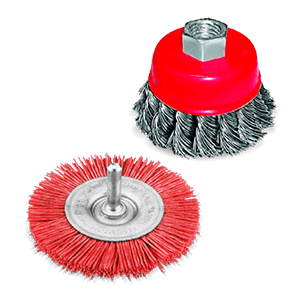
Wire brush


- Tool handle material: Wood
- Material: Steel Wire
- Number of rows: 3
- Item number: 06930
- Our price: £1.29
- Manufacturer: VOREL
- EAN number: 06930
- Condition: New
price incl. 20% VAT
excl. delivery costs
Sold by AUTODOC
Here you can add a product to compare


- Diameter: 22
- Material: Steel
- Surface: Brass-plated
- Item number: S-SWB22
- Our price: £1.59
- Manufacturer: ASTA
- EAN number: S-SWB22
- Condition: New
price incl. 20% VAT
excl. delivery costs
Sold by AUTODOC
Here you can add a product to compare

- Tool handle material: Plastic
- Material: Brass
- Item number: 06965
- Our price: £1.59
- Manufacturer: VOREL
- EAN number: 06965
- Condition: New
price incl. 20% VAT
excl. delivery costs
Sold by AUTODOC
Here you can add a product to compare

- Tool handle material: Wood
- Material: Steel Wire
- Number of rows: 4
- Item number: 06940
- Our price: £1.59
- Manufacturer: VOREL
- EAN number: 06940
- Condition: New
price incl. 20% VAT
excl. delivery costs
Sold by AUTODOC
Here you can add a product to compare

- Tool handle material: Wood
- Material: Steel Wire
- Number of rows: 5
- Item number: 06950
- Our price: £1.59
- Manufacturer: VOREL
- EAN number: 06950
- Condition: New
price incl. 20% VAT
excl. delivery costs
Sold by AUTODOC
Here you can add a product to compare


- Tool handle material: Plastic
- Material: Steel Wire
- Item number: HST 0222
- Our price: £1.99
- Manufacturer: HST
- EAN number: 5906125155074
- Condition: New
price incl. 20% VAT
excl. delivery costs
Sold by AUTODOC
Here you can add a product to compare

- Length [mm]: 170
- Tool handle material: Plastic
- Material: Steel, Nylon, Brass
- Quantity Unit: Kit
- Number of tools: 3
- Item number: 06963
- Our price: £1.99
- Manufacturer: VOREL
- EAN number: 06963
- Condition: New
price incl. 20% VAT
excl. delivery costs
Sold by AUTODOC
Here you can add a product to compare

- Tool handle material: Wood
- Material: Steel Wire
- Number of rows: 6
- Item number: 06960
- Our price: £1.99
- Manufacturer: VOREL
- EAN number: 06960
- Condition: New
price incl. 20% VAT
excl. delivery costs
Sold by AUTODOC
Here you can add a product to compare


- Number of rows: 4
- Bristle Material: Stainless Steel
- Tool handle material: Wood
- Overall Length [mm]: 285
- Net Weight [g]: 78
- Item number: 14A604
- Our price: £1.99
- Manufacturer: TOP TOOLS
- EAN number: 14A604
- Condition: New
price incl. 20% VAT
excl. delivery costs
Sold by AUTODOC
Here you can add a product to compare


- Diameter: 100
- Item number: YT-4757
- Our price: £2.29
- Manufacturer: YATO
- EAN number: 5906083947575
price incl. 20% VAT
excl. delivery costs
Sold by AUTODOC
Here you can add a product to compare


- Weight [g]: 90
- Tool handle material: Plastic
- Length [mm]: 240
- Item number: 02602
- Our price: £2.29
- Manufacturer: AMiO
- EAN number: 5903293026021
- Condition: New
price incl. 20% VAT
excl. delivery costs
Sold by AUTODOC
Here you can add a product to compare
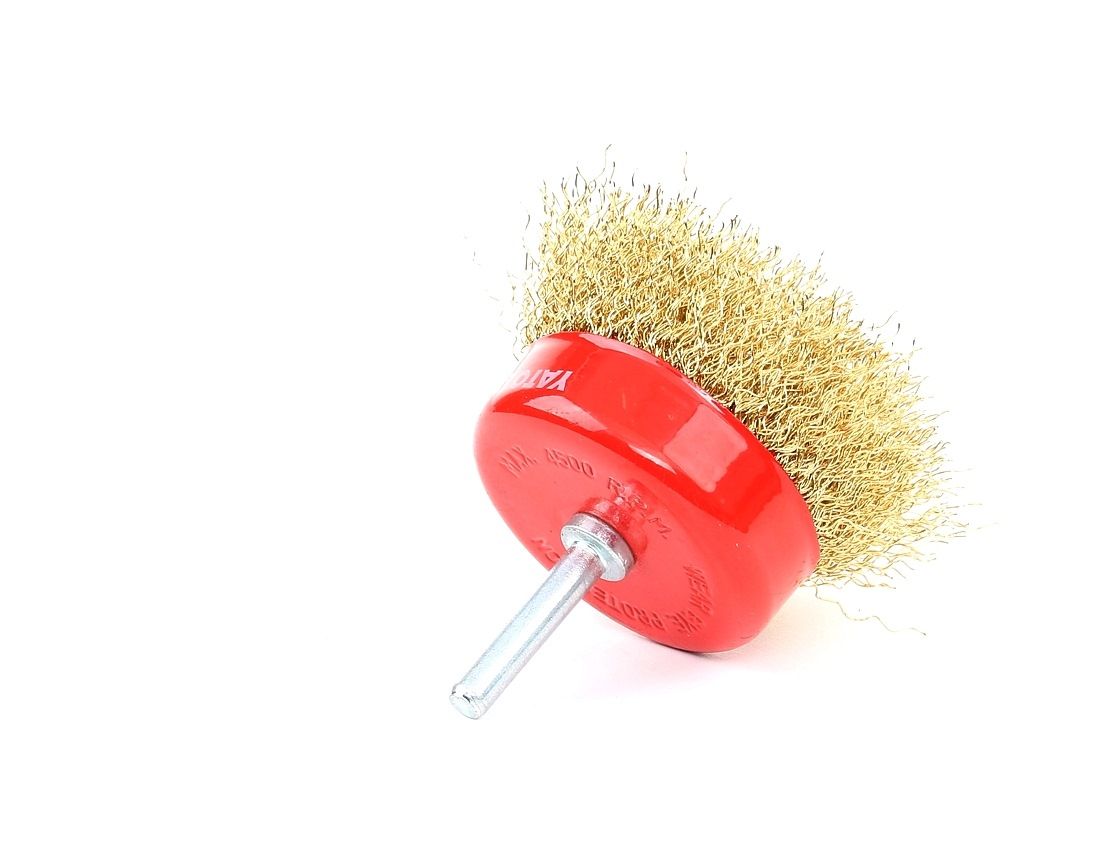

- Diameter: 75
- Item number: YT-4750
- Our price: £2.29
- Manufacturer: YATO
- EAN number: 5906083947506
price incl. 20% VAT
excl. delivery costs
Sold by AUTODOC
Here you can add a product to compare

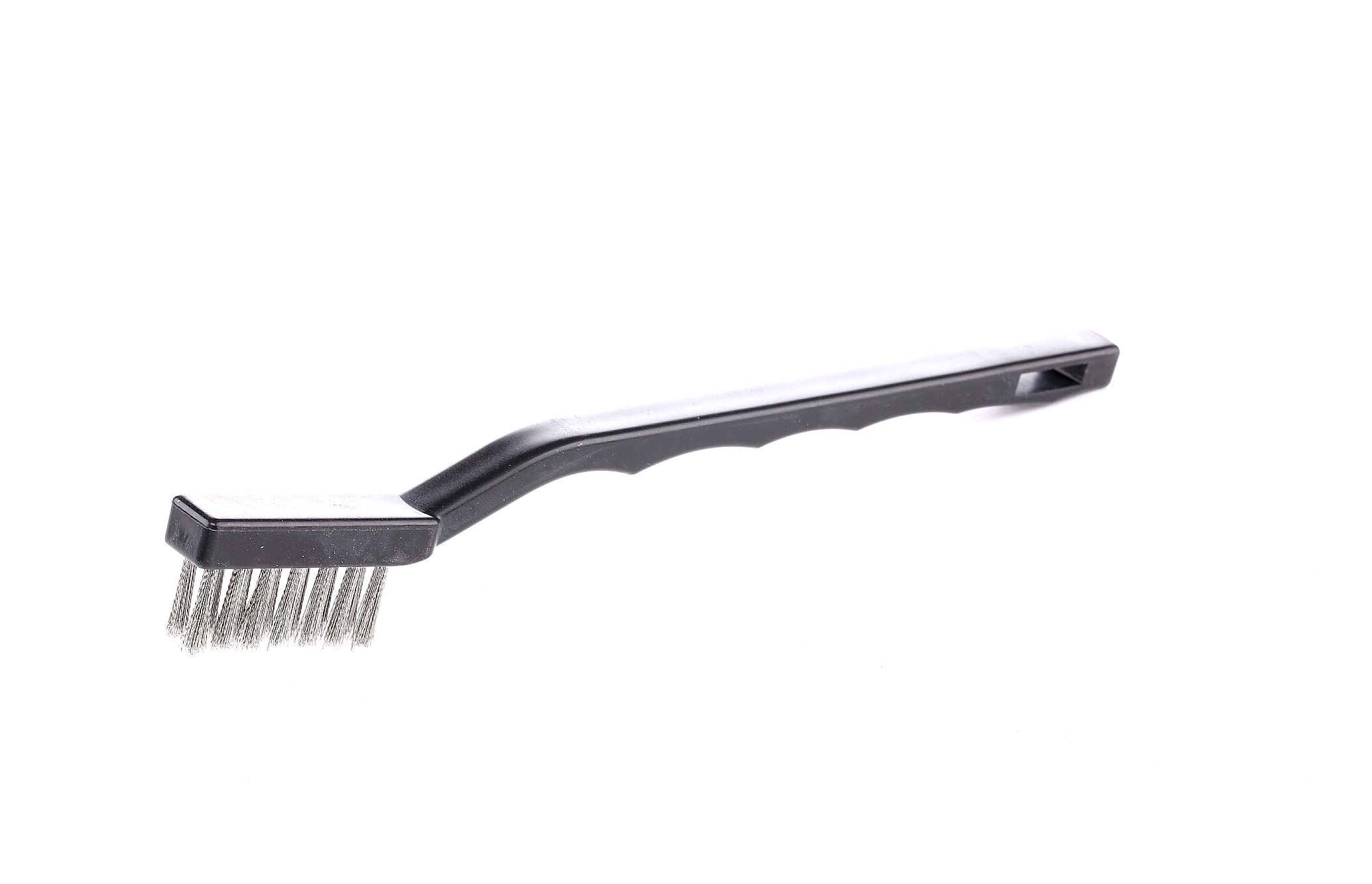
- Number of rows: 2
- Material: Steel Wire
- Length [mm]: 24,5, 170,0
- Height: 14,8
- Tool handle material: Plastic
- Weight [g]: 20
- Item number: 201.2315
- Our price: £2.29
- Manufacturer: KS TOOLS
- EAN number: 4042146168356
- Condition: New
price incl. 20% VAT
excl. delivery costs
Sold by AUTODOC
Here you can add a product to compare


- Diameter: 22
- Bristle Type: knotted version
- Effective Length [mm]: 42
- Item number: NE00885
- Our price: £2.29
- Manufacturer: ENERGY
- EAN number: NE00885
- Condition: New
price incl. 20% VAT
excl. delivery costs
Sold by AUTODOC
Here you can add a product to compare

- Number of rows: 6
- Bristle Material: Stainless Steel
- Tool handle material: Wood
- Overall Length [mm]: 285
- Net Weight [g]: 102
- Item number: 14A606
- Our price: £2.29
- Manufacturer: TOP TOOLS
- EAN number: 14A606
- Condition: New
price incl. 20% VAT
excl. delivery costs
Sold by AUTODOC
Here you can add a product to compare

- Bristle Material: Stainless Steel
- Tool handle material: Wood
- Number of rows: 5
- Item number: YT-6359
- Our price: £2.29
- Manufacturer: YATO
- EAN number: YT-6359
- Condition: New
price incl. 20% VAT
excl. delivery costs
Sold by AUTODOC
Here you can add a product to compare

- Material: Steel
- Weight [g]: 18
- Diameter: 18
- Total Length [mm]: 100
- Socket Driver [inch]: 1 / 4
- Item number: 340.0085
- Our price: £2.29
- Manufacturer: KS TOOLS
- EAN number: 4042146593134
- Condition: New
price incl. 20% VAT
excl. delivery costs
Sold by AUTODOC
Here you can add a product to compare

- Material: Steel
- Weight [g]: 18
- Diameter: 19
- Total Length [mm]: 100
- Socket Driver [inch]: 1 / 4
- Item number: 340.0086
- Our price: £2.29
- Manufacturer: KS TOOLS
- EAN number: 4042146593141
- Condition: New
price incl. 20% VAT
excl. delivery costs
Sold by AUTODOC
Here you can add a product to compare

- Number of rows: 3
- Tool handle material: Plastic
- Item number: HST 0611
- Our price: £2.59
- Manufacturer: HST
- EAN number: 5906125594187
- Condition: New
price incl. 20% VAT
excl. delivery costs
Sold by AUTODOC
Here you can add a product to compare


- Tool handle material: Wood
- Material: Steel Wire
- Number of rows: 4
- Item number: 14A614
- Our price: £2.59
- Manufacturer: TOPEX
- EAN number: 5902062121677
- Condition: New
price incl. 20% VAT
excl. delivery costs
Sold by AUTODOC
Here you can add a product to compare
- 1
- 2
- 3
- 4
- 5
Wire brush: useful information about tools for your car in our blog
Wire brushes: what you need to know
Wire Brush: A Guide to Selection, Use, and Care
The wire brush is used for mechanical surface treatment in metalworking and automotive repair, effectively removing rust, deposits, and burrs. Choosing the right type depends heavily on the material hardness, the degree of soiling, and the drive used to achieve efficient results without damaging the workpiece.
Construction and Function of the Wire Brush
Below, we explain the basic operating principles of these tools.
A wire brush transfers kinetic energy to a surface through the mechanical action of numerous fine metal wires to remove loose particles or coatings. Depending on the application, these wire filaments are made of different materials such as hardened steel wire, stainless steel, or brass, with the wire thickness and the type of wiring – such as crimped or knotted – determining the abrasiveness.
In the hand wire brush, an ergonomic handle provides the necessary force transmission through the manual movement of the user. Models for rotating drives, such as the wire brush for a drill, use centrifugal force to enable uniform processing. The geometry of the brush body, for example as a cup brush or a wheel brush, defines how deeply and at what angles the tool can penetrate the workpiece.
The choice of wire material is crucial for protecting the workpiece. Stainless steel brushes are recommended for working on stainless steel to avoid the formation of foreign rust due to iron particles. Brass brushes are significantly softer and are used on more sensitive metals or where sparking must be avoided, while knotted steel wire offers the highest aggressiveness for stubborn rust layers.
Types of Metal Brushes Overview
The following table provides an overview of common designs for different areas of application.
| Type | Advantages / Application Focus | Typical Limitations |
|---|---|---|
| Hand Wire Brush | Precise control, no power supply required, ideal for small surfaces and corners | High effort required for large surfaces |
| Wire Brush for Drill | High removal rate through rotation, time-saving on medium-sized surfaces | Less control than with hand guidance |
| Wheel Brush | Effective for large-area rust removal from flat metal surfaces | Not suitable for recesses or corners |
| Cup Brush | Ideal for cleaning welds, grooves, and pipes | Risk of spraying at excessive speeds |
| Pencil Brush | Precise work in hard-to-reach places such as bores | Low removal rate on large areas of rust |
| Shaft Brush | Flexible use in flexible shafts or straight grinders | Strong vibration under eccentric load |
For simple manual tasks, the classic hand wire brush is recommended, while for large-area tasks on the vehicle or in the metal workshop, rotating brushes, such as the wheel brush, are the more efficient choice.
Advantages and Limitations of the Wire Brush
Compared to chemical rust removers or abrasive pads, wire brushing offers an immediate mechanical effect without waiting times, but it reaches physical limits with very deep corrosion marks in the metal.
Advantages of the Wire Brush
- Immediate cleaning action – no waiting times like with chemical rust removers or pastes.
- High material compatibility – if the right wire material is selected, the basic structure of the workpiece is preserved.
- No waste products – unlike abrasive pastes, brushing does not produce liquid chemical waste.
- Versatility – with a set of different brush shapes, almost all geometries can be processed.
Disadvantages of the Wire Brush
- Risk of wire breakage – especially with knotted models, small metal wires can come loose and fly away.
- Surface roughness – mechanical processing leaves a characteristic finish that often requires post-processing.
- Dust development – cleaning rust and old paint layers creates considerable fine dust.
- Wear – the bristles wear out relatively quickly on hard surfaces and lose their rigidity.
How Much Does a Wire Brush Cost?
Pricing is primarily determined by the wire material and the quality of the carrier body.
| Product Group | Approximate Range | Price Drivers |
|---|---|---|
| Hand Wire Brush (simple) | approx. £2–£8 | Handle material, wire fill |
| Wire Brush for Drill | approx. £5–£25 | Brush diameter, wire quality |
| Industrial Wheel Brush | approx. £15–£50 | Knotted design, stainless steel quality |
The density of the wire fill and the alloy are among the main price drivers; well-known quality brands such as Klingspor, Osborn, or Pferd offer high-quality workmanship here.
While simple models are sufficient for occasional home use, users in the professional automotive or metalworking sector should invest in high-quality versions that impress with better wire anchoring and longer service life.
Where is a Wire Brush Used?
The abrasive brush is used in almost all areas where metallic surfaces need to be prepared or cleaned.
- Automotive Workshop: Here, the wire brush is used to clean brake callipers, wheel hubs, and stubborn dirt deposits on the suspension before new parts are installed.
- Metalworking: Before and after welding, it is used to remove slag, scale, and corrosion layers from the raw material.
- Restoration: Old paint layers or extensive rust on vehicle frames are quickly and thoroughly removed with rotating metal brushes.
- Home and Garden: Cleaning metal garden tools, roughening surfaces before painting, or removing rust from fence elements are classic areas of application.
How Do I Choose the Right Wire Brush?
The selection of the appropriate tool is based on the material combination of the substrate and brush.
| Criterion | What to Check | Relevant for |
|---|---|---|
| Wire Material | Steel for normal metal, stainless steel for stainless steels, brass for soft metals | All Types |
| Design | Cup brush for welds, wheel brush for surfaces, pencil brush for bores | Rotating Brushes |
| Wire Type | Crimped for fine work, knotted for strong corrosion and heavy abrasion | All Types |
| Mounting | Shaft size (usually 6 mm) for the drill or mounting for angle grinders | Machine Brushes |
The most important criterion is material matching. For working on stainless steel, you should choose a stainless steel wire brush to avoid contact corrosion, while a knotted steel wheel brush is often the most efficient choice for removing coarse rust.
Correct Application, Care, and Storage of the Wire Brush
Correct application prevents premature wear of the brush and protects the workpiece from unnecessary damage due to improper abrasion.
Guide the brush evenly over the workpiece and avoid getting caught on edges, which can lead to immediate wire breakage. Always pay attention to the maximum permissible speed of your model while working.
In the automotive sector, the manufacturer's specifications apply to the cleaning of safety-relevant parts such as brake systems; make sure not to weaken structural parts by excessive abrasion.
Technique and Common Mistakes When Wire Brushing
- Avoid pressure – only apply lightly, as the wire tips do the abrasion.
- Observe speed – never exceed the maximum speed specified for the brush.
- Safety measures – safety glasses and gloves are mandatory with rotating brushes.
- Maintain angle – do not tilt to avoid wire breakage and material grooves.
- Direction of movement – always work in the direction of movement of the brush to keep the workpiece clean.
Care and Storage of the Metal Brush
Care for these tools is more a matter of correct storage to avoid deforming the wire structure. Regular inspection ensures that the tool remains safely ready for use.
Avoid contact with moisture or aggressive chemicals during storage and transport, as these could corrode the wire.
- Dry storage – moisture leads to rust on the wires, which impairs the material properties, especially in stainless steel brushes.
- Hanging storage – this prevents the wires from deforming and keeps them in shape for the next use.
- Cleaning – after use, tap off coarse residue or metal shavings from the wires.
- Protection from contamination – avoid contact with foreign materials (e.g. iron dust on stainless steel brushes).
- Regular checks – check at each use whether wires are missing or the brushing pattern is uneven.
Useful Accessories for the Wire Brush
Additional accessories can expand the range of applications and increase safety.
- Safety glasses – essential for protecting against flying wire pieces and rust particles.
- Work gloves – protect against sharp edges of the workpiece and contact with the wire fill.
- Angle grinder adapter – for use of wheel brushes with larger mountings.
- Air duster – for removing stubborn abrasive dust in the spaces between the brush.
- Respirator – prevents the inhalation of metal dust during application.
- Steel wool – for final surface smoothing after coarse brushing.
Buy Wire Brushes at AUTODOC
The range includes wire brushes for drills, angle grinders, and a large selection of hand wire brushes from leading manufacturers. The filter functions can be used to search specifically for wire material, brush type, and shaft mounting to find a suitable model for the respective project.
Qualified technical advisors help with the selection of the right model for special automotive applications. Thanks to an efficient delivery network in Europe, the order reaches the customer in a short time.
Frequently Asked Questions
Why does my wire brush lose wires during operation?
Excessive pressure or too high a speed cause the wires to bend and break. Work with less pressure and make sure the brush is approved for the speed of your machine.
Can I also work aluminium with a wire brush?
Yes, in principle, but preferably use brass brushes or special wire brushes for non-ferrous metals. Steel or stainless steel brushes can be too aggressive or lead to undesirable discolouration on aluminium.
How do I know if a wire brush is blunt?
A blunt brush can be recognised by a significantly reduced cleaning effect despite constant pressure. In addition, the wires discolour or bend permanently instead of giving way, which reduces the abrasion.
How do I clean a wire brush after use?
After use, tap the brush gently against a hard surface to remove coarse metal shavings and residue from the wire mesh. Cleaning with compressed air can also be helpful to loosen fine abrasive dust from the spaces.
Can wire brushes also be used for wood?
Yes, wire brushes are used in woodworking to roughen surfaces or to create a rustic look (texturing). Make sure that the wire thickness is not chosen too coarse to avoid damaging the wood too deeply.