The best wire strippers remove insulation from wires without nicking the copper conductors inside. Whether you're fixing a faulty earth connection, installing new car accessories, or tackling small electrical jobs at home, a quality wire stripper makes precise stripping easier, and saves time on every job. Below is a detailed analysis of the tools available on AUTODOC, taking into account their characteristics, durability, and customer reviews to help you find the product that suits your workflow.
The SEALEY AK2265 stands out as the most versatile cable stripper in this selection. It covers conductor sizes from 0.2–6 mm², which suits many automotive wiring tasks, as well as general electrical jobs. The built-in cutting function means you don't need separate cutters for most jobs. Many electricians prefer this type of automatic wire stripper because it strips insulation cleanly without damaging conductors.
Pros
Integrated cable cutter cuts up to 2 mm stainless steel
Wide cross-section range for different wire types
2-piece grip provides comfortable handling
Perfect for both automotive and domestic work
Strips flat cable and round wire
Cons
Higher price than basic strippers
May be overkill for occasional DIY users
Pistol-grip design is bulkier
Specifications
Specification
Value
Length
190 mm
Cross-section from
0.2 mm²
Cross-section to
6 mm²
Handle type
2-piece grip
Max cutting capacity
2 mm
Features
With cable cutter, cutting function
Reasons to buy
Dual function design strips and cuts in one tool
Covers most cable sizes found in car electrical systems
The comfortable grip reduces hand fatigue during long sessions
SEALEY is UK-based and highlights aftersales support and parts availability.
Pro tip from our workshop: When working on car wiring, always check that your stripper blade is sharp. A dull blade will crush conductors rather than cutting cleanly through insulation.
If you work with thicker cables, such as battery leads and main earth cables, the FORCE 6808 covers a large cable diameter range of 4–28 mm. It is also lightweight at 100 g, which makes it easy to keep in a toolkit.
Pros
Very wide cable diameter range: 4–28 mm.
Lightweight at 100 g.
Suitable for thicker automotive cables within its stated diameter range.
Simple manual format.
Cons
Not suitable for thin signal wires
Limited to round cables
Specifications
Specification
Value
Weight
100 g
Cable diameter from
4 mm
Cable diameter to
28 mm
Type
Manual stripper
Reasons to buy
Perfect for heavy automotive cables that other strippers can't handle
The Hogert Technik HT1P184 puts comfort first with its ergonomic non-slip handles. Professional electricians who strip dozens of cables daily will appreciate the 2-piece grip that reduces strain. The 0.2-6 mm² range covers most automotive applications, and the 205 mm length gives good control without feeling bulky.
Pros
Ergonomically shaped, non-slip 2-piece grip for a secure hold.
Wide stripping range: 0.2–6 mm².
205 mm length supports controlled handling.
Manufacturer states a built-in cable cutting blade and crimping function.
Cons
Mid-range price point
Handle coating may wear over time
Specifications
Specification
Value
Length
205 mm
Cross-section from
0.2 mm²
Cross-section to
6 mm²
Handle type
2-piece, ergonomic, non-slip
Reviews
1 customer rating
Reasons to buy
The ergonomic design is perfect for professionals doing repeated stripping
Long tool length provides better control on difficult cables
Manufacturer-listed extras can reduce the number of separate tools you carry (strip, cut, crimp).
TOPTUL tools are trusted by many garages across Europe, and the DICA1306 shows why. Weighing just 150 g with a 190 mm length, this stripper feels balanced and precise. The 0.2-6 mm² range handles everything from thin sensor wires to standard power cables without blade changes.
Pros
Professional brand with proven durability
Lightweight 150 g design
Fine precision on small cable sizes
Well-balanced feel in hand
Good length for control
Cons
Premium-brand pricing.
Plain handle design.
Specifications
Specification
Value
Length
190 mm
Cross-section from
0.2 mm²
Cross-section to
6.0 mm²
Weight
150 g
Reasons to buy
Professional quality that stands up to daily workshop use
Light, compact tool for 0.2–6.0 mm² wiring work.
If you want an automatic-style stripper, the manufacturer lists DICA1306 as an automatic wire stripper.
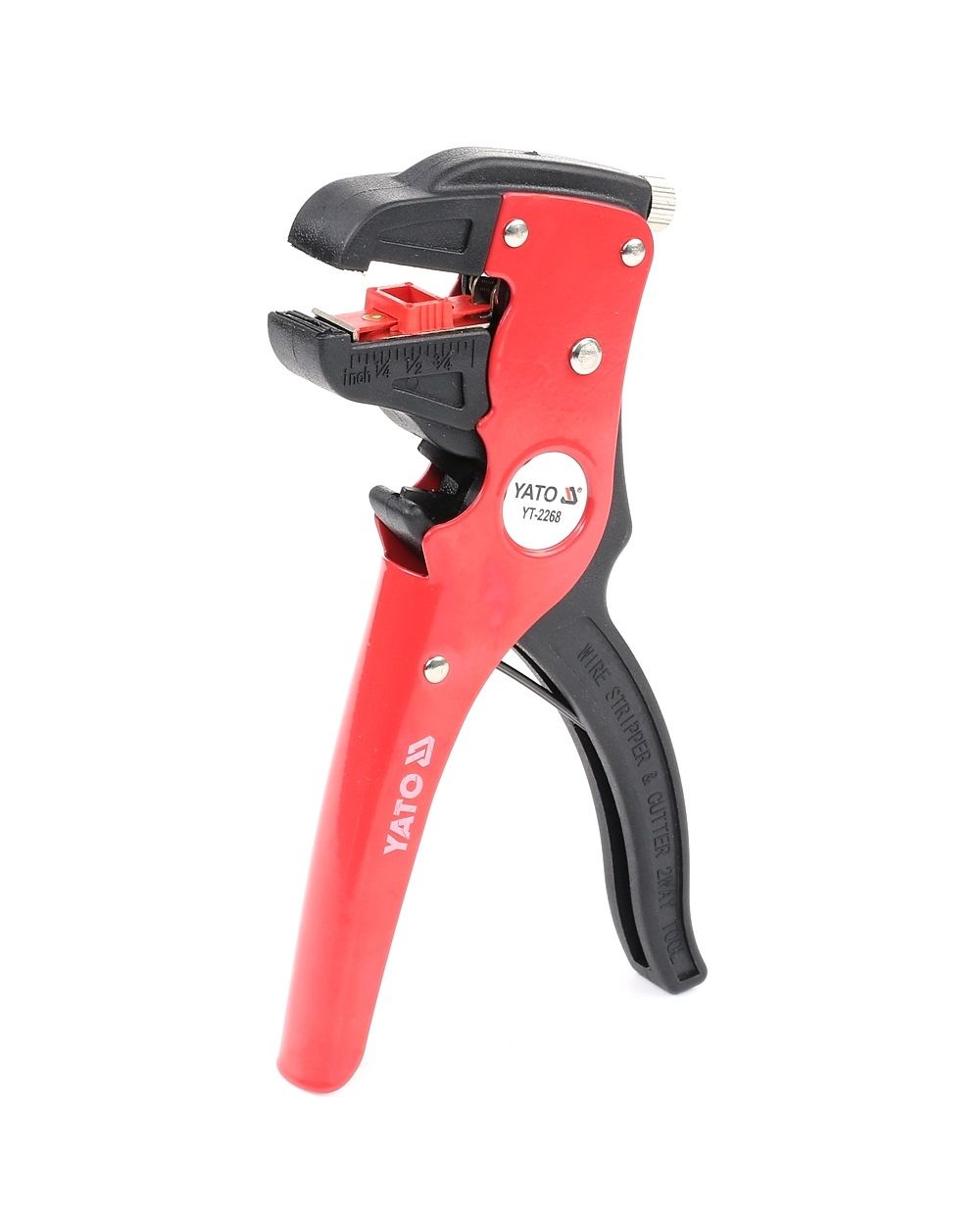
The YATO YT-2268 is a popular tool that has proven itself in real-world conditions. The tool is 175 mm long and is listed for cables up to Ø 10 mm, which makes it a compact, general-purpose option for diameter-based stripping tasks.
Pros
Handles cables up to 10 mm diameter
Compact 175 mm size fits tool bags easily
Good price-to-quality ratio
Cons
Diameter-based rather than cross-section sizing
Limited to smaller cable sizes
Basic feature set
Specifications
Specification
Value
Length
175 mm
Diameter up to
10 mm
EAN
5906083922688
Reasons to buy
The 10 mm diameter suits most standard automotive wiring
Compact size doesn't take up much space in your toolkit
Workshop advice: Keep wire strippers clean and lightly oiled. Dirty blades tear insulation instead of cutting it cleanly.
The ROOKS OK-07.1060 is a simple plier-style cable stripper made from chrome vanadium steel, with a rubberised two-piece grip. At 200 mm long, it offers a comfortable hand position for basic stripping tasks in a workshop or garage.
Pros
Chrome vanadium steel blade stays sharp longer
Rubberised handles for comfort
200 mm length improves control
2-piece grip design
Built to last
Cons
Basic feature set
Mid-range pricing
Specifications
Specification
Value
Length
200 mm
Handle surface
Rubberised
Handle type
2-piece grip
Material
Chrome vanadium steel
Reasons to buy
The chrome vanadium steel blade maintains sharpness through heavy use
A straightforward option if you want a plier-style stripper with a rubberised grip.
Good choice for basic tasks where a stated mm² range is not essential.
The NEO TOOLS 01-534 has a listed hardness rating of HRC 52–60, which supports wear resistance in regular use. It covers a 0.5–6 mm² cross-section range and also includes AWG sizing (24–10 AWG) in the specification, which is useful if you work with wiring labelled in either system. The handles are plastic-coated, which improves grip and comfort.
Pros
High hardness rating: HRC 52–60
Metric and AWG sizing in the listing: 0.5–6 mm² and 24–10 AWG
Plastic-coated handle surface
180 mm length balances control and portability
Cons
Slightly narrower minimum cross-section than 0.2 mm² tools.
Plastic coating can mark or chip over time (practical consideration).
Specifications
Specification
Value
Length
180 mm
Cross-section from
0.5 mm²
Cross-section to
6 mm²
AWG range
24-10
Hardness
HRC 52-60
Handle surface
Plastic-coated
Reasons to buy
AWG markings help when working with imported vehicles
Safety matters when working near live circuits, and the ALCA 458800 is insulated for protection. The steel construction reaches HRC 55-65 hardness, among the highest here. At 160 mm, this compact stripper suits work in tight spaces under dashboards or in engine bays.
Pros
Insulated for working near electrical systems
Very high blade hardness (HRC 55-65)
Compact 160 mm length
Steel construction throughout
Cons
Compact size may feel small for larger hands
Basic design without automatic features
Specifications
Specification
Value
Length
160 mm
Material
Steel
Insulated
Yes
Hardness
HRC 55-65
Size
M
Reasons to buy
Insulated handles (as listed) for more confident handling around wiring.
High hardness rating for a compact, steel tool.
Compact format for working in confined spaces.
Workshop advice: Even with insulated handles, treat vehicle wiring as live until you have disconnected the battery and verified the circuit is safe to work on.
The AMiO 03132 starts at 0.2 mm² cross-section, making it one of the few strippers here that handles very fine wires. The 205 mm length and AWG 24-10 range give good versatility. Plastic-coated handles keep the weight down while providing grip.
Pros
Handles very fine wires from 0.2 mm²
Long 205 mm design for control
Both metric and AWG sizing
Wide usable range
Cons
Basic handle design
Less well-known brand
Specifications
Specification
Value
Length
205 mm
Cross-section from
0.2 mm²
Cross-section to
6 mm²
AWG range
10-24
Handle surface
Plastic-coated
Reasons to buy
Useful for very fine wiring where a 0.2 mm² minimum matters.
Long body improves precision on difficult jobs
Clear spec coverage in both mm² and AWG for mixed standards.
For occasional DIY use, the VOREL 45100 is a budget-priced option. It is 165 mm long and covers a stated 0.5–6.0 mm² range, with AWG sizing from 10 to 20 AWG. This makes it suitable for many common wiring tasks, but it will not cover very fine wires below 0.5 mm² or heavier cables above 6.0 mm².
Pros
Stated range: 0.5–6.0 mm².
Compact and easy to store
Good for occasional use
Simple reliable design
Cons
Does not cover wires below 0.5 mm²..
Not intended for heavy cables above 6.0 mm²..
Basic feature set.
Specifications
Specification
Value
Length
165 mm
Cross-section
0.5-6.0 mm²
AWG range
10-20
Reasons to buy
The budget price makes it accessible for DIY users
Covers many common wire sizes within 0.5–6.0 mm².
Compact enough for a small home kit or a basic emergency kit.
Step-by-step cable stripper buying guide: how to make the right choice?
Check your cable sizes first. Measure the wires you work with most often. Select a stripper with a cross-section range that covers these sizes with room to spare for occasional larger or smaller jobs.
Consider how often you'll use it. Professionals need durability and ergonomic features for daily use. DIY users can save money with simpler tools that handle occasional jobs without problems.
Look at the blade material. Chrome Vanadium Steel or high HRC hardness ratings mean longer blade life. Cheap blades dull quickly and start damaging conductors instead of cutting insulation.
Think about comfort and control. Longer tools give better precision, while ergonomic handles reduce fatigue. If you strip many wires, invest in quality handles and the right length.
SEALEY wire strippers: UK tool brand with a strong range for workshop and trade use.
YATO cable strippers: Brand of TOYA Group (Poland), known for broad coverage across hand tools
FORCE cable strippers: Taiwanese tools known for handling heavy-duty applications well
TOPTUL wire strippers: Professional grade tools used widely in workshops
Hogert Technik strippers: Focus on ergonomic design and user comfort for daily use
ROOKS wire strippers: Chrome Vanadium construction provides excellent long-term durability
NEO TOOLS strippers: Good balance of hardness, features, and value for money
Conclusion
Finding the best cable stripper depends on what type of work you do and how often. For all-round automotive use, the SEALEY AK2265 stands out with its integrated cutter and wide cross-section range from 0.2 to 6 mm². If thick battery cables are your main concern, the FORCE 6808 handles diameters up to 28 mm that other tools cannot manage.
Professionals who strip wires daily should consider the Hogert Technik HT1P184 or TOPTUL DICA1306 for their ergonomic designs and professional-grade construction. The YATO YT-2268 offers proven reliability.
For DIY users and occasional jobs, the VOREL 45100 provides the essential features at the lowest price point. The ALCA 458800 adds insulated safety for those working on live systems.
At AUTODOC, we offer 6.7 million products from 2,500 brands, and operate in 27 European countries. Our specialists select quality tools that match what professionals and DIY enthusiasts actually need. Check our video guides and join the AUTODOC Club to learn more about automotive electrical work and find the right tools for your next project.
The best way is to grip the wire firmly, position the blade at the correct gauge notch, and squeeze gently. Rotate slightly if needed, then pull the insulation off the end. Test your technique on scrap wire first.
What is the best tool to strip armoured cable?
For armoured cable, you need a rotary cable stripper designed for that purpose. Standard wire strippers won't work. Search for tools rated for the specific cable diameter. Klein Tools and similar professional brands make dedicated armored cable cutters.
What is the easiest way to strip cable?
Automatic wire strippers are usually the easiest option. They adjust to different cable sizes and strip insulation with one squeeze. This saves time and gives consistent results without needing to understand gauge settings or blade adjustments.
How to strip very thick wire?
Use a heavy-duty stripper like the FORCE 6808 that handles larger diameters. Score around the insulation first, then continue pulling it off. For battery cables, a sharp stanley knife works if you're careful not to cut the conductors.
How do professional electricians strip wires?
Professionals use quality automatic strippers and work quickly through a large number of connections. They select the correct gauge, strip to the right length, and check each wire. Many electricians share the same trusted tool brands across their teams.
Can I damage wires while stripping?
Yes, using the wrong technique or dull blades can nick copper conductors. This weakens the wire and creates resistance points. Always test your stripper setting on spare cable and check stripped ends for damage before making connections.
How to strip a wire without a wire stripper?
A sharp stanley knife can score around the insulation if you're careful. Cut lightly around the circumference, then pull the insulation off the end. This method requires practice to avoid cutting into the current-carrying conductors underneath.


 28 January 2026 (updated)