Table of Contents

 3 April 2026 (updated)
 Do DPF Cleaners Really Work? A UK Motorist's Guide
Yes, but their effectiveness depends entirely on the type of cleaner and the severity of the blockage. Pour-in fuel additives offer limited, preventative benefits for minor soot build-up, potentially helping a vehicle's natural regeneration process. However, for a significantly blocked Diesel Particulate Filter (DPF) that triggers warning lights, these additives are ineffective. The appropriate response depends on the stage of the problem. If an amber DPF warning light appears, but the vehicle is still performing normally, a stepped approach is typically warranted: first, attempting to complete regeneration by driving at sustained speeds (the AA recommends above 40mph for around 10 to 20 minutes); if that fails, a garage can perform a forced regeneration using diagnostic equipment, which may also involve clearing fault codes and resetting system-specific counters. Only in more severe cases is professional DPF cleaning necessary. However, if the warning light turns red or the vehicle has entered "limp mode," driving at speed is not appropriate and will not trigger regeneration — at this stage, the RAC advises stopping and seeking professional assistance, as the car may need to be recovered. Acting promptly at each stage can help reduce the risk of a costly replacement, though outcomes will vary depending on the vehicle, the blockage severity, and the underlying fault.
Understanding DPF Blockages: Soot vs. Ash

All new diesel cars registered from 1 January 2011 onwards are fitted with a DPF to capture harmful soot from the exhaust — the date from which Euro 5 made DPF fitment a mandatory legal requirement for all new registrations New diesel car models launched from September 2009 onwards were also required to comply, meaning some vehicles registered before January 2011 will already be fitted with a DPF. Fitment on older or non-passenger vehicles may vary. The DPF is designed to "regenerate" by burning off accumulated soot at high temperatures — a process that oxidises the carbon-rich particles so they no longer block the filter. Separately, over many thousands of miles, a non-combustible ash also builds up inside the DPF, largely derived from engine oil additives; because this ash cannot be burned away during regeneration, it gradually accumulates regardless. This process works well with regular motorway driving, where exhaust temperatures are consistently high.
The problem arises from frequent short journeys, where the engine does not get hot enough to complete a regeneration cycle. This causes a build-up of soot, leading to a blockage. Over many thousands of miles, the incombustible ash also accumulates. It is crucial to understand that no chemical additive can remove this ash; it must be physically cleaned out.
The Two Types of DPF Cleaning Solutions
When faced with a DPF warning light, the right course of action depends on how severe the blockage is. Their suitability and results differ dramatically.
- Completing Regeneration via Driving: This is typically the first step when a warning light appears. As the AA advises, driving at sustained speeds — above 40mph for around 10 to 20 minutes — may be enough to complete an active regeneration cycle and clear the light. This should always be attempted before considering any other intervention.
- DPF Cleaner Additives: These are liquids poured directly into the fuel tank. They work by lowering the temperature at which soot can burn off, aiming to make the vehicle's own regeneration process more efficient. They are best seen as a preventative measure for drivers who frequently make short trips, but they cannot fix an already blocked filter or address underlying engine faults that prevent regeneration.
- Professional DPF Cleaning: This is a garage service required when the filter is too blocked for additives or regeneration to work. It involves powerful, targeted methods to clear both heavy soot and accumulated ash, effectively resetting the filter's capacity. When ash accumulation or blockage severity is beyond what forced regeneration can address, professional cleaning is generally the most appropriate solution — though in extreme cases, filter replacement may ultimately be required.
Sold by AUTODOC Sold by AUTODOC Sold by AUTODOC Sold by AUTODOC Sold by AUTODOC
 Article number: 20-A90
More
£6. 29
£13.98
for 1 litre
price incl. 20% VAT, excl. delivery costs
Article number: 20-A90
More
£6. 29
£13.98
for 1 litre
price incl. 20% VAT, excl. delivery costs
 Article number: 7945
£203. 00price incl. 20% VAT, excl. delivery costs
-57%
Article number: 7945
£203. 00price incl. 20% VAT, excl. delivery costs
-57%
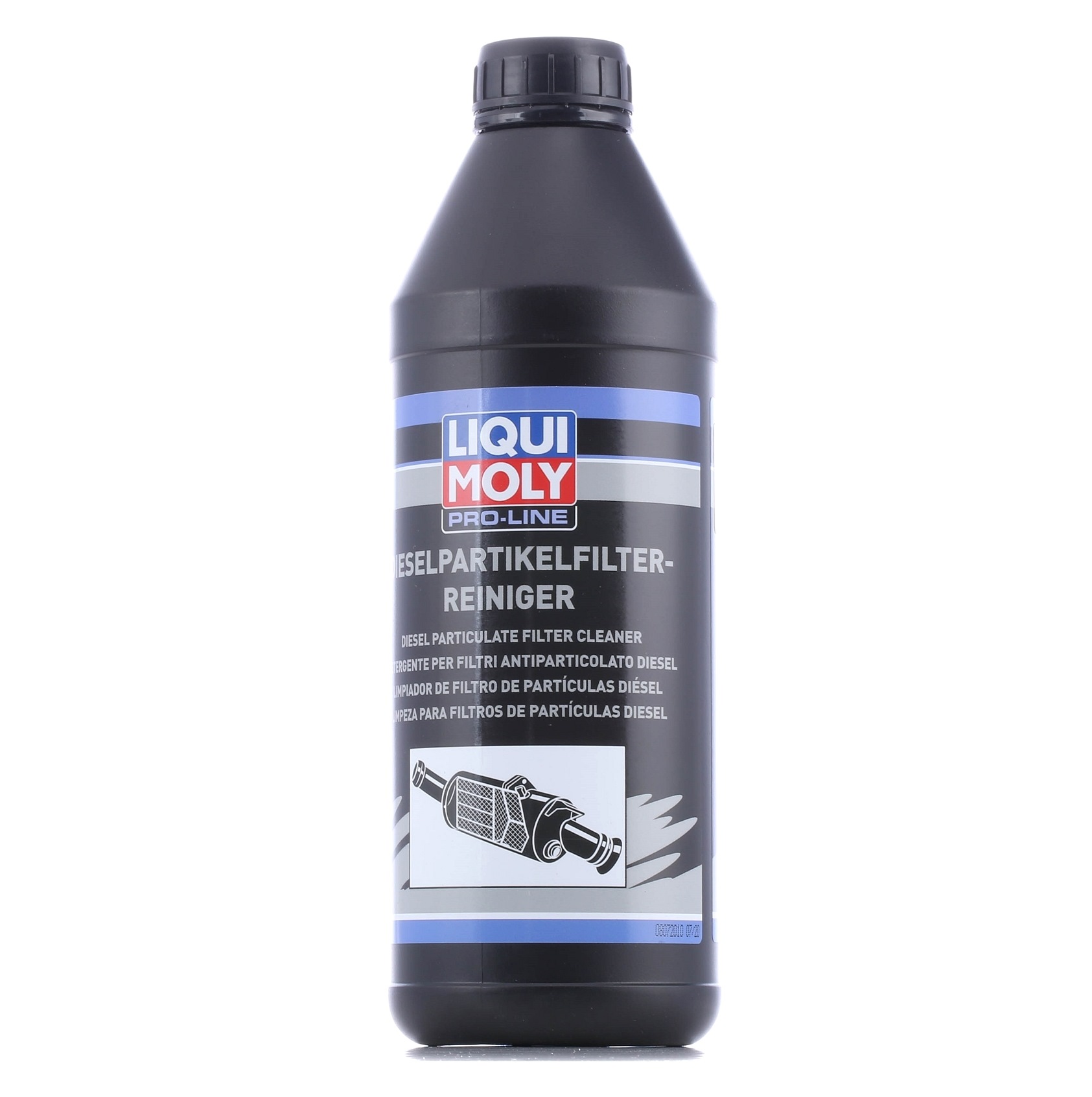 LIQUI MOLY DPF cleaner
Capacity: 1l
Article number: 5169
More
compared to
RRP
£81.73
£34. 49
£34.49
for 1 litre
price incl. 20% VAT, excl. delivery costs
LIQUI MOLY DPF cleaner
Capacity: 1l
Article number: 5169
More
compared to
RRP
£81.73
£34. 49
£34.49
for 1 litre
price incl. 20% VAT, excl. delivery costs
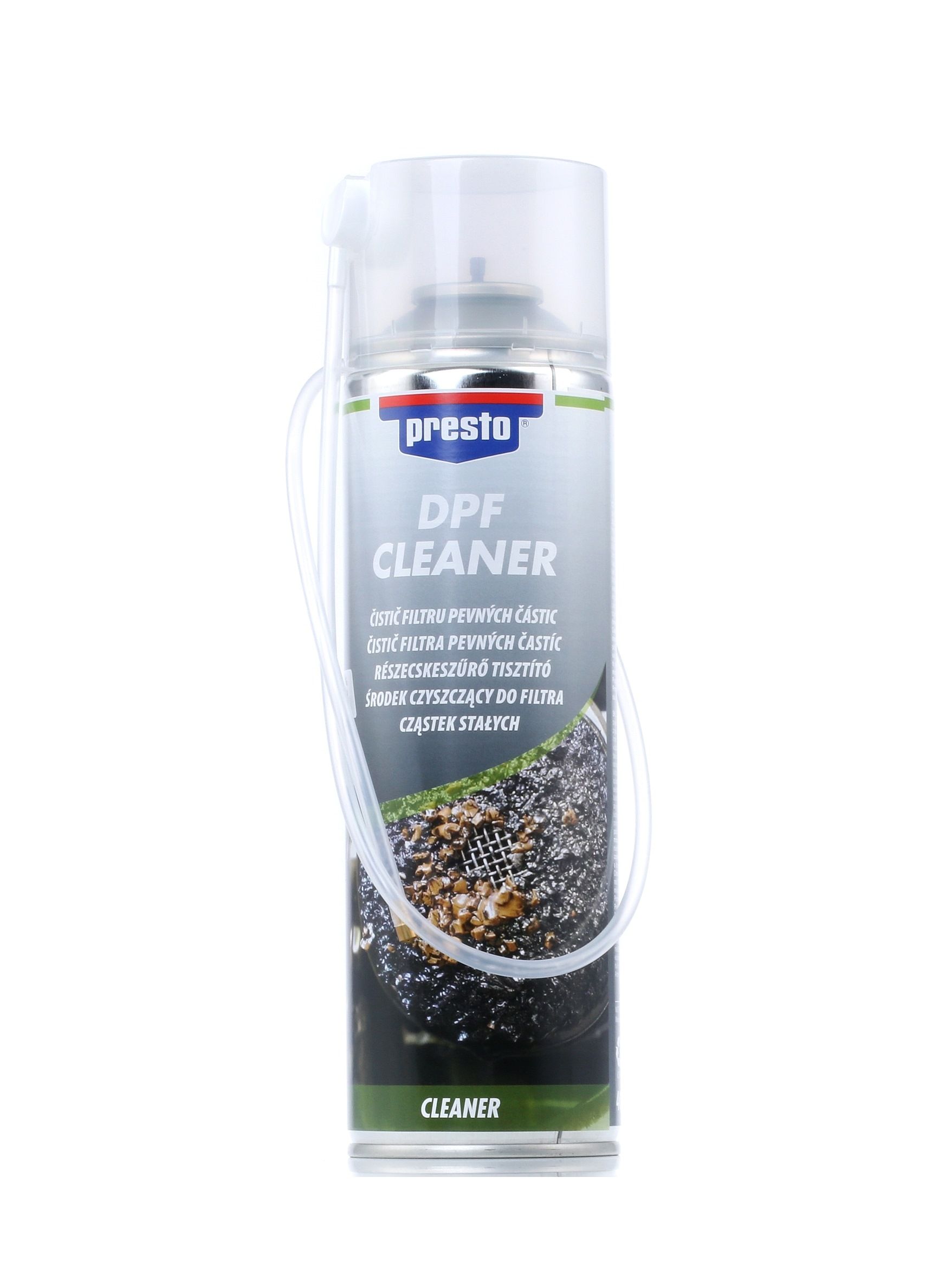 PRESTO DPF cleaner
Capacity: 400ml
Article number: 416613
More
£13. 99
£34.98
for 1 litre
price incl. 20% VAT, excl. delivery costs
PRESTO DPF cleaner
Capacity: 400ml
Article number: 416613
More
£13. 99
£34.98
for 1 litre
price incl. 20% VAT, excl. delivery costs
 Article number: 00140198
More
£11. 49
£28.73
for 1 litre
price incl. 20% VAT, excl. delivery costs
Article number: 00140198
More
£11. 49
£28.73
for 1 litre
price incl. 20% VAT, excl. delivery costs
Comparing DPF Cleaning Costs and Methods
Choosing the right approach is critical. Using an additive when a professional clean is needed will only waste time and money, potentially leading to further component damage. The cost can escalate significantly if a blockage is ignored and the DPF ultimately requires full replacement, which can be a considerable expense depending on the vehicle model — both the RAC and ClickMechanic indicate replacement costs can run into the thousands of pounds in some cases.
| Cleaning Method | Typical UK Cost | Best For | Limitations |
|---|---|---|---|
| Fuel Additive (DIY) | £12 - £45 | Preventative maintenance; very early-stage, light soot. | Ineffective for blocked filters, limp mode, or ash removal. Does not fix the root cause. |
| Forced Regeneration | Costs vary, usually from £85 to £200 |
Clearing soot when passive regen fails. Note: may not be suitable if the filter is heavily blocked or if an underlying fault is present. |
Will not work if the filter is too heavily blocked or if there is an underlying fault. |
| On-Car Chemical Clean | £200 - £350 | Moderate to heavy soot blockages where the filter is still on the vehicle. | Less effective on heavy ash build-up compared to off-car methods. |
| Off-Car Deep Clean | Costs vary by vehicle; prices can be higher on complex or premium models | Severely blocked filters and high-mileage vehicles with ash build-up. | Requires more labour to remove and refit the DPF from the vehicle. |
The Legal Reality of DPF Removal (2025–2026)
While the cost of a replacement filter can be high, "deleting" or removing the DPF is not a legal solution for UK road users. Under Section 42 of the Road Traffic Act 1988, it is an offence to use a vehicle on public roads that has been modified so that it no longer complies with its original air pollutant emissions standards.
As of 2025-2026, DVSA MOT inspection rules have tightened; any evidence of a missing, hollowed-out, or tampered DPF results in an automatic MOT failure. Furthermore, motorists caught driving without a DPF face fixed penalties of up to £1,000 for cars and £2,500 for light goods vehicles, along with potential insurance invalidation.
Why Additives Often Fail

DPF blockages most commonly result from frequent short journeys that prevent the filter from reaching the temperatures needed to complete regeneration — a usage pattern issue rather than a mechanical fault. However, underlying component problems can also contribute or make blockages more likely. Common underlying causes include:
- Faulty temperature or pressure sensors
- Issues with the EGR (Exhaust Gas Recirculation) valve
- Incorrect engine oil specification
- Air intake or turbocharger leaks
An aftermarket bottle of additive cannot diagnose or repair these faults. Pouring it into the tank is a gamble that ignores the root cause. Note: this is distinct from the factory-fitted, on-board fuel-borne catalyst systems — such as Eolys — found in certain diesel vehicles from manufacturers including Peugeot, Citroën, Ford, and Volvo. These are part of the vehicle's original engineering and work via a dedicated dosing system; they are not interchangeable with aftermarket pour-in products. A reputable technician will always perform diagnostics first to identify why the DPF has blocked before attempting any cleaning. Ignoring this step will almost certainly lead to the filter blocking again in a short period.
Conclusion
DPF cleaner additives have a limited role as a preventative tool for healthy diesel engines, but they are not a fix for a blocked filter. When your dashboard displays a DPF warning light, or the car enters limp mode, the problem has progressed beyond the capabilities of any pour-in solution. Professional cleaning is a highly effective and proven method to restore your DPF, saving you from the immense cost of a replacement. It is vital to address the root cause of the blockage to prevent a recurrence. When sourcing replacement sensors or other engine management components to resolve the underlying issue, it is crucial to use quality car parts. By consulting advisors at AUTODOC, you can source Low-SAPS oils to the correct ACEA specification for your vehicle and compatible differential pressure sensors — both of which can help support DPF system health and may reduce the risk of premature ash accumulation when used as part of a properly maintained, correctly specified engine.