Table of Contents

 22 December 2025 (updated)
 Engine Oil
General Information
Engine oil is a specially developed lubricant for internal combustion engines that plays an important role in the safe and efficient operation of motor vehicles. It performs several functions in the engine and contributes significantly to the lifespan and performance of the engine.
Engine oil performs various tasks in the internal combustion engine that go far beyond mere lubrication. Its main function is to minimise friction between moving metal parts such as pistons, piston rings, connecting rods, crankshaft, and camshaft. By forming a thin lubricating film, the oil prevents direct metal contact and thus significantly reduces wear.
Another important task is heat dissipation. The oil absorbs heat from hot engine components and transports it via the oil circuit to the oil pan or oil cooler, where it is released. This is important for components such as piston crowns and turbochargers.
The cleaning function is another essential aspect. Modern engine oils contain detergents and dispersants that keep combustion residues, metal abrasion, and other impurities in suspension so that they do not lead to deposits. Detergents neutralise acidic components from combustion or oxidation. The oil filter eventually removes these suspended particles. In addition, engine oil helps to reduce the escape of combustion gases through the oil film between piston rings and cylinder wall, thereby maintaining compression and engine performance.
Types of Engine Oil

Engine oils are classified according to their manufacturing method, with three main categories having been established:
Mineral Oils
Conventional mineral oils are obtained directly from crude oil through refining processes. They offer a cost-effective basic supply for older vehicles or engines with low performance requirements. However, mineral oils have lower temperature and oxidation stability and shorter change intervals than synthetic oils.
Semi-Synthetic Oils
Semi-synthetic oils combine mineral base oils with synthetic components in a ratio of approximately 70:30. This mixture offers:
- improved flow properties at low temperatures
- higher oxidation stability than pure mineral oils
- balanced price-performance ratio
- longer change intervals
Fully Synthetic Oils
Fully synthetic engine oils are produced by chemical synthesis and offer the highest performance. They are characterised by:
- excellent low-temperature properties
- thermal stability at high temperatures
- reduced evaporation losses
- optimal protection under extreme conditions
- longest change intervals
Sold by AUTODOC Sold by AUTODOC Sold by AUTODOC Sold by AUTODOC Sold by AUTODOC
-16%
 Article number: 5011987001831
More
compared to
RRP
£22.73
£18. 99
£18.99
for 1 litre
price incl. 20% VAT, excl. delivery costs
Article number: 5011987001831
More
compared to
RRP
£22.73
£18. 99
£18.99
for 1 litre
price incl. 20% VAT, excl. delivery costs
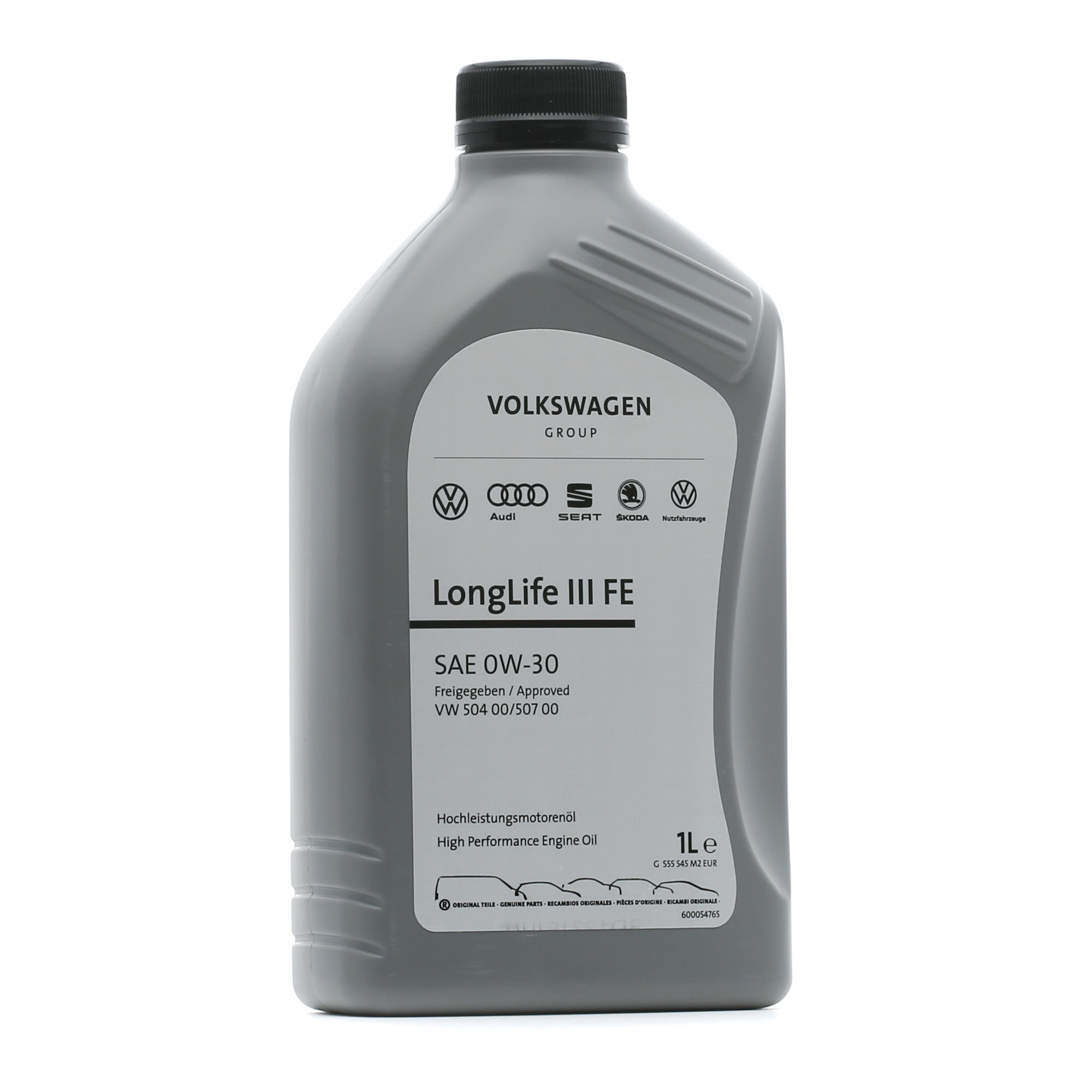 VAG Engine oil
0W-30, 1l
Article number: GS55545M2
£12. 99
£12.99
for 1 litre
price incl. 20% VAT, excl. delivery costs
VAG Engine oil
0W-30, 1l
Article number: GS55545M2
£12. 99
£12.99
for 1 litre
price incl. 20% VAT, excl. delivery costs
 Article number: 83212365929
More
£27. 49
£27.49
for 1 litre
price incl. 20% VAT, excl. delivery costs
-51%
Article number: 83212365929
More
£27. 49
£27.49
for 1 litre
price incl. 20% VAT, excl. delivery costs
-51%
 Article number: 104039
More
compared to
RRP
£103.26
£50. 49
£12.62
for 1 litre
price incl. 20% VAT, excl. delivery costs
Article number: 104039
More
compared to
RRP
£103.26
£50. 49
£12.62
for 1 litre
price incl. 20% VAT, excl. delivery costs
 Article number: 08880-80845
More
£57. 99
£11.60
for 1 litre
price incl. 20% VAT, excl. delivery costs
Article number: 08880-80845
More
£57. 99
£11.60
for 1 litre
price incl. 20% VAT, excl. delivery costs
Standards and Classification Systems
Engine oils are classified according to internationally standardised systems that enable clear identification of oil properties. These standards define both physical properties such as viscosity and performance requirements for various engine types and operating conditions. The most important classification systems complement each other in practice and are often used together.
SAE Viscosity Grades
The SAE system (Society of Automotive Engineers) classifies engine oils according to their viscosity at different temperatures. The designation follows the "xW-y" scheme:
- W-number (Winter): Flow behaviour at –18 °C to –35 °C
- 0W: down to –35 °C
- 5W: down to –30 °C
- 10W: down to –25 °C
- 15W: down to –20 °C
- High-temperature number: Viscosity at 100 °C
- 20, 30, 40, 50, 60 (increasingly viscous)
The smaller the number before the "W", the better the flow behaviour in cold weather. The higher the number after the "W", the more viscous the oil is in hot weather. If both properties are present, it is referred to as low-friction oil.
ACEA Classification
The ACEA defines European quality standards:
- A-classes: Petrol engines (ACEA A1/B1, ACEA A3/B3, ACEA A3/B4, ACEA A5/B5)
- B-classes: Diesel engines without particulate filter
- C-classes: Engines with exhaust aftertreatment (C1, ACEA C2, ACEA C3, C4, C5)
- E-classes: Heavy-duty commercial vehicle diesel engines
API Standards
The American Petroleum Institute defines performance categories:
- S-categories: Service (petrol engines)
- Current standards: SN, SP (since 2020)
- C-categories: Commercial (diesel engines)
- Current standards: CK-4, FA-4
Higher letters denote newer, more advanced specifications with better protective properties and environmental compatibility.
The correct type of oil for a specific car model depends on the manufacturer, engine type, and multiple other factors. Mixing different types of engine oil is generally not recommended.
Manufacturer Specifications
In addition to the standards listed above, vehicle manufacturers issue their own specifications (e.g. VW 504.00, BMW Longlife-04, Mercedes-Benz MB 229.5). These are often binding and ensure that the engine oil meets all specific requirements of the respective engine (e.g. oil consumption, exhaust aftertreatment, and lubrication channels).
Durability and Change Intervals

The durability and consumption of engine oil depend on various factors and are strongly influenced by driving conditions. City traffic with frequent cold and warm cycles stresses the oil more than motorway driving. Short distances are particularly critical as the engine never reaches its optimal operating temperature.
Recommended change intervals vary depending on oil type, engine, and operating conditions:
- Mineral oil: 5,000–10,000 km or every 6–12 months
- Semi-synthetic oil: 10,000–15,000 km or every 12 months
- Fully synthetic and long-life oil: 15,000–30,000 km or every 12–24 months
Sold by AUTODOC Sold by AUTODOC Sold by AUTODOC Sold by AUTODOC Sold by AUTODOC
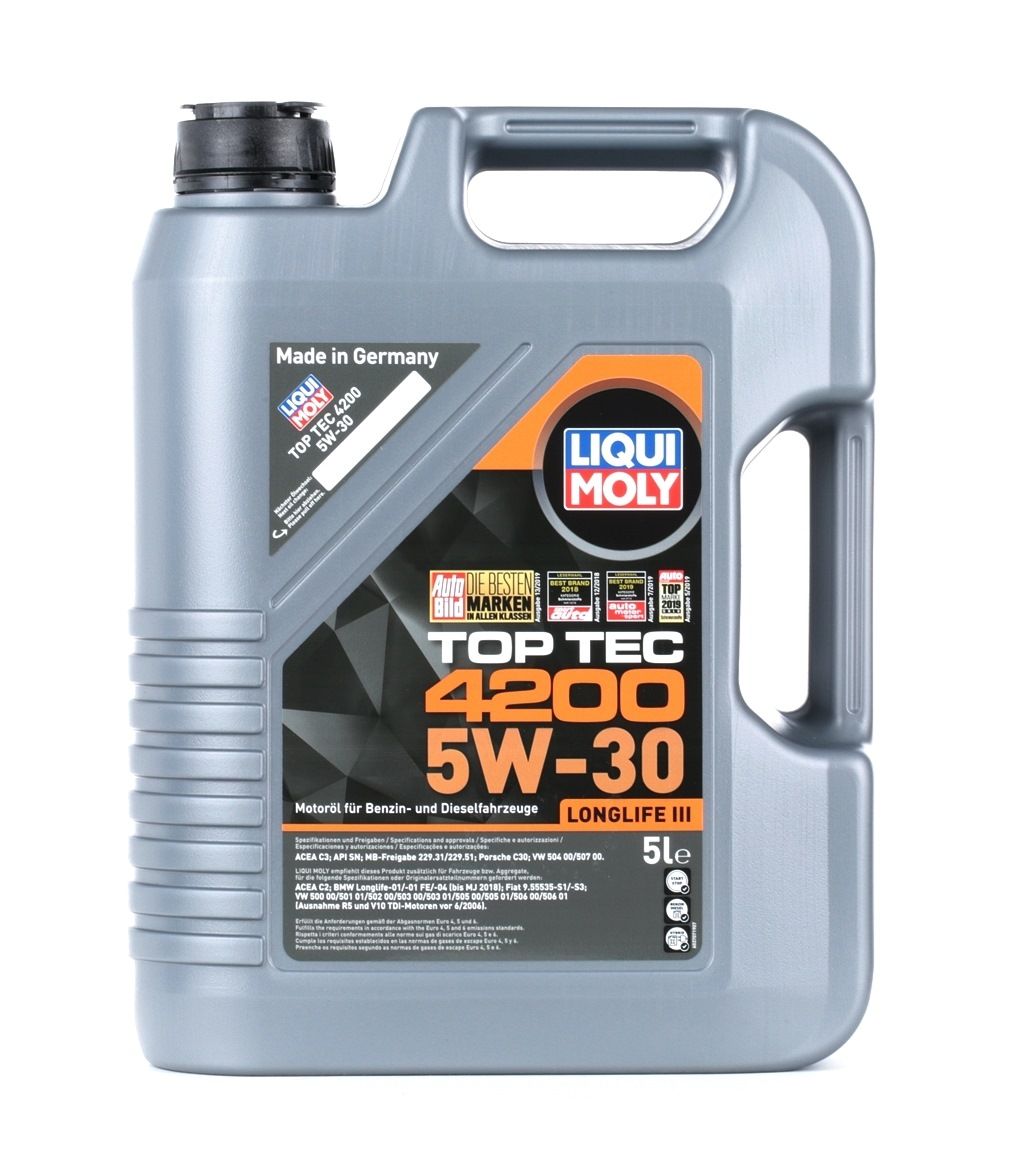 LIQUI MOLY Engine oil
5W-30, 5l
Article number: 3707
More
£71. 99
£14.40
for 1 litre
price incl. 20% VAT, excl. delivery costs
LIQUI MOLY Engine oil
5W-30, 5l
Article number: 3707
More
£71. 99
£14.40
for 1 litre
price incl. 20% VAT, excl. delivery costs
 Article number: 212579
More
£89. 49
£17.90
for 1 litre
price incl. 20% VAT, excl. delivery costs
Article number: 212579
More
£89. 49
£17.90
for 1 litre
price incl. 20% VAT, excl. delivery costs
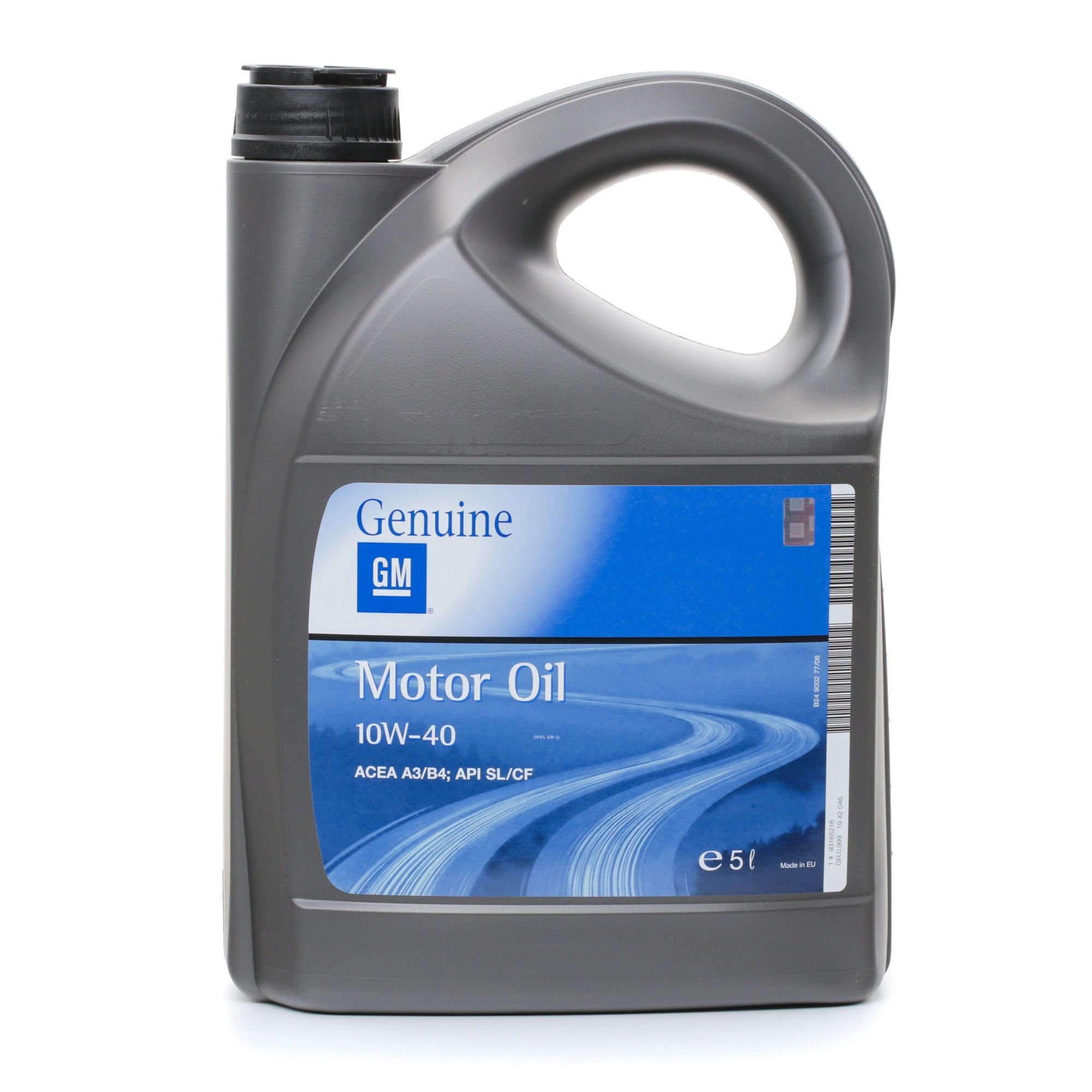 OPEL GM Engine oil
10W-40, 5l, Part Synthetic Oil
Article number: 19 42 046
More
£29. 49
£5.90
for 1 litre
price incl. 20% VAT, excl. delivery costs
OPEL GM Engine oil
10W-40, 5l, Part Synthetic Oil
Article number: 19 42 046
More
£29. 49
£5.90
for 1 litre
price incl. 20% VAT, excl. delivery costs
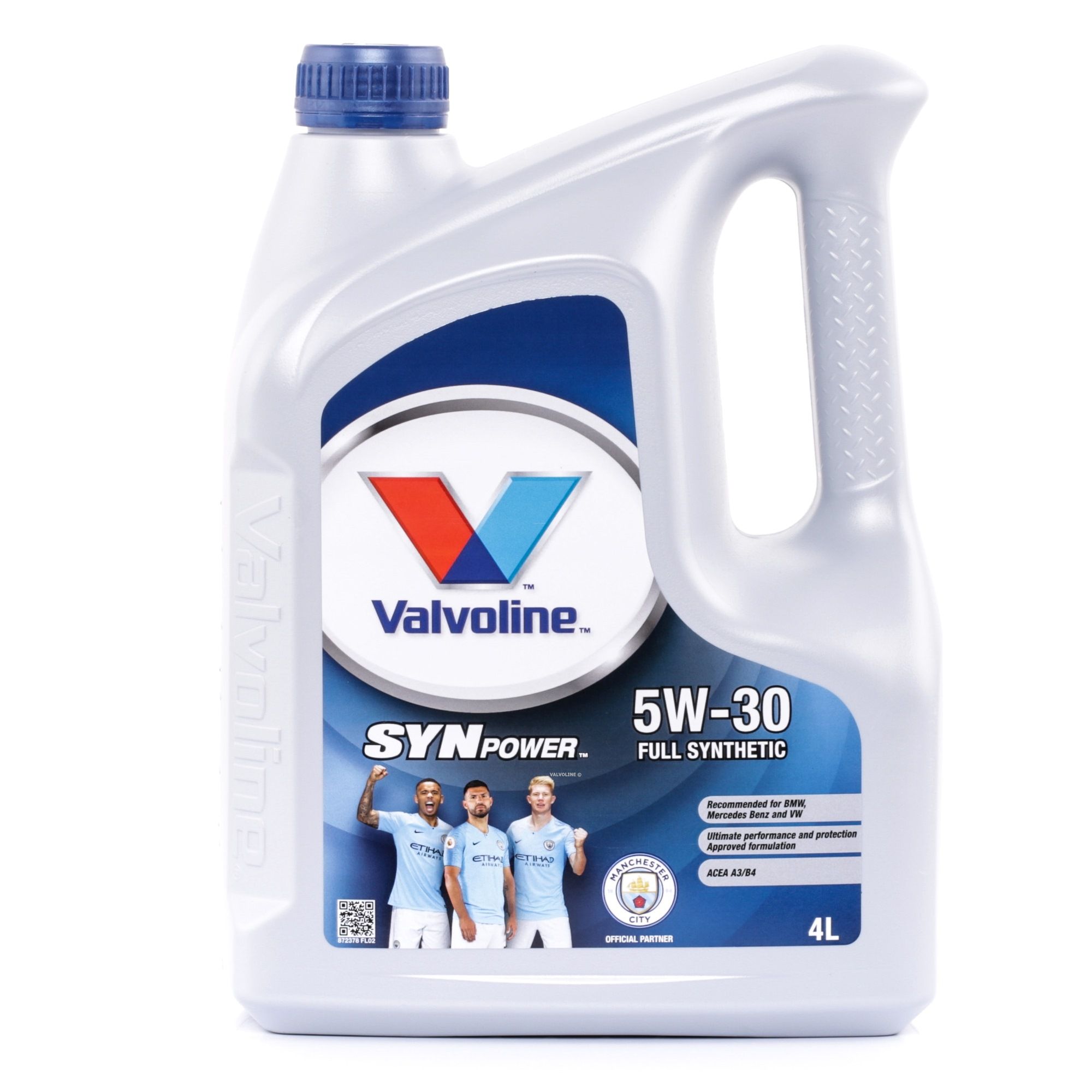 Valvoline Engine oil
5W-30, 4l
Article number: 872378
More
£35. 99
£9.00
for 1 litre
price incl. 20% VAT, excl. delivery costs
Valvoline Engine oil
5W-30, 4l
Article number: 872378
More
£35. 99
£9.00
for 1 litre
price incl. 20% VAT, excl. delivery costs
 Article number: 157EA4
More
£42. 99
£10.75
for 1 litre
price incl. 20% VAT, excl. delivery costs
Article number: 157EA4
More
£42. 99
£10.75
for 1 litre
price incl. 20% VAT, excl. delivery costs
Modern vehicles often have service interval displays or oil sensors that take into account operating conditions such as temperature, load, and driving style. These systems can determine more precise change times than rigid specifications.
Under extreme conditions such as frequent short trips, heavy trailer operation, sporty driving, or strong climatic influences, the change intervals can be shortened by approximately 30–50%.
The cost of an oil change typically ranges from £50 to £150, depending on the vehicle model, oil type (conventional, semi-synthetic, or fully synthetic), and the garage. This usually includes the oil, oil filter, and labor.
Possible Problems and Symptoms
A low oil level causes considerable damage to the engine in the long run. Failure to top up the oil leads to insufficient lubrication and thus to increased wear. Oil loss often occurs due to leaky seals, defective oil pans, or porous hoses. A typical symptom is oil stains under the vehicle.
Repairing an oil leak costs from £100 for a minor seal replacement to over £1000 for more complex issues involving major engine components or extensive diagnostic work. Both to protect the engine and for environmental reasons, oil leaks need to be repaired as soon as possible.
If the oil level is too high, the oil can foam, causing the lubricating film to break down. In addition, the pressure in the crankcase increases, which can lead to leaks or damage to seals.
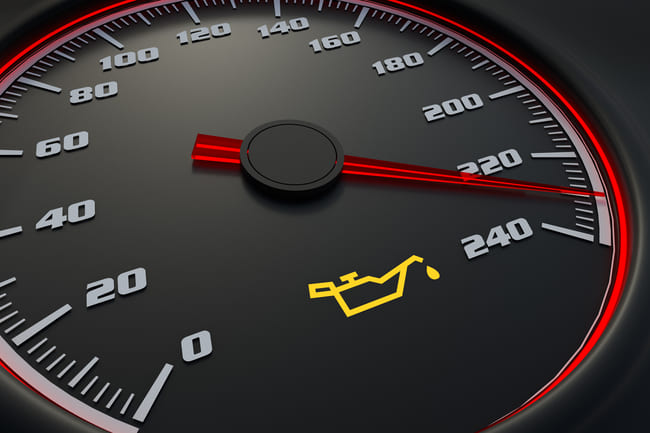
An illuminated oil warning light indicates, among other things, a low oil level, a pressure drop in the oil circuit, or a malfunction in the sensor system. Checking the oil level is the first step in determining the cause.
Disposal and Environmental Protection
The proper disposal of used oil is important for environmental protection, as even one litre of used oil can contaminate up to one million litres of drinking water. Used oils are subject to strict legal regulations.
Waste Return and Collection Points
- Council recycling centres and oil banks accept used oil in household quantities.
- Waste oil may not be mixed with other substances.
- Oil filters and oily waste must be disposed of separately.
Recycling: A large part of the collected used oil is recycled materially or energetically. Refined used oils can be reused as base oil.
Improper disposal via wastewater, residual waste, or into the environment is punishable by law and is subject to fines of up to £5,000. Used oil must never enter the sewage system or soil.