Table of Contents

 30 September 2025 (updated)
 Mitsubishi Outlander engines
The Mitsubishi Outlander has established itself as a reliable family SUV since its launch in 2001 and offers a remarkably diverse range of Mitsubishi Outlander engines across four generations. From proven naturally aspirated engines to innovative plug-in hybrid systems, the technological evolution of the Outlander demonstrates the continuous development of Japanese engineering.

Mitsubishi Outlander Generation I (2001-2006)
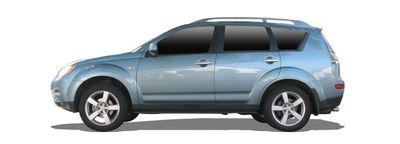
The first Mitsubishi Outlander generation was characterized by robust but technically simple naturally aspirated engines that were characterized by exceptional durability. With proper maintenance, these Mitsubishi Outlander engines easily reached 400,000 to 500,000 kilometers, with major repairs usually only becoming necessary after 250,000 kilometers. The engines of this generation were considered almost indestructible, but required regular maintenance of the spark plugs and air filters. The absolute top engine was the 2.4-liter MIVEC with 160 hp, which optimally combined power and reliability. Technically, Mitsubishi relied on proven naturally aspirated engines without turbocharging, which was the reason for the high reliability, but also led to higher fuel consumption.
Mitsubishi Outlander petrol engines: Generation I (2001-2006)
The Mitsubishi Outlander petrol engine range consisted exclusively of naturally aspirated engines from the 4G series. The entry-level engine was a 2.0-liter 4G63 with 136 hp, which was characterized by its robustness, but reached its limits when the vehicle was fully loaded. The more powerful 2.4-liter 4G69 MIVEC with 160 hp offered significantly more pulling power and became the most popular engine of this generation. Both Mitsubishi Outlander engines featured multi-point injection and were renowned for their durability. Typical problems were limited to worn ignition coils after 120,000 kilometers and occasional leaks at the valve cover gaskets. The 4G69 MIVEC with variable valve timing was considered a technical highlight and offered a good balance between performance and consumption.
| Mitsubishi Outlander engine | Power output | Fuel consumption | Typical weaknesses | Rating |
|---|---|---|---|---|
| 2,0 4G63 | 136 HP | 9.2-10.1 l/100km | Ignition coils, valve cover gasket | Good |
| 2.4 4G69 MIVEC | 160 HP | 9.8-10.6 l/100km | Very robust, occasional valve cover | Very good |
Mitsubishi Outlander Generation II (2006-2012)

The second Mitsubishi Outlander generation brought significant technical advancements and introduced diesel engines to the range for the first time. Mileage remained at a high level with 350,000 to 450,000 kilometers for the petrol engines and 400,000 to 500,000 kilometers for the robust diesels. Major repairs were usually due between 180,000 and 220,000 kilometers, with the diesel engines requiring significantly less maintenance. The absolute highlight was the 2.2 DI-D with 156 hp - an exceptionally reliable common-rail diesel that was still running smoothly after 300,000 kilometers. Technically, Mitsubishi introduced modern common-rail injection and improved MIVEC systems, which increased efficiency but also increased complexity.
Mitsubishi Outlander petrol engines: Generation II (2006-2012)
The Mitsubishi Outlander gasoline engine range was expanded with a smaller 2.0-liter engine and retained the proven 2.4-liter. The 2.0-liter 4B11 with 147 hp replaced the old 4G63 and offered better efficiency and higher performance thanks to MIVEC technology. The 2.4-liter 4B12 MIVEC with 170 hp became the favorite among the Mitsubishi Outlander engines of this generation. Both engines had aluminum blocks and modern injection systems. Occasional defects in the MIVEC actuators after 150,000 kilometers and leaks in the water pumps were problematic. The 4B12 with 2.4 liters was considered to be particularly durable and offered sufficient power for trailer operation.
Mitsubishi Outlander diesel engines: Generation II (2006-2012)
Mitsubishi offered an Outlander diesel engine for the first time: the 2.2 DI-D (4HK) with 156 hp and common-rail injection. This Mitsubishi Outlander diesel quickly became the most reliable engine of the entire generation. With a torque of 380 Nm, it offered excellent pulling power and low fuel consumption of just 6.8 liters per 100 km. The 2.2 DI-D had a particulate filter and complied with the Euro 4 standard. Typical problems were limited to occasional defects in the turbocharger after 200,000 kilometers and clogged particulate filters on predominantly short journeys. Overall, this Mitsubishi Outlander engine was considered one of the best diesels in its class.
| Mitsubishi Outlander engine | Power output | Fuel consumption | Typical weaknesses | Rating |
|---|---|---|---|---|
| 2.0 4B11 MIVEC | 147 HP | 8.4-9.2 l/100km | MIVEC servomotors, water pump | Good |
| 2.4 4B12 MIVEC | 170 HP | 9.1-9.8 l/100km | Very robust, occasional water pump | Very good |
| 2.2 DI-D | 156 HP | 6.5-6.8 l/100km | Turbocharger, particulate filter for short distances | Very good |
Mitsubishi Outlander Generation III (2012-2021)
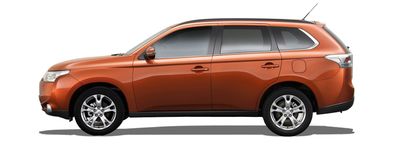
The third Mitsubishi Outlander generation marked the transition to electrification and launched the world's first plug-in hybrid SUV, the PHEV. The conventional engines continued to achieve high mileages of 300,000 to 400,000 kilometers, with the 2.4-liter petrol engines being considered particularly reliable. Major repairs were usually required between 200,000 and 250,000 kilometers. The absolute top engine was the PHEV with 203 hp system output - a technical masterpiece that combined purely electric driving with the flexibility of a gasoline engine. Technically, Mitsubishi introduced CVT transmissions and refined the MIVEC technology, while the PHEV set completely new standards with two electric motors and a petrol engine.
Mitsubishi Outlander petrol engines: Generation III (2012-2021)
The Mitsubishi Outlander petrol engine range focused on two proven engines: the 2.0-liter 4J11 with 150 hp and the 2.4-liter 4J12 with 167 hp. Both engines featured MIVEC technology and aluminum blocks for low weight. The 2.4-liter developed into the most reliable conventional engine of this generation with only occasional problems with the ignition coils after 120,000 kilometers. As standard, these Mitsubishi Outlander engines were mated to CVT transmissions, resulting in a smooth but sluggish ride. The 2.0-liter engine was considered sufficient for city driving, but reached its limits when driving on the freeway and towing a trailer. Both engines were characterized by low maintenance costs and high reliability.
Mitsubishi Outlander Plug-in Hybrid: Generation III (2012-2021)
The Mitsubishi Outlander PHEV revolutionized the SUV segment with its innovative drive concept. The system combined a 2.0-liter petrol engine (121 hp) with two electric motors (82 hp each) to produce a system output of 203 hp. With an electric range of 54 kilometers and a total fuel consumption of just 1.9 liters per 100 km, this Mitsubishi Outlander engine set new standards. The all-wheel drive system worked purely electrically via separate motors on the front and rear axles. Occasional software updates and the limited towing capacity of only 1,500 kg were problematic. Despite the complex technology, the PHEV proved to be surprisingly reliable, with the 8-year battery warranty providing additional peace of mind.
| Mitsubishi Outlander engine | Power output | Fuel consumption | Typical weaknesses | Rating |
|---|---|---|---|---|
| 2.0 4J11 MIVEC | 150 HP | 7.8-8.4 l/100km | Ignition coils, sluggish CVT | Good |
| 2.4 4J12 MIVEC | 167 HP | 8.2-8.8 l/100km | Very robust, occasional ignition coils | Very good |
| PHEV | 203 HP | 1.9 l/100km + electricity | Software updates, limited towing capacity | Very good |
Mitsubishi Outlander Generation IV (2021-today)
The current Mitsubishi Outlander generation is fully electrified and represents Mitsubishi's vision for the future of mobility. All engines are electrified, with the advanced PHEV powertrain taking center stage. As this generation has only been available since 2021, long-term experience is not yet available, but the first tests show promising approaches. The top-of-the-range engine is the PHEV with 252 PS system output, which offers significantly more power than its predecessor. The new platform promises mileages of over 350,000 kilometers, with the electrical components designed for a service life of at least 200,000 kilometers.
Mitsubishi Outlander plug-in hybrid: Generation IV (2021-today)
The new fourth-generation Mitsubishi Outlander PHEV offers a significantly increased system output of 252 hp by combining a 2.4-liter petrol engine (131 hp) with two powerful electric motors (95 hp each at the front, 100 hp at the rear). The electric range has been increased to 84 kilometers, while total fuel consumption is just 1.4 liters per 100 km. The revised S-AWC all-wheel drive system offers three driving modes and a towing capacity of up to 1,500 kg. This modern Mitsubishi Outlander engine has a 20 kWh battery and supports both AC and DC fast charging. Initial experience shows improved driving performance and higher efficiency, although long-term reliability cannot yet be assessed.
Mitsubishi Outlander petrol engines: Generation IV (2021-today)
In parallel to the PHEV, Mitsubishi continues to offer a conventional 2.4-liter petrol engine, but only in selected markets. This further developed engine is based on the proven 4J12, but has been optimized for greater efficiency and delivers 181 hp. In Europe, however, Mitsubishi is concentrating entirely on the PHEV drive, which means that this Mitsubishi Outlander engine is not available here.
| Mitsubishi Outlander engine | Power output | Fuel consumption | Typical weaknesses | Rating |
|---|---|---|---|---|
| PHEV (Gen IV) | 252 HP | 1.4 l/100km + electricity | No long-term experience yet | Very good |
| 2.4 petrol engine | 181 HP | 8.0-8.6 l/100km | Not available in Europe | Good |

Conclusion: The best Mitsubishi Outlander engines of all generations
The development of Mitsubishi Outlander engines shows a consistent evolution from robust naturally aspirated engines to highly efficient hybrid systems. While the early generations impressed with their exceptional reliability and durability, Mitsubishi is now focusing on innovative electrification without compromising on quality. PHEV technology has established itself as the Outlander's trademark and unique selling point.
- Best Mitsubishi Outlander gasoline engine:
The 2.4-liter 4G69 MIVEC (160 hp, Generation I) combines legendary reliability with ample power and is considered virtually indestructible.
- Best Mitsubishi Outlander diesel engine:
The 2.2 DI-D (156 hp, Generation II) offers the best combination of reliability, economy and pulling power across all generations.
- Best Mitsubishi Outlander hybrid engine:
The fourth generation PHEV (252 hp, 2021-present) with its high electric range of 84 km and lowest fuel consumption ever.
For maintenance and spare parts for all Mitsubishi Outlander generations, AUTODOC offers a comprehensive range of original and quality spare parts with fast delivery and expert advice.
TOP Products on the topic: