Table of Contents

 4 May 2026
 Reverse Camera Installation Costs in the UK
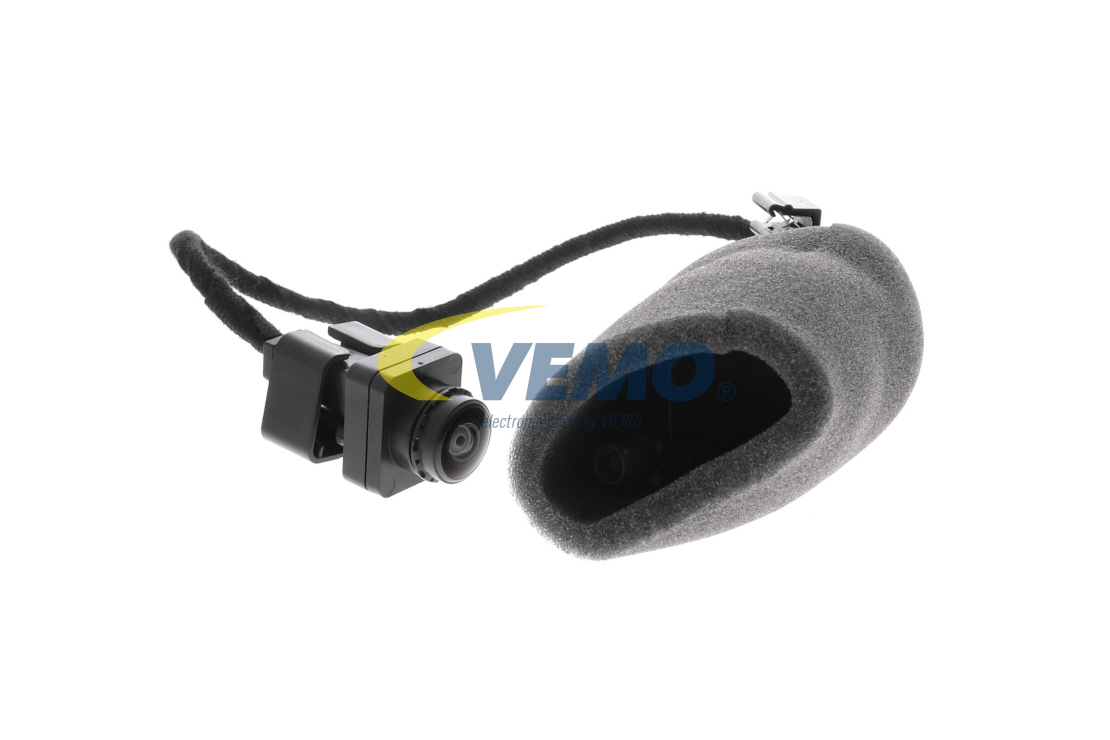
The cost to add a reverse camera to a car in the UK can vary significantly, depending on whether you choose a basic, self-installed kit or a fully integrated system fitted by a professional. Entry-level universal kits are available at relatively modest prices, whereas a high-definition camera system that integrates with your car's existing infotainment screen will involve higher equipment and labour costs, pushing the total considerably higher. How much you ultimately pay will depend on the type of kit, your vehicle, and whether you opt for professional installation.
What factors influence the cost?

Several key variables determine the final price of a reversing camera installation. Understanding these factors, which include the camera system type, display method, vehicle complexity, and installer labour rates, will help you budget accordingly. The quality of the camera itself is also a major consideration, with features like image resolution, night vision capability, and weatherproofing directly impacting the component cost.
The complexity of your vehicle's electronics plays a major role. Modern cars with integrated infotainment systems and complex CAN bus wiring require more specialised knowledge and potentially coding to enable the camera feed. This is a more labour-intensive job than fitting a camera to an older car with a simple wiring loom. Furthermore, the physical design of the car can affect installation time; routing wires through the tailgate of a hatchback or estate can be more intricate than on a saloon.
Geographic location is another crucial factor. Labour rates in London and the South East are invariably higher than in the North of England, Scotland, or Wales. As a general rule, a specialist auto electrician or independent garage in a major city is likely to charge more per hour than one in a smaller town, and this regional variation can have a meaningful impact on the overall cost of fitting. A main dealer will almost always be the most expensive option for fitting an OEM (Original Equipment Manufacturer) or approved camera system.
Sold by AUTODOC Sold by AUTODOC Sold by AUTODOC Sold by AUTODOC Sold by AUTODOC
 Article number: 78-548#
£60. 49price incl. 20% VAT, excl. delivery costs
Article number: 78-548#
£60. 49price incl. 20% VAT, excl. delivery costs
 Article number: 02163
£13. 49price incl. 20% VAT, excl. delivery costs
Article number: 02163
£13. 49price incl. 20% VAT, excl. delivery costs
 Article number: 02165
£10. 49price incl. 20% VAT, excl. delivery costs
Article number: 02165
£10. 49price incl. 20% VAT, excl. delivery costs
 Article number: EPP013
£28. 99price incl. 20% VAT, excl. delivery costs
Article number: EPP013
£28. 99price incl. 20% VAT, excl. delivery costs
 Article number: EPP018
£25. 99price incl. 20% VAT, excl. delivery costs
Article number: EPP018
£25. 99price incl. 20% VAT, excl. delivery costs
Key Technical and Legal Considerations
Beyond the basic choice of system, several technical and legal points must be considered for a safe and compliant installation. These aspects can influence your choice of components and are vital for avoiding future issues, such as failing an MOT test.
- Camera Quality: Higher-specification cameras cost more but offer significant benefits. Look for a high waterproof rating (e.g., IP68 or IP69K) to withstand the British weather, effective night vision using infrared (IR) LEDs for low-light clarity, and a wide viewing angle (130–170 degrees) to minimise blind spots.
- MOT Compliance: A standard aftermarket reversing camera, used only as a parking aid, is not in itself a routine MOT inspection item. However, two specific issues can arise. First, if a monitor is positioned such that it significantly impairs the driver's forward field of vision, this could constitute a defect under the visibility section of the MOT inspection manual. Second, if a camera-and-screen system is installed as a mandatory indirect vision device — that is, it is actually replacing a required mirror — the MOT manual requires both the camera and screen to be inspected and fully functional.
- Legal Placement: The camera unit must be mounted so that it does not obscure the number plate in any way. UK law requires number plates to be correctly fixed, legible, and free from any feature or obstruction that affects the appearance or readability of the characters. In particular, if mounting a camera requires drilling through or close to the plate, care must be taken not to compromise the legibility of the characters or damage the plate's reflective surface, as an illegally displayed number plate can result in a fine of up to £1,000 and an MOT failure. As a practical matter, poor fixing or plate damage can also prevent identification by Automatic Number Plate Recognition (ANPR) cameras used for enforcement purposes, but it is the legal requirement for a legible, unobscured plate that is the primary obligation.
- Insurance Declaration: Although a reversing camera is a safety-oriented addition, any aftermarket modification to a vehicle — including the fitting of a camera system — should be declared to your insurer. Policies vary: some insurers treat minor safety additions as immaterial, while others may adjust your premium or require an amendment to your cover. Failing to disclose a modification that your insurer considers material can invalidate your policy, leaving you uninsured in the event of a claim. Check your policy terms or contact your insurer before installation.
- Recording and Data Privacy: Some camera systems — particularly combined dashcam and reversing camera units — record and store video footage. If the camera captures identifiable individuals or vehicles outside the boundary of your private property (for example, on a public road or in a shared car park), UK data protection law may apply. This is particularly relevant if the vehicle is used for business purposes. In those cases, you should ensure you have a lawful basis for recording and that footage is stored securely and not retained for longer than necessary. The ICO's guidance on dashcams and video surveillance provides further detail.
Types of Reversing Camera Systems and Associated Costs

The market is saturated with different types of reversing camera kits, each with its own price point and installation requirements. Your choice here is the single biggest determinant of the overall cost.
- Wireless Camera Kits: These are often the cheapest and easiest to install. The camera, usually mounted on the number plate, transmits a signal to a small, separate monitor. While they eliminate running a video cable through the car, their signal can be prone to interference, and they still require a power source for both units. Parts can range from £40 to £120.
- Wired Camera Kits: Offering a more stable and reliable image, wired systems require a physical cable to be run from the camera at the rear to the monitor at the front. This increases installation complexity and time. The kits themselves are similarly priced to wireless ones, but professional fitting will cost more.
- Integration with Existing Screen: For cars with a factory-fitted infotainment screen, this is the neatest solution. It involves fitting a camera and a special interface module that allows the video feed to be displayed on the original screen when reverse gear is selected. The parts are more expensive, often £150 – £300, and installation is a job for a professional.
- Replacement Mirror Monitors: This option replaces your existing rearview mirror with one that has an integrated LCD screen. In most systems, the screen is invisible until you engage reverse, at which point it displays the camera feed, though the exact behaviour can vary between models. This provides a very clean, factory-look installation. Kits typically cost between £80 and £200.
The table below gives a general indication of how costs can build up across system types, including professional installation. Prices will vary depending on your vehicle, chosen installer, and the specific components required, so treat these as illustrative rather than definitive figures.
| Camera System Type | Estimated Parts Cost | Estimated Labour Cost | Estimated Total Cost |
|---|---|---|---|
| Basic Wireless Kit with Dash Monitor | £40 – £120 | Varies by installer and vehicle | Parts cost plus fitting |
| Wired Kit with Dash Monitor | £50 – £150 | Higher than wireless due to added complexity | Parts cost plus fitting |
| Replacement Mirror Monitor Kit | £80 – £200 | Varies by installer and vehicle | Parts cost plus fitting |
| Infotainment Integration Kit | £150 – £300 | Typically, the highest of all options | Parts cost plus fitting |
Conclusion
Adding a reversing camera is a worthwhile safety and convenience upgrade for any vehicle. The total cost of a basic, professionally fitted system will depend on your chosen kit and installer, but entry-level supply-and-fit options are available at the more modest end of the scale. If you desire a seamless, factory-finish look that uses your car's built-in screen, the cost will be considerably higher, reflecting both the price of the interface module and the specialist labour involved. While DIY installation is possible for simpler kits, the complexity of modern vehicle wiring and the need to ensure a legal, MOT-compliant fitment mean professional installation is the recommended route. When sourcing components, especially for an integrated system, it is crucial to get the right parts for your specific make and model. If you are unsure which camera or interface module is compatible with your vehicle, the AUTODOC team is on hand to help you find the right accessories for a secure and reliable installation.