Table of Contents
 5 September 2025
 VW Polo 6R engines
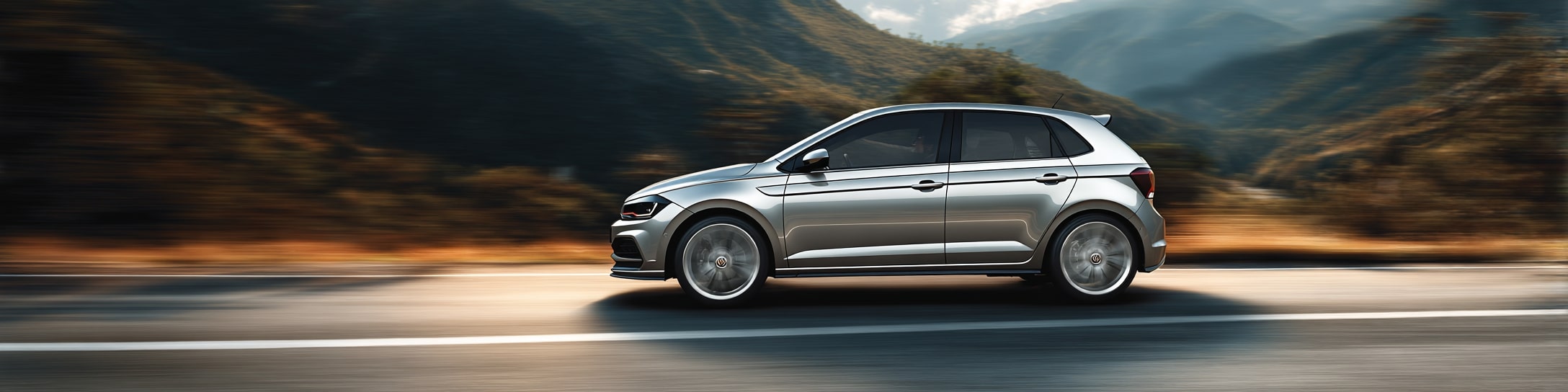
The VW Polo 6R, which was produced from 2009 to 2017, marked a new era in the small car class and quickly established itself as one of the most successful compact cars in Europe. The fifth Polo generation offered an impressive range of engines, from economical TSI petrol engines to efficient TDI diesel units. The technological evolution during the eight-year production period included significant innovations such as the introduction of BlueMotion technology and the continuous improvement of direct injection.

VW Polo 6R engines - first generation (2009-2014)

The first generation VW Polo 6R established new benchmarks in terms of reliability and typically achieved mileages of between 250,000 and 350,000 kilometers with proper maintenance. Major repairs were usually only due after 180,000 to 220,000 kilometers, with the 1.2 TSI with 105 PS proving to be the absolute highlight of the generation. The technical highlights of this era included the introduction of TSI direct injection and the further development of the proven TDI technology. In a market comparison, the Polo 6R successfully positioned itself against competitors such as the Ford Fiesta and Opel Corsa, particularly due to its superior build quality and long-term durability.
VW Polo 6R TSI petrol engines: first generation (2009-2014)
The TSI petrol engines of the first Polo 6R generation set new standards in the small car class with their combination of direct injection and turbocharging. The range included the 1.2 TSI with 90 PS (engine code CBZB), the outstanding 1.2 TSI with 105 PS (CBZA) and the sporty 1.4 TSI with 180 PS in the GTI (CAVE). The 1.2 TSI 105 PS proved to be the optimum balance between performance and consumption, while the 90 PS variant occasionally exhibited problems with the timing chain after 120,000 to 150,000 kilometers.
The strengths of the TSI engines lie in their direct throttle response, low consumption of 5.2 to 6.8 liters and robust construction. Weak points mainly concern the high-pressure pump at high mileages and occasional ignition coil failures after around 100,000 kilometers. The GTI engine CAVE is considered to be particularly reliable and easily reaches 300,000 kilometers in sporty use.
VW Polo 6R MPI petrol engines: first generation (2009-2014)
The naturally aspirated engines with intake manifold injection formed the entry-level segment of the Polo 6R engine range and impressed with their uncomplicated technology. The 1.2 MPI with 60 PS (CGPA) and 70 PS (CGPB) as well as the 1.4 MPI with 85 PS (CGGA) were available. These engines regularly achieve mileages of over 400,000 kilometers and are considered virtually indestructible.
The MPI engines score points with minimal maintenance costs, simple repairs and absolute reliability. Typical problems are limited to wearing parts such as spark plugs every 30,000 kilometers and occasional lambda sensor failures after 150,000 kilometers. The 1.4 MPI 85 PS offers the best balance between driving performance and long-term durability in this category.
VW Polo 6R TDI diesel engines: first generation (2009-2014)
The TDI diesel range included the 1.2 TDI with 75 hp (CFWA) and the popular 1.6 TDI in various power levels from 90 hp (CAYC) to 105 hp (CAYB). These engines established the Polo as one of the most economical small cars with fuel consumption figures from 3.8 liters per 100 kilometers. The 1.6 TDI with 90 PS proved to be the most reliable diesel engine of the generation.
Characteristic strengths of the TDI engines are their exceptionally low fuel consumption, high torque even at low engine speeds and mileages of up to 500,000 kilometers. Problem areas concern the particulate filter on short journeys after 80,000 to 120,000 kilometers and occasional injector problems in the 1.2 TDI after 180,000 kilometers. The high-pressure pump only shows the first signs of wear after 250,000 kilometers in all TDI variants.
| Engine | Power (PS) | Consumption (l/100km) | Typical weaknesses | Rating |
|---|---|---|---|---|
| 1.2 MPI 60 HP | 60 | 6.2 | Lambda sensor after 150,000 km | Good |
| 1.2 MPI 70 HP | 70 | 6.0 | Minimal problems | Very good |
| 1.4 MPI 85 HP | 85 | 6.5 | Spark plugs every 30,000 km | Very good |
| 1.2 TSI 90 PS | 90 | 5.8 | Timing chain after 120,000 km | Good |
| 1.2 TSI 105 PS | 105 | 5.2 | High pressure pump at high mileage | Very good |
| 1.4 TSI 180 PS | 180 | 6.8 | Ignition coils after 100,000 km | Good |
| 1.2 TDI 75 PS | 75 | 4.2 | Injectors after 180,000 km | Average |
| 1.6 TDI 90 HP | 90 | 3.8 | Particle filter for short distances | Very good |
| 1.6 TDI 105 HP | 105 | 4.0 | DPF problem | Good |
VW Polo 6R Engines - Facelift Euro-6 (2014-2017)
The 2014 facelift saw the introduction of the Euro 6 emissions standard and significant technical improvements. Reliability reached new highs with typical mileages between 300,000 and 400,000 kilometers, while major repairs are usually only required after 200,000 kilometers. The 1.0 TSI with 95 PS established itself as the outstanding engine of this generation, combining state-of-the-art three-cylinder technology with exceptional efficiency. Technical innovations included the introduction of the revolutionary 1.0 TSI three-cylinder engine and improved exhaust gas aftertreatment in the diesel engines. This modernization strengthened the market position against new competition from the Peugeot 208 and Renault Clio.
VW Polo 6R TSI petrol engines: Facelift (2014-2017)
The revised TSI engine range was supplemented by the innovative 1.0 TSI three-cylinder engine, which was offered in two power levels with 95 PS (CHZB) and 110 PS (CHZD). The tried-and-tested 1.2 TSI remained in the range with 90 PS (CJZC) and 110 PS (CJZD), while the GTI continued to receive the 1.8 TSI with 192 PS (CJSA). The new 1.0 TSI impresses with its characteristic three-cylinder sound and impressively smooth running despite the odd number of cylinders.
The strengths of the facelift TSI engines lie in their improved fuel efficiency, reduced emissions and optimized durability. The 1.0 TSI shows occasional problems with the oil pump after 80,000 to 100,000 kilometers, while the 1.2 TSI variants retained their proven reliability. Particularly noteworthy is the improved timing chain in the 1.2 TSI, which now has a significantly longer service life.
VW Polo 6R MPI petrol engines: Facelift (2014-2017)
The naturally aspirated engines were fundamentally revised for the facelift and received new engine control units to meet the Euro 6 standard. The 1.2 MPI with 75 PS (CHFA) and the 1.4 MPI with 85 PS (CHGB) remained available, both with optimized combustion processes and improved exhaust gas aftertreatment. These engines retained their legendary long-term durability and continue to achieve mileages in excess of 400,000 kilometers.
The revised MPI engines score points with even lower maintenance costs and improved environmental compatibility while retaining the same robustness. No new weak points have been added, only the lambda sensors require more frequent checks due to the stricter emission standards. The 1.4 MPI remains the first choice for frequent drivers looking for maximum reliability at a moderate purchase price.
VW Polo 6R TDI diesel engines: Facelift (2014-2017)
The diesel range was completely redeveloped for Euro 6 and included the 1.4 TDI with 90 PS (CUTA) and the 1.6 TDI with 95 PS (CXMA). These engines were fitted with sophisticated exhaust gas aftertreatment systems with SCR catalytic converters and AdBlue injection. The 1.4 TDI with 90 PS proved to be the most reliable diesel engine of the facelift generation and offers an optimum compromise between performance and consumption.
The Euro 6 TDI engines impress with even lower fuel consumption figures from 3.5 liters and significantly reduced pollutant emissions. Problem areas relate to the more complex exhaust gas aftertreatment system, in particular the SCR catalytic converter after 120,000 to 150,000 kilometers and occasional AdBlue dosing problems. However, the basic engines show excellent durability and easily reach a mileage of 400,000 kilometers.
| Engine | Power (PS) | Consumption (l/100km) | Typical weaknesses | Rating |
|---|---|---|---|---|
| 1.2 MPI 75 HP | 75 | 5.9 | Lambda sensor more frequent check | Good |
| 1.4 MPI 85 HP | 85 | 6.3 | Minimal problems | Very good |
| 1.0 TSI 95 PS | 95 | 4.8 | Oil pump after 80,000 km | Good |
| 1.0 TSI 110 PS | 110 | 5.0 | Oil pump after 100,000 km | Good |
| 1.2 TSI 90 PS | 90 | 5.5 | Improved timing chain | Very good |
| 1.2 TSI 110 PS | 110 | 5.2 | High-pressure pump with high mileage | Very good |
| 1.8 TSI 192 PS | 192 | 6.5 | Ignition coils after 120,000 km | Good |
| 1.4 TDI 90 PS | 90 | 3.5 | SCR catalytic converter after 120,000 km | Good |
| 1.6 TDI 95 HP | 95 | 3.7 | AdBlue dosing unit | Average |

Conclusion: The best VW Polo 6R engines of all generations
The engine development of the VW Polo 6R shows a continuous evolution from proven technology to highly efficient, environmentally friendly drives. Across all generations, the model series has established itself as the benchmark for reliability and long-term durability in the small car class. The technological journey from the robust MPI naturally aspirated engines to the innovative TSI turbo engines and the highly efficient Euro 6 units reflects the transformation of the automotive industry.
- Best VW Polo 6R gasoline engine:
The 1.2 TSI with 105 PS (CBZA) from the first generation combines optimum driving performance with exceptional reliability and easily reaches 300,000 kilometers with moderate maintenance requirements.
- Best VW Polo 6R diesel engine:
The first-generation 1.6 TDI with 90 hp (CAYC) impresses with legendary durability, minimal fuel consumption of 3.8 liters and mileage of up to 500,000 kilometers with proper care.
- Most reliable all-rounder:
The 1.4 MPI with 85 hp from both generations is regarded as an almost indestructible engine for frequent drivers who value maximum long-term durability with minimum operating costs.
For all VW Polo 6R engines, you will find high-quality spare parts and wear components at AUTODOC at reasonable prices.