Table of Contents

 30 September 2025 (updated)
 Citroën Jumper engines
Since its launch in 1994, the Citroën Jumper has established itself as a reliable van, offering a diverse range of Citroën Jumper engines across three generations. Each generation has brought new technologies and different strengths, with diesel engines always at the heart of the range.

Citroën Jumper Generation I (1994-2006)
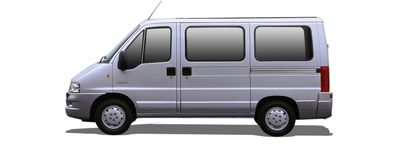
The first Citroën Jumper generation was a pioneering period for the French manufacturer in the large van segment and was characterized by robust but technically simple engines. With proper maintenance, mileage easily reached 400,000 to 500,000 kilometers, whereby the tried-and-tested 2.8 HDi diesel engines were particularly durable. Major engine damage due to timing belt tears was not uncommon if maintenance was neglected between 120,000 and 160,000 kilometers. The absolute top engine of this generation was the 2.8 HDi with 128 hp, which optimally combined power, reliability and reasonable fuel consumption. Typical repair intervals were between 80,000 and 120,000 kilometers for the timing belt and water pump.
Citroën Jumper petrol engines: Generation I (1994-2006)
The Citroën Jumper petrol engine range was very limited in the first generation and mainly comprised the 2.0 liter naturally aspirated engine with 109 hp. This engine proved to be robust, but not very economical for van use. The petrol engine was primarily designed for light payloads and achieved fuel consumption of 11-13 liters per 100 km. Due to its high fuel consumption and limited power for heavy loads, this engine was only available in small numbers and was mainly offered in southern European markets.
Citroën Jumper diesel engines: Generation I (1994-2006)
The Citroën Jumper diesels were initially dominated by the 1.9 TD with 69 hp (1994-1999), but this was quickly replaced by the more modern 2.5 TDI with 116 hp. The highlight was the 2.8 HDi with 128 hp, which was available from 2000 and offered common-rail injection. These Citroën Jumper HDi engines proved to be very durable and economical, with fuel consumption of 8-9 liters per 100 km. The 2.8 HDi developed into the most reliable engine of the entire generation and offered sufficient torque for heavy loads and trailer operation.
| Citroën Jumper engine | Power output | Fuel consumption | Typical weaknesses | Rating |
|---|---|---|---|---|
| 2.0 Petrol | 109 HP | 11.0-13.0 l/100km | High consumption, limited performance | Moderate |
| 1.9 TD | 69 HP | 8.5-9.5 l/100km | Loud, little power | Average |
| 2.5 TDI | 116 HP | 8.0-9.0 l/100km | Timing belt problems | Good |
| 2.8 HDi | 128 HP | 7.8-8.8 l/100km | Very robust, durable | Very good |
Citroën Jumper Generation II (2006-2014)
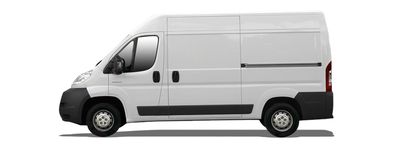
The second Citroën Jumper generation marked a significant technological leap and established itself as one of the most reliable vans in its class. With proper maintenance, most engines of this generation can easily reach 350,000 to 450,000 kilometers, with the 2.2 HDi diesel engines with 130 hp being particularly durable. Major engine failures have become rare; only the early 3.0 HDi engines occasionally exhibited turbocharger weaknesses. The absolute highlight was the 2.2 HDi with 130 hp - a technical masterpiece with an optimum balance between performance and consumption. The Euro 4 and later Euro 5 emissions standard was also introduced for the first time, which significantly improved environmental compatibility.
Citroën Jumper diesel engines: Generation II (2006-2014)
The Citroën Jumper diesel range comprised three main engines: the 2.2 HDi with 100, 110 and 130 hp and the powerful 3.0 HDi with 156 hp. The 2.2 HDi proved to be the heart of the range and offered the best combination of performance, consumption and reliability in the 130 hp version. These Citroën Jumper HDi engines featured modern common-rail injection with particulate filters and complied with the Euro 4 and Euro 5 standards. Although the 3.0 HDi offered more power, it was prone to turbocharger problems and higher fuel consumption, which is why it was considered less reliable.
| Citroën Jumper engine | Power output | Fuel consumption | Typical weaknesses | Rating |
|---|---|---|---|---|
| 2.2 HDi | 100 HP | 7.5-8.5 l/100km | Robust, economical | Good |
| 2.2 HDi | 110 HP | 7.8-8.8 l/100km | Very reliable | Very good |
| 2.2 HDi | 130 HP | 8.0-9.0 l/100km | Optimal balance | Very good |
| 3.0 HDi | 156 HP | 9.5-10.5 l/100km | Turbocharger problems | Moderate |
Citroën Jumper Generation III (2014-today)
The current Citroën Jumper generation relies on state-of-the-art diesel technology and represents Citroën's expertise in the van sector. All engines meet at least the Euro 6 standard and offer an excellent combination of performance, consumption and environmental compatibility. With proper maintenance, mileage can easily reach 400,000 to 500,000 kilometers, with the 2.0 BlueHDi diesel with 130 hp being particularly reliable. The top-of-the-range engine is the 2.0 BlueHDi with 180 hp, which combines sporty performance with high efficiency. The AdBlue technology ensures clean exhaust gases, but slightly increases operating costs.
Citroën Jumper diesel engines: Generation III (2014-today)
The Citroën Jumper diesel range is based entirely on the modern 2.0 BlueHDi engine, which is available in various power levels from 110 to 180 hp. These Citroën Jumper BlueHDi engines feature state-of-the-art common-rail injection with SCR catalytic converter and particulate filter. The 2.0 BlueHDi with 130 hp proved to be the most reliable and efficient engine of this generation, with a test consumption of only 6.8-7.8 liters per 100 km. All engines require AdBlue for exhaust gas purification, which incurs additional running costs but significantly improves environmental performance.
Citroën Jumper electric drive: Generation III (2020-today)
From 2020, the Citroën e-Jumper was introduced as a fully electric variant. With 122 hp and a range of up to 340 km, it offers an environmentally friendly alternative for urban traffic. The electric motor proves to be low-maintenance and quiet, but is only suitable for special applications due to the high purchase costs and limited range.
| Citroën Jumper engine | Power output | Fuel consumption | Typical weaknesses | Rating |
|---|---|---|---|---|
| 2.0 BlueHDi | 110 HP | 6.5-7.5 l/100km | AdBlue consumption | Good |
| 2.0 BlueHDi | 130 HP | 6.8-7.8 l/100km | Very reliable | Very good |
| 2.0 BlueHDi | 140 HP | 7.0-8.0 l/100km | Robust, efficient | Very good |
| 2.0 BlueHDi | 160 HP | 7.5-8.5 l/100km | High performance | Good |
| 2.0 BlueHDi | 180 HP | 8.0-9.0 l/100km | Sporty, but thirsty | Good |
| Electric | 122 HP | 25-30 kWh/100km | Limited range | Average |

Conclusion: The best Citroën Jumper engines of all generations
The development of Citroën Jumper engines shows a continuous improvement in terms of reliability, efficiency and environmental compatibility. While the early generations used simpler technology, the modern BlueHDi engines offer an excellent balance between performance and consumption. The diesel engines have remained at the heart of the range throughout all generations, establishing the Citroën Jumper as one of the most reliable vans on the market.
- Best Citroën Jumper diesel engine:
The 2.0 BlueHDi (130 hp, Generation III) offers the best combination of reliability, economy and environmental compatibility across all generations.
- Best Citroën Jumper performance engine:
The 2.0 BlueHDi (180 hp, Generation III) combines high performance with modern exhaust technology and is ideal for heavy loads and trailer operation.
- Best Citroën Jumper electric drive:
The e-Jumper (122 hp, Generation III) with its range of up to 340 km for environmentally conscious urban logistics.
For maintenance and spare parts for all Citroën Jumper generations, AUTODOC offers a comprehensive range of original and quality spare parts with fast delivery.
TOP Products on the topic: