Table of Contents

 30 September 2025 (updated)
 Citroën Jumpy engines
Since its introduction in 1995, the Citroën Jumpy has established itself as a reliable van in the mid-size segment and offers a diverse range of Citroën Jumpy engines across three generations. The technological development of Citroën Jumpy engines shows a clear progress from simple naturally aspirated engines to modern common-rail diesels and electric drives.

Citroën Jumpy Generation I (1995-2006)
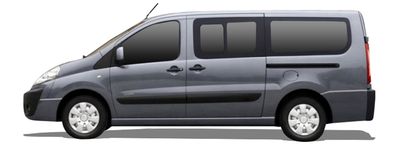
The first Citroën Jumpy generation was characterized by robust but technically simple engines that easily reached 350,000 to 450,000 kilometers with proper maintenance. Major repairs were typically due between 200,000 and 300,000 kilometers, usually involving injection pumps or turbochargers. The absolute top engine of this generation was the 2.0 HDi with 109 hp, which optimally combined power, reliability and acceptable fuel consumption values. The Citroën Jumpy engines of this era were characterized by their ease of maintenance and low electronics density, which made them the preferred workhorses for craftsmen and tradesmen. Compared to competitors such as the VW T4 or Ford Transit, the Jumpy offered a cheaper alternative with similar reliability.
Citroën Jumpy petrol engines: Generation I (1995-2006)
The Citroën Jumpy petrol engine range was straightforward and mainly comprised the 2.0-liter naturally aspirated engine with 100 kW (136 hp). This Citroën Jumpy engine was based on the proven XU unit from PSA and was considered reliable but thirsty. With a fuel consumption of 10-12 liters per 100 km, it was not very attractive for commercial use. The Citroën Jumpy petrol engines occasionally suffered from problems with the cylinder head gasket at high mileages, but otherwise showed few abnormalities. The engine was coupled with a 5-speed manual gearbox and offered sufficient power for city traffic, but reached its limits when fully loaded and at highway speeds.
Citroën Jumpy diesel engines: Generation I (1995-2006)
The 1.9 TD with 51 kW (69 hp) dominated the Citroën Jumpy diesel range as the entry-level engine, followed by the more powerful 1.9 TD with 66 kW (90 hp). From 1999, the more modern 2.0 HDi with 80 kW (109 hp) was added, which already had common-rail injection. The Citroën Jumpy 2.0 HDi developed into the most reliable engine of the entire generation - especially the variants produced from 2000 onwards with improved electronics proved to be very durable and economical. These Citroën Jumpy engines offered a fuel consumption of only 6.5-7.5 liters per 100 km and already met the Euro 3 standard. The older 1.9 TD engines were robust, but noisy and less economical.
| Citroën Jumpy engine | Power output | Fuel consumption | Typical weaknesses | Rating |
|---|---|---|---|---|
| 2.0 petrol engine | 136 HP | 10.0-12.0 l/100km | High fuel consumption, cylinder head gasket | Average |
| 1.9 TD | 69-90 HP | 7.5-8.5 l/100km | Loud, less economical | Good |
| 2.0 HDi | 109 HP | 6.5-7.5 l/100km | Very robust from 2000 | Very good |
Citroën Jumpy Generation II (2007-2016)
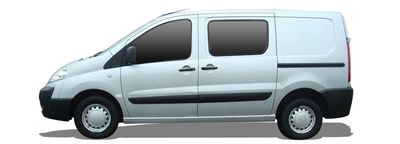
The second Citroën Jumpy generation marked a significant technological leap and offered a wide range of modern common-rail diesel engines for the first time. Most Citroën Jumpy engines of this generation can easily reach 300,000 to 400,000 kilometers with proper maintenance, with the 2.0 HDi diesels with 120 hp being considered particularly well-balanced. Major repairs are typically due between 180,000 and 250,000 kilometers, usually involving the turbocharger or the injection system. The absolute highlight was the 2.2 HDi with 155 hp - a powerful unit with high torque, which also handled heavy loads effortlessly. The Citroën Jumpy engines of this generation had particulate filters as standard for the first time and complied with the Euro 4 and Euro 5 standards. Compared to competitors such as the Fiat Scudo or Peugeot Expert (identical in construction), the Jumpy offered identical technology at often lower prices.
Citroën Jumpy diesel engines: Generation II (2007-2016)
The Citroën Jumpy diesel range consisted exclusively of HDi engines with common-rail injection. The entry-level engine was the 1.6 HDi with 66 kW (90 hp), followed by the 2.0 HDi in various output levels from 88 kW (120 hp) to 120 kW (163 hp). The most powerful Citroën Jumpy engine was the 2.2 HDi with 114 kW (155 hp). All Citroën Jumpy engines were turbocharged and had a particulate filter as standard. The Citroën Jumpy 2.0 HDi with 88 kW (120 hp) proved to be the most reliable engine of this generation - it offered a well-balanced combination of performance, fuel consumption and durability. The larger 2.2 HDi engines were occasionally prone to turbocharger problems with neglected maintenance, but offered excellent pulling power for heavy loads.
Citroën Jumpy petrol engines: Generation II (2007-2016)
Petrol engines played a subordinate role in the second generation. Only in some markets was a 2.0-liter petrol engine with 100 kW (136 hp) available, but this was quickly withdrawn from the range due to its high fuel consumption and low demand. These Citroën Jumpy petrol engines were based on the proven PSA unit, but were unsuitable for commercial use.
| Citroën Jumpy engine | Power output | Fuel consumption | Typical weaknesses | Rating |
|---|---|---|---|---|
| 1.6 HDi | 90 HP | 6.0-6.8 l/100km | Sufficient for light loads | Good |
| 2.0 HDi | 120-163 HP | 6.5-7.2 l/100km | Very balanced (120 hp) | Very good |
| 2.2 HDi | 155 HP | 7.0-7.8 l/100km | Occasional turbocharger damage | Good |
| 2.0 Petrol engine | 136 HP | 11.0-13.0 l/100km | High fuel consumption | Moderate |
Citroën Jumpy Generation III (2016-today)
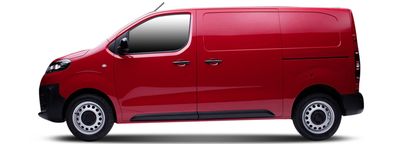
The current Citroën Jumpy generation represents the state of the art in van technology and also offers a fully electric drive for the first time. The Citroën Jumpy engines of this generation can easily reach 250,000 to 350,000 kilometers with proper maintenance, whereby the 2.0 BlueHDi diesel engines are considered to be particularly clean and efficient. Major repairs have become rarer, but are typically due between 150,000 and 200,000 kilometers and usually concern the complex exhaust gas aftertreatment system. The absolute top-of-the-range engine is the 2.0 BlueHDi with 180 hp - a technical masterpiece with high torque and low emissions. The all-electric ë-Jumpy, which offers a range of up to 330 kilometers, has also been available since 2020. The Citroën Jumpy engines all meet the Euro 6d standard and have modern exhaust gas aftertreatment with SCR catalytic converter and particulate filter.
Citroën Jumpy diesel engines: Generation III (2016-today)
The Citroën Jumpy diesel range is based entirely on BlueHDi technology with SCR exhaust gas aftertreatment. Available are the 1.5 BlueHDi with 75 kW (102 hp) and 96 kW (130 hp) as well as the 2.0 BlueHDi with 90 kW (122 hp), 130 kW (177 hp) and 132 kW (180 hp). All Citroën Jumpy engines feature turbocharging, common-rail injection and modern exhaust gas aftertreatment. The Citroën Jumpy 2.0 BlueHDi with 130 kW (177 hp) is developing into the best engine of this generation - it offers excellent driving performance, low emissions and high reliability. The smaller 1.5 BlueHDi engines are more economical but less powerful with heavy loads. All Citroën Jumpy engines can be combined with a 6-speed manual or 8-speed automatic transmission.
Citroën Jumpy electric drive: Generation III (2016-today)
The Citroën ë-Jumpy has been available as a fully electric version since 2020. The Citroën Jumpy electric motor delivers 100 kW (136 hp) and offers a maximum torque of 260 Nm from the first rpm. Depending on the battery size (50 kWh or 75 kWh), the ë-Jumpy achieves a range of up to 230 or 330 kilometers according to WLTP. The charging time at a 100 kW fast charging station is around 30 minutes for 80% battery capacity. The Citroën Jumpy electric drive offers low operating costs and is ideal for urban delivery traffic, but has limitations in terms of payload and range.
| Citroën Jumpy engine | Power output | Fuel consumption | Typical weaknesses | Rating |
|---|---|---|---|---|
| 1.5 BlueHDi | 102-130 HP | 5.5-6.2 l/100km | Less power with heavy loads | Good |
| 2.0 BlueHDi | 122-180 HP | 6.0-6.8 l/100km | Very balanced (177 hp) | Very good |
| Electric motor | 136 HP | 22-26 kWh/100km | Range, payload | Good |

Conclusion: The best Citroën Jumpy engines of all generations
The development of Citroën Jumpy engines shows a continuous improvement in terms of efficiency, cleanliness and driving comfort. While the early generations impressed with their robustness and simplicity, the modern BlueHDi engines offer an optimal combination of performance, consumption and environmental compatibility. The electric drive opens up new possibilities for emission-free urban traffic, but is not yet suitable for all applications.
- Best Citroën Jumpy diesel engine:
The Citroën Jumpy 2.0 BlueHDi (177 hp, Generation III) combines modern technology with high performance and excellent reliability for all applications.
- Most reliable Citroën Jumpy engine:
The Citroën Jumpy 2.0 HDi (109 hp, Generation I) offers proven technology and easily achieves high mileages with minimal maintenance costs.
- Best Citroën Jumpy electric drive:
The Citroën ë-Jumpy electric motor (136 hp, Generation III) with its long range of up to 330 km and low operating costs for urban use.
For maintenance and spare parts for all Citroën Jumpy generations, AUTODOC offers a comprehensive range of original and quality spare parts with fast delivery and expert advice.
TOP Products on the topic: