Table of Contents

 30 September 2025 (updated)
 Fiat Grande Punto engines
Since its launch in 2005, the Fiat Grande Punto has established itself as a popular small car, offering a diverse range of engines with characteristic Italian features over two generations. The technological development of the Fiat Grande Punto engines reflects the change from proven naturally aspirated engines to modern turbo units.

Fiat Grande Punto Generation I (2005-2012)
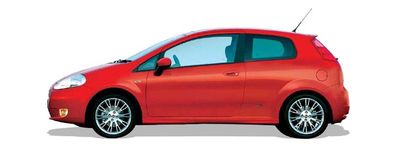
The first generation of the Fiat Grande Punto was characterized by robust but technically simple engines that could easily reach 250,000 to 300,000 kilometers with proper maintenance. Typical major repairs were usually due between 120,000 and 180,000 kilometers, with clutch changes and timing belt replacements being the main cost items. The absolute top engine of this generation was the 1.9 JTD Multijet with 120 hp, which optimally combined reliability, economy and sufficient power. Technically, this era was characterized by proven Multijet diesel technology and simple but robust petrol engines. In the small car segment, the Grande Punto competed successfully with the VW Polo and Opel Corsa, with the Italian brand scoring points above all with attractive prices and lively handling.
Fiat Grande Punto petrol engines: Generation I (2005-2012)
The Fiat Grande Punto petrol engine range initially comprised the proven 1.2 8V FIRE engine with 48 kW (65 PS), which was later supplemented by a 16V version with 59 kW (80 PS). The most powerful naturally aspirated engine was the 1.4 16V with 70 kW (95 PS), which was characterized by smooth power delivery and moderate fuel consumption figures. From 2007, the first turbocharged petrol engine was added in the form of the 1.4 T-Jet with 88 kW (120 hp), which, however, already showed early turbocharger weaknesses. These Fiat Grande Punto engines typically suffered from problems with the ignition coil unit and occasional idling problems, but were generally durable. The 1.4 16V developed into the most reliable petrol engine of this generation, while the T-Jet, despite its liveliness, was notable for turbocharger damage and increased maintenance requirements.
Fiat Grande Punto diesel engines: Generation I (2005-2012)
The Fiat Grande Punto diesels were dominated by the proven Multijet technology with the 1.3 Multijet in various output levels from 55 kW (75 hp) to 66 kW (90 hp). The top-of-the-range engine was the 1.9 Multijet with 88 kW (120 hp) and 96 kW (130 hp), which still fitted into the small car despite its size. These Fiat Grande Punto engines were characterized by outstanding economy and robust technology. The 1.3 Multijet with 90 hp became a bestseller and offered an excellent balance between performance and consumption. Typical weaknesses only became apparent in the injection system and turbocharger after high mileages, whereby the smaller 1.3 variants were significantly more durable than the powerful 1.9 engines.
| Fiat Grande Punto engine | Power output | Fuel consumption | Typical weaknesses | Rating |
|---|---|---|---|---|
| 1.2 8V FIRE | 65 HP | 6.2-6.8 l/100km | Ignition coils, sluggish | Average |
| 1.2 16V | 80 HP | 6.0-6.5 l/100km | Idle problems | Good |
| 1.4 16V | 95 HP | 6.4-7.0 l/100km | Very robust | Very good |
| 1.4 T-Jet | 120 HP | 7.2-8.1 l/100km | Turbocharger, high maintenance | Moderate |
| 1.3 Multijet | 75-90 HP | 4.2-4.8 l/100km | Durable, economical | Very good |
| 1.9 Multijet | 120-130 HP | 5.1-5.7 l/100km | Fuel injection, turbocharger | Good |
Fiat Grande Punto Generation II (2012-2018)
The second generation of the Fiat Grande Punto, known as the Punto, brought modernized engines with improved efficiency, but also new technical challenges. Mileage expectations remained similar at 220,000 to 280,000 kilometers, with the new start-stop systems putting additional strain on the starter and battery. Major repairs continued to be concentrated in the 100,000 to 160,000 kilometer range, with more frequent problems with the electronic systems. The outstanding engine of this generation was the revised 1.3 Multijet II with 95 hp, which combined proven diesel technology with modern emission standards. Technically, Fiat introduced the TwinAir concept - a revolutionary two-cylinder turbo that polarized opinion. In the market environment, the Punto increasingly struggled against stronger competition from the Ford Fiesta and Peugeot 208, with its market position weakening.
Fiat Grande Punto petrol engines: Generation II (2012-2018)
The petrol engine range was expanded to include the innovative 0.9 TwinAir Turbo with 63 kW (85 hp) and 77 kW (105 hp), which stood out with its characteristic two-cylinder sound. The tried-and-tested FIRE engines 1.2 8V (51 kW/69 hp) and 1.4 16V (57 kW/77 hp) remained in the range, but with revised electronics. The TwinAir developed into the most problematic engine of this generation - despite its innovativeness and low fuel consumption, it suffered from problems with the engine mounts, vibrations and a susceptible timing chain. The traditional FIRE engines continued to prove reliable, but looked increasingly outdated. The 1.4 16V remained the most solid petrol engine, while the TwinAir, despite its technical sophistication, disappointed with high repair costs and unreliability.
Fiat Grande Punto diesel engines: Generation II (2012-2018)
The diesel range focused on the further developed 1.3 Multijet II, which was offered in power levels from 70 kW (95 hp) to 77 kW (105 hp). These Fiat Grande Punto engines already met the Euro 5 standard and had optimized injection systems. The 1.3 Multijet II with 95 hp established itself as the most reliable engine of the entire second generation and offered an excellent combination of economy, performance and durability. Compared to the first generation, the injection nozzles were designed to be more robust and exhaust gas recirculation was improved. Typical problems were limited to the replacement of the particulate filter after high mileage and occasional weaknesses in the high-pressure pump, the latter mainly occurring when maintenance was neglected.
| Fiat Grande Punto engine | Performance | Fuel consumption | Typical weaknesses | Rating |
|---|---|---|---|---|
| 1.2 8V FIRE | 69 HP | 5.9-6.4 l/100km | Outdated technology | Average |
| 1.4 16V | 77 HP | 6.1-6.7 l/100km | Proven, robust | Good |
| 0.9 TwinAir | 85-105 HP | 4.1-4.9 l/100km | Timing chain, vibrations, bearings | Problematic |
| 1.3 Multijet II | 95-105 HP | 3.8-4.3 l/100km | Very economical and robust | Very good |

Conclusion: The best Fiat Grande Punto engines of all generations
The development of the Fiat Grande Punto engines shows an interesting dichotomy between proven Italian diesel technology and experimental petrol engines. While the Multijet diesels were consistently convincing, innovative approaches such as the TwinAir brought more problems than advantages. The traditional FIRE petrol engines proved to be solid but unexciting companions for everyday use.
- Best Fiat Grande Punto petrol engine:
The 1.4 16V (95 hp, Generation I) combines proven technology with adequate performance and high reliability at moderate running costs.
- Best Fiat Grande Punto diesel engine:
The 1.3 Multijet II (95 hp, Generation II) offers the optimum balance of economy, reliability and modern exhaust technology for all applications.
- Most innovative engine:
The 0.9 TwinAir Turbo was technically fascinating, but too fragile for everyday use - a bold attempt that unfortunately failed to impress.
For the maintenance and repair of all Fiat Grande Punto engines, AUTODOC offers a comprehensive selection of original spare parts and high-quality alternatives with reliable delivery.
TOP Products on the topic: