Table of Contents

 30 September 2025 (updated)
 Dacia Sandero engines
Since its launch in 2008, the Dacia Sandero has established itself as an affordable small car with solid engineering, offering a proven range of engines across three generations. The development shows a clear focus on reliability and low running costs, with each generation offering technical improvements while keeping maintenance costs low.

Dacia Sandero Generation I (2008-2012)
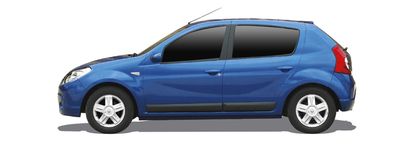
The first Dacia Sandero generation was based on the proven Renault Clio platform and relied on tried and tested Renault engines that had already proven their worth millions of times over. With proper maintenance, the mileage easily reached 250,000 to 300,000 kilometers, with the diesel engines even managing up to 400,000 kilometers. Major repairs were usually only necessary after 150,000 to 200,000 kilometers, mainly on the clutch and chassis. The absolute top engine of this generation was the 1.5 dCi with 70 hp, which perfectly combined economy, reliability and low maintenance costs. The Dacia Sandero engines of this generation were characterized by their simplicity and robustness - complex technology was deliberately avoided, resulting in low repair costs.
Dacia Sandero petrol engines: Generation I (2008-2012)
The Dacia Sandero petrol engine range mainly comprised the tried and tested 1.4 MPI engine with 55 kW (75 hp) and the 1.6 MPI with 64 kW (87 hp). These Dacia Sandero engines were based on the robust Renault K-series and deliberately dispensed with turbocharging or complex injection technology. The 1.4 MPI became the most reliable petrol engine of the first generation - it was virtually indestructible, required only basic maintenance and achieved a test fuel consumption of 6.5-7.2 liters per 100 km. Typical problems were limited to worn ignition coils after 100,000 kilometers and occasional throttle valve problems, which were inexpensive to fix.
Dacia Sandero diesel engines: Generation I (2008-2012)
The Dacia Sandero 1.5 dCi with 50 kW (68 hp) and later 51 kW (70 hp) came from the proven Renault diesel family and was considered one of the most economical engines in its class. These Dacia Sandero diesel engines achieved a test consumption of just 4.2-4.8 liters per 100 km and proved to be extremely durable. The 1.5 dCi was equipped with a simple turbocharger and direct injection, but did not have complex exhaust gas purification. Typical weaknesses only became apparent after high mileage: The turbocharger could wear out after 200,000 kilometers, and the injection nozzles occasionally needed cleaning. Nevertheless, the Dacia Sandero 1.5 dCi was considered one of the most reliable diesel engines of its time.
| Dacia Sandero engine | Power output | Fuel consumption | Typical weaknesses | Rating |
|---|---|---|---|---|
| 1.4 MPI | 75 HP | 6.5-7.2 l/100km | Ignition coils, throttle valve | Very good |
| 1.6 MPI | 87 HP | 7.0-7.8 l/100km | Robust, not very common | Good |
| 1.5 dCi | 68-70 HP | 4.2-4.8 l/100km | Turbocharger after 200,000 km | Very good |
Dacia Sandero Generation II (2012-2020)

The second Dacia Sandero generation continued the tradition of reliable and cost-effective engines, but for the first time introduced modern technologies such as start-stop systems and improved emission control. Mileage remained high at 250,000 to 350,000 kilometers, with the revised diesel engines becoming even more durable. Major engine damage remained rare and maintenance costs increased only minimally. The outstanding engine of this generation was the 0.9 TCe with 90 hp - a small three-cylinder turbo that was surprisingly reliable and economical despite its small size. The second generation Dacia Sandero engines benefited from the further development of Renault technology, but retained the focus on simplicity and low running costs.
Dacia Sandero petrol engines: Generation II (2012-2020)
The Dacia Sandero petrol engine range was expanded to include the innovative 0.9 TCe with 66 kW (90 hp), while the proven 1.2 MPI engines with 55 kW (75 hp) formed the basis. The Dacia Sandero 0.9 TCe surprised with its reliability despite turbocharging and achieved a test consumption of just 4.8-5.4 liters per 100 km. This small three-cylinder engine proved to be a technical masterpiece - it offered more power than the first-generation 1.4 MPI with significantly lower fuel consumption. Typical problems were limited to occasional ignition coil changes and rare turbocharger damage after very high mileages. The 1.2 MPI remained available as a low-cost alternative and proved to be practically indestructible.
Dacia Sandero diesel engines: Generation II (2012-2020)
The revised Dacia Sandero 1.5 dCi was offered in two power levels with 66 kW (90 hp) and 55 kW (75 hp). These Dacia Sandero diesel engines received improved emission control with particulate filters and complied with the Euro 5 standard. The 1.5 dCi with 90 hp developed into the best diesel engine of the second generation - it offered a balanced combination of performance, economy (4.0-4.5 l/100km) and reliability. The engines benefited from improved injection technology and more robust turbochargers, which further increased durability. Problems were mainly caused by neglected maintenance, especially with the particulate filter, which required regular highway driving.
| Dacia Sandero engine | Power output | Fuel consumption | Typical weaknesses | Rating |
|---|---|---|---|---|
| 1.2 MPI | 75 HP | 6.8-7.5 l/100km | Practically trouble-free | Very good |
| 0.9 TCe | 90 HP | 4.8-5.4 l/100km | Rare turbocharger damage | Very good |
| 1.5 dCi | 75-90 HP | 4.0-4.5 l/100km | Particle filter for short distances | Very good |
Dacia Sandero Generation III (2020-today)

The current Dacia Sandero generation consistently relies on proven technology and deliberately dispenses with complex electrification in order to keep costs low. The engine range has been streamlined and focuses on the most successful units from the previous generation. Initial experience shows mileages of over 300,000 kilometers for the diesel engines, while the petrol engines continue to prove their reliability. The top engine is the revised 1.0 TCe with 100 hp, which replaces the proven 0.9 TCe and is even more economical and powerful. The third-generation Dacia Sandero engines benefit from decades of development work and are considered mature and reliable.
Dacia Sandero petrol engines: Generation III (2020-today)
The Dacia Sandero petrol engine range is based on the 1.0 TCe engine in two power levels with 67 kW (91 hp) and 74 kW (100 hp). These Dacia Sandero engines are further developments of the proven 0.9 TCe and offer improved efficiency combined with higher performance. The 1.0 TCe with 100 hp is considered the best petrol engine of the third generation - it achieves a test consumption of only 4.7-5.2 liters per 100 km and offers sufficient power for all driving situations. The engines feature modern direct injection and variable valve control, but remain deliberately simple in design. So far, there have been no major series problems, with only the ignition coils requiring replacement after around 80,000 kilometers.
Dacia Sandero diesel engines: Generation III (2020-today)
The Dacia Sandero 1.5 Blue dCi with 67 kW (91 hp) and 85 kW (115 hp) represents the latest generation of proven diesel technology. These Dacia Sandero diesel engines meet the Euro 6d standard and feature modern SCR exhaust gas purification with AdBlue injection. The 1.5 Blue dCi with 115 hp is shaping up to be the best diesel engine of all Dacia Sandero generations - offering an excellent combination of performance, economy (3.8-4.2 l/100km) and reliability. The engines benefit from improved material quality and optimized combustion management, further increasing durability. The only weakness is the more complex exhaust gas purification system, which requires regular maintenance and occasional AdBlue refills.
Dacia Sandero LPG engines: Generation III (2020-today)
As a special feature, Dacia also offers the Sandero with an LPG engine. The 1.0 TCe Eco-G with 74 kW (100 hp) can run on both petrol and LPG and therefore offers particularly low fuel costs. This Dacia Sandero LPG engine achieves a consumption of around 6.5-7.0 liters per 100 km in gas mode with significantly lower fuel costs. The technology is reliable, but requires special maintenance of the gas system every 20,000 kilometers.
| Dacia Sandero engine | Power output | Fuel consumption | Typical weaknesses | Rating |
|---|---|---|---|---|
| 1.0 TCe | 91-100 HP | 4.7-5.2 l/100km | Ignition coils after 80,000 km | Very good |
| 1.0 TCe Eco-G | 100 HP | 6.5-7.0 l LPG/100km | Gas system maintenance | Good |
| 1.5 Blue dCi | 91-115 HP | 3.8-4.2 l/100km | AdBlue system | Very good |

Conclusion: The best Dacia Sandero engines of all generations
The development of the Dacia Sandero engines shows a consistent focus on reliability, low running costs and proven technology. While other manufacturers focus on complex electrification, Dacia remains true to its concept of simple and robust engines. The diesel engines have established themselves across all generations as particularly economical and durable, while the modern turbo petrol engines are surprisingly reliable.
- Best Dacia Sandero gasoline engine:
The 1.0 TCe with 100 hp (Generation III) offers the best combination of performance, economy and reliability with low maintenance costs.
- Best Dacia Sandero diesel engine:
The 1.5 Blue dCi with 115 hp (Generation III) impresses with excellent economy, high reliability and sufficient power for all driving situations.
- Best Dacia Sandero alternative drive:
The 1.0 TCe Eco-G with LPG system (Generation III) enables particularly low fuel costs with proven technology.
For maintenance and spare parts for all Dacia Sandero generations, AUTODOC offers a comprehensive range of original and quality spare parts with fast delivery and low prices.
TOP Products on the topic: