Table of Contents
 5 September 2025
 VW T5 engines
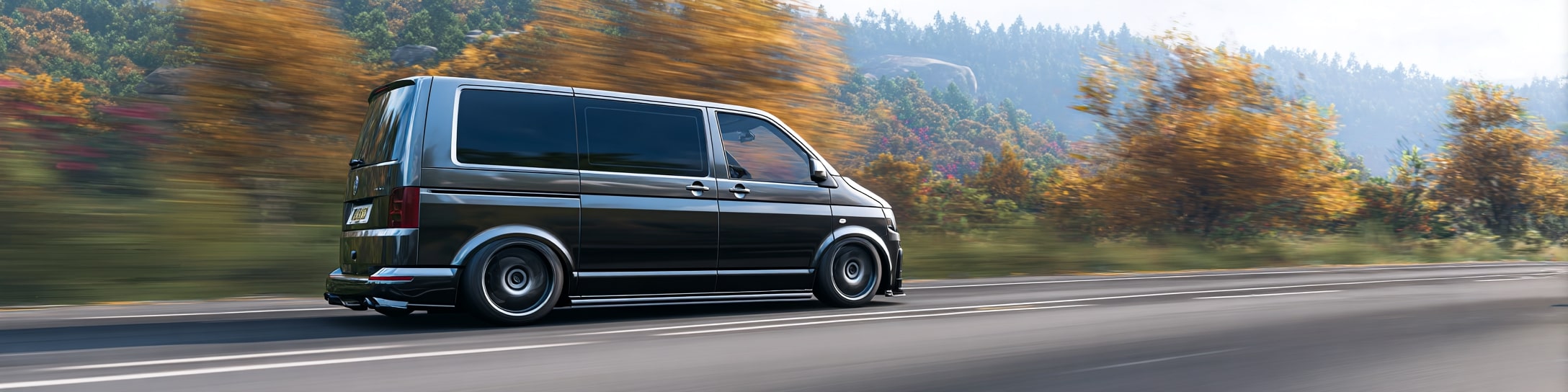
The VW T5, which was launched in 2003 as the fifth generation of the Volkswagen Transporter, quickly established itself as one of the most successful commercial vehicles in Europe. Over its eleven-year production period until 2015, the T5 went through various engine concepts, ranging from economical TDI units to powerful petrol engines. The continuous further development of the drive technology reflected the technological changes of the 2000s and 2010s.

VW T5 engines - first generation with TDI focus (2003-2009)

The first generation of the T5 relied primarily on proven TDI technology and marked the transition from the air-cooled engines of its predecessors to modern water-cooled units. With a mileage of typically 400,000 to 500,000 kilometers, these engines proved their long-distance suitability, with major repairs usually only occurring after 300,000 kilometers. The 2.5 TDI with 174 hp (AXE/BLJ) was regarded as the absolute pinnacle of this generation, combining performance with reliability. The introduction of common rail technology revolutionized diesel technology, while at the same time the first Euro 4-compliant engines were developed. The T5 positioned itself on the market as a premium alternative to the Ford Transit and Mercedes Sprinter.
VW T5 TDI diesel engines first generation (2003-2009)
The TDI range of the first T5 generation comprised four power levels: the 1.9 TDI with 84 hp (BRS), 105 hp (BRR/BRS) and the 2.5 TDI in two variants with 131 hp (BNZ) and 174 hp (AXE/BLJ). The engine code AXE/BLJ with 174 hp became the favorite of many users, as it offered sufficient reserves for heavy loads and at the same time remained economical. The injection pumps of the 1.9 TDI engines proved problematic after around 200,000 kilometers, while the 2.5 TDI occasionally struggled with defective turbochargers after 250,000 kilometers. The timing chain of the 2.5 TDI proved to be high-maintenance and should be checked every 120,000 kilometers.
VW T5 petrol engines first generation (2003-2009)
The only petrol engine available was the 3.2 V6 with 235 hp (AXK/BKK), which was mainly used in the upmarket Multivan equipment. This engine impressed with its smooth running and power delivery, but consumed considerably more fuel than the TDI variants. Typical weak points were the ignition coils after 100,000 kilometers and occasional problems with the timing chain after 200,000 kilometers. Maintenance costs were higher than for the TDI engines due to the more complex V6 design.
| Engine | Power (PS) | Fuel consumption (l/100km) | Typical weaknesses | Rating |
|---|---|---|---|---|
| 1.9 TDI BRS | 84 | 8,5 | Injection pump, turbocharger | Average |
| 1.9 TDI BRR | 105 | 8,2 | Injection pump, EGR valve | Good |
| 2.5 TDI BNZ | 131 | 9,1 | Timing chain, turbocharger | Good |
| 2.5 TDI AXE/BLJ | 174 | 9,3 | Timing chain, high-pressure pump | Very good |
| 3.2 V6 AXK/BKK | 235 | 13,5 | Ignition coils, timing chain | Good |
VW T5 engines - Euro-5 and common rail optimization (2009-2015)
With the 2009 model update, Volkswagen introduced revised engines that met the stricter Euro 5 standards and were simultaneously optimized in terms of efficiency and performance. The mileage remained at the high level of the predecessors, with the improved common rail technology ensuring smoother combustion. The 2.0 BiTDI with 180 hp (CFCA) established itself as the most powerful and most modern diesel engine of this generation. The introduction of particulate filters and optimized exhaust gas recirculation systems significantly improved environmental compatibility. Compared to the competition, the T5 continued to offer the best balance between performance, consumption and reliability.
VW T5 TDI diesel engines facelift Euro-5 (2009-2015)
The revised engine range comprised the 2.0 TDI in three power levels with 84 hp (CAAA), 102 hp (CAAB) and 140 hp (CAAC/CFCA) as well as the new 2.0 BiTDI with 180 hp (CFCA). The BiTDI with its bi-turbo charging set new standards in terms of pulling power and efficiency. All engines were fitted with diesel particulate filters and optimized injection systems as standard. The DPF systems occasionally proved problematic on short journeys, while the high-pressure pumps of the CFCA engines required attention after around 200,000 kilometers. The 84 hp version proved to be particularly economical, but reached its limits under full load.
| Engine | Power (PS) | Consumption (l/100km) | Typical weaknesses | Rating |
|---|---|---|---|---|
| 2.0 TDI CAAA | 84 | 7,8 | DPF regeneration, low reserves | Average |
| 2.0 TDI CAAB | 102 | 7,9 | DPF system, EGR valve | Good |
| 2.0 TDI CAAC | 140 | 8,1 | High pressure pump, turbocharger | Good |
| 2.0 BiTDI CFCA | 180 | 8,4 | High-pressure pump, complex turbo technology | Very good |

Conclusion: The best VW T5 engines of all generations
The engine development of the VW T5 reflected the technological progress from proven TDI technology to modern common-rail systems with bi-turbo charging. Across all generations, the T5 engines proved their long-distance capability and established new standards in the commercial vehicle segment.
- Best VW T5 diesel engine:
The 2.0 BiTDI with 180 hp (CFCA) combines modern bi-turbo technology with impressive efficiency and offers the best power-to-consumption ratio.
- Most reliable VW T5 diesel engine:
The 2.5 TDI with 174 hp (AXE/BLJ) impresses with proven technology, high mileage and moderate maintenance costs while delivering powerful performance.
- Most economical VW T5 diesel engine:
The 2.0 TDI with 102 hp (CAAB) offers the best compromise between sufficient power and low fuel consumption for everyday use.
You can find spare parts for all VW T5 engines in proven quality at AUTODOC.