Table of Contents
 29 September 2025 (updated)
 Audi A6 engines
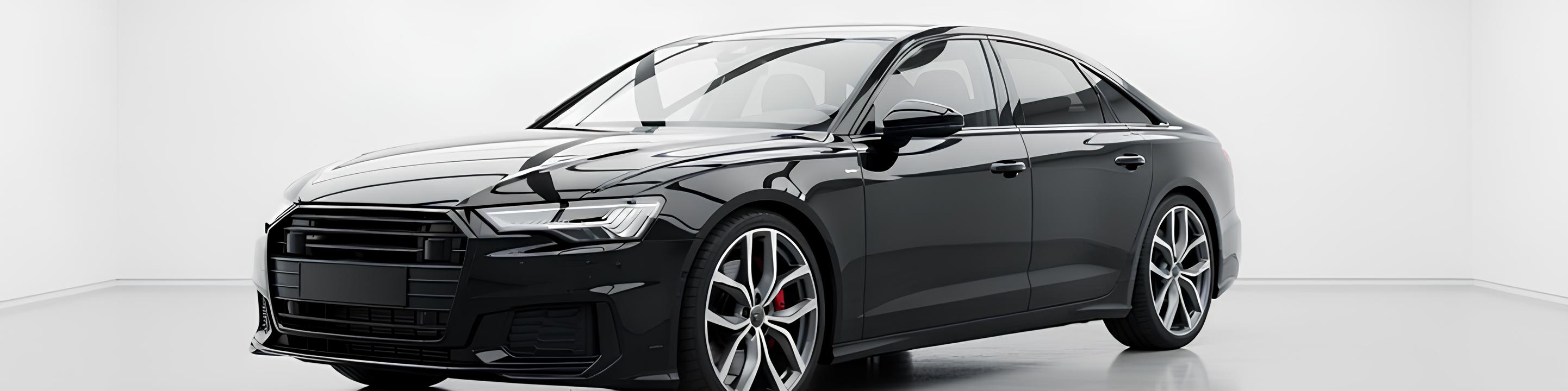
Since its launch in 1994, the Audi A6 has established itself as the benchmark in the upper mid-size class and offers an exceptionally diverse range of engines across five generations. From the robust V6 engines of the first generation to the ultra-modern mild hybrid systems of the current C8 generation, the technological evolution of Audi A6 engines reflects four decades of automotive innovation.

Audi A6 engines: Generation I (1994-1997)
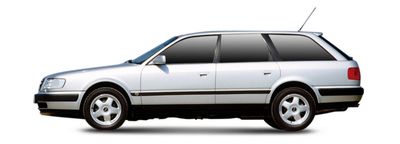
The first Audi A6 generation (C4) marked the transition from the Audi 100 era and established new standards in the upper mid-size class. The mileage of this generation varied considerably: while the tried-and-tested five-cylinder engines easily reached 400,000 to 500,000 kilometers with proper maintenance, the V6 petrol engines often required major repairs to valve guides or water pumps between 200,000 and 300,000 kilometers. The first TDI diesels already demonstrated their legendary longevity with mileages of over 600,000 kilometers. The absolute top engine of this generation was the 2.5 TDI with 140 hp, which optimally combined power, reliability and economy and is considered a milestone in diesel technology.
Audi A6 petrol engines: Generation I (1994-1997)
The Audi A6 petrol engine range included the legendary 2.0-liter four-cylinder with 100 hp, the characteristic 2.3-liter five-cylinder with 133 hp and the V6 engines with 2.6 and 2.8 liters displacement (150-174 hp). The Audi A6 2.3-liter five-cylinder developed into the most charismatic engine of this generation - its unmistakable sound and robust construction made it a classic. However, the V6 engines suffered from typical problems such as leaking valve cover gaskets and wear-prone water pumps, which required regular maintenance.
Audi A6 diesel engines: Generation I (1994-1997)
The Audi A6 diesels were dominated by the revolutionary 2.5 TDI with 116 hp (from 1995) and later 140 hp. This Audi A6 TDI engine was one of the first turbodiesels with direct injection and intercooling in the luxury class. The 2.5 TDI proved to be exceptionally durable - many units ran for over 700,000 kilometers without an engine overhaul. Only the injection pump required occasional maintenance, but this was bearable given the fuel savings of over 10 liters compared to petrol engines at the time.
| Audi A6 engine | Power output | Fuel consumption | Typical weaknesses | Rating |
|---|---|---|---|---|
| 2.0 petrol engine | 100 HP | 8.5-9.2 l/100km | Valve guides, moderate performance | Average |
| 2.3 Five-cylinder | 133 HP | 9.1-9.8 l/100km | Very robust, characteristic | Very good |
| 2,6/2,8 V6 | 150-174 HP | 9.8-10.5 l/100km | Valve cover, water pump | Good |
| 2.5 TDI | 116-140 HP | 6.8-7.5 l/100km | Injection pump, otherwise legendary | Very good |
Audi A6 engines: Generation II (1997-2004)
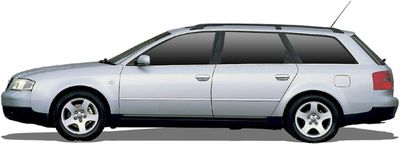
The second Audi A6 generation (C5) revolutionized the luxury class with innovative technologies such as the world's first V8 TDI and modern FSI petrol engines. The mileage reached new dimensions: The proven V6 TDI engines routinely ran for over 400,000 kilometers, while the more complex V8 engines required major maintenance between 250,000 and 350,000 kilometers. The early 2.7T engines were problematic with their susceptible turbochargers, which often required repairs after just 120,000 kilometers. The absolute pinnacle was the 2.5 TDI V6 with 180 hp - a technical masterpiece that combined sporty performance with diesel efficiency.
Audi A6 petrol engines: Generation II (1997-2004)
The Audi A6 petrol engine range started with the 1.8T (150 hp), followed by the 2.4 V6 (165 hp), the problematic 2.7T Biturbo (250 hp) and the 2.8 V6 (193 hp). The first FSI engines with 2.0 (130 hp) and 3.2 liters (255 hp) were added later. The Audi A6 2.7T developed into the most problematic engine of this generation - the two small turbochargers regularly overheated, which led to costly repairs. The 2.8 V6, on the other hand, proved to be a solid all-rounder, while the FSI engines introduced direct injection and variable valve control.
Audi A6 diesel engines: Generation II (1997-2004)
The Audi A6 2.5 TDI was offered in various power levels from 150 to 180 hp and established itself as one of the best diesels of its time. These V6 TDI engines had modern common-rail injection and particulate filters. The Audi A6 2.5 TDI with 180 hp combined impressive performance with a fuel consumption of just 6.5 liters - a milestone in diesel technology. There was also the spectacular 4.2 V8 TDI with 326 hp, which set standards as the world's first V8 diesel, but was complex and high-maintenance.
| Audi A6 engine | Power output | Fuel consumption | Typical weaknesses | Rating |
|---|---|---|---|---|
| 1,8T | 150 HP | 7.8-8.5 l/100km | Turbocharger, oil consumption | Average |
| 2,4 V6 | 165 HP | 9.2-9.8 l/100km | Robust, but thirsty | Good |
| 2.7T Biturbo | 250 HP | 10.5-11.2 l/100km | Turbocharger, overheating | Problematic |
| 2,8 V6 | 193 HP | 9.5-10.1 l/100km | Solid all-rounder | Good |
| 2.0/3.2 FSI | 130-255 HP | 8.1-10.8 l/100km | Valve coking with FSI | Good |
| 2.5 TDI V6 | 150-180 HP | 6.2-6.8 l/100km | Legendary reliability | Very good |
| 4.2 V8 TDI | 326 HP | 8.5-9.2 l/100km | Complex, high-maintenance | Average |
Audi A6 engines: Generation III (2004-2011)
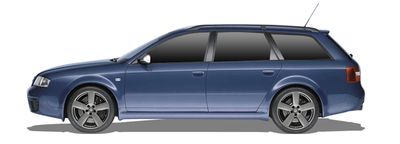
The third Audi A6 generation (C6) marked the transition to the modern era with FSI direct injection and advanced TDI engines. Reliability reached new heights: Most of the engines of this generation ran for 300,000 to 400,000 kilometers without any problems with proper maintenance, whereby the 3.0 TDI engines with quattro drive were considered particularly durable. The early 2.0 TFSI engines with their timing chain tensioners and the complex W12 engines were problematic. The absolute top engine was the 3.0 TDI with 233 hp - a perfect balance of performance, efficiency and reliability that is still regarded as the benchmark today.
Audi A6 petrol engines: Generation III (2004-2011)
The Audi A6 petrol engine range comprised the 2.0 TFSI (170 hp), the 2.4 V6 (177 hp), the 2.8 FSI (210 hp), the 3.2 FSI (255 hp) and the top models 4.2 V8 (335 hp) and the exclusive 6.0 W12 (450 hp). The Audi A6 2.0 TFSI suffered from the typical problems of the early TFSI generation - timing chain damage and turbocharger faults made it the most unreliable engine of this generation. The 3.2 FSI, on the other hand, proved to be an excellent compromise between performance and reliability, while the V8 engines were surprisingly robust despite their complexity.
Audi A6 diesel engines: Generation III (2004-2011)
The Audi A6 3.0 TDI dominated with power levels from 204 to 240 hp and established itself as the benchmark for premium diesels. These V6 TDI engines featured modern third-generation common-rail injection and particulate filters. The Audi A6 3.0 TDI with 233 hp developed into the best engine of the entire generation - it offered the sporty performance of a petrol engine with diesel consumption and proved to be exceptionally durable. There was also the 2.7 TDI with 163-180 hp, but this was less widespread.
| Audi A6 engine | Power output | Fuel consumption | Typical weaknesses | Rating |
|---|---|---|---|---|
| 2.0 TFSI | 170 HP | 7.5-8.2 l/100km | Timing chain, turbocharger | Problematic |
| 2,4 V6 | 177 HP | 8.8-9.4 l/100km | Robust, but outdated | Average |
| 2.8 FSI | 210 HP | 8.9-9.5 l/100km | Valve coking | Good |
| 3.2 FSI | 255 HP | 9.8-10.4 l/100km | Very reliable | Very good |
| 4,2 V8 | 335 HP | 11.2-11.8 l/100km | Surprisingly robust | Good |
| 6,0 W12 | 450 HP | 13.5-14.2 l/100km | Complex, exclusive | Average |
| 2.7 TDI | 163-180 HP | 6.8-7.2 l/100km | Less common | Good |
| 3.0 TDI | 204-240 HP | 6.1-6.8 l/100km | Legendary reliability | Very good |
Audi A6 engines: Generation IV (2011-2018)
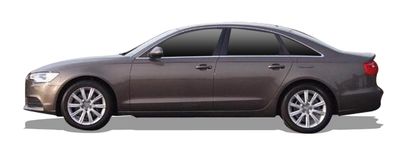
The fourth Audi A6 generation (C7) revolutionized efficiency with modern TFSI engines and advanced TDI units. Mileage remained consistently high: the tried-and-tested 3.0 TDI engines continued to achieve 400,000 to 500,000 kilometers, while the new 2.0 TFSI engines had overcome their teething troubles and now reliably ran for 250,000 to 350,000 kilometers. The highly complex 3.0 TFSI engines with supercharger and turbocharger as well as the first hybrid systems were problematic. The absolute highlight was the 3.0 TDI with 272 hp - a technical masterpiece with an electric turbocharger that combined sporty performance with exceptional efficiency.
Audi A6 petrol engines: Generation IV (2011-2018)
The Audi A6 petrol engine range started with the revised 2.0 TFSI (180-252 hp), followed by the 2.8 FSI (204 hp), the 3.0 TFSI (300-333 hp) and the top-of-the-range 4.0 TFSI (420-450 hp). The second-generation Audi A6 2.0 TFSI proved to be significantly more reliable than its predecessor - the timing chain problems had been resolved and the turbochargers now lasted much longer. The 3.0 TFSI with supercharger and turbocharger offered impressive performance, but was technically complex and prone to cooling problems during sporty driving.
Audi A6 diesel engines: Generation IV (2011-2018)
The Audi A6 3.0 TDI was offered in various power levels from 204 to 326 hp, with the more powerful variants featuring electric turbochargers. There was also the smaller 2.0 TDI with 136-190 hp for more efficient variants. The Audi A6 3.0 TDI with 272 hp developed into the top engine of this generation - its combination of electric turbocharger, state-of-the-art common rail injection and SCR catalytic converter offered unparalleled performance with minimal fuel consumption. These engines already met the Euro 6 standard and were regarded as the benchmark for modern diesel technology.
Audi A6 hybrid drive: Generation IV (2011-2018)
From 2012, an Audi A6 Hybrid with 245 hp system output was offered for the first time. This combined a 2.0 TFSI with a 40 kW electric motor and offered decent performance, but with limitations in terms of trunk space and occasionally jerky CVT transmission.
| Audi A6 engine | Power output | Fuel consumption | Typical weaknesses | Rating |
|---|---|---|---|---|
| 2.0 TFSI | 180-252 HP | 6.8-7.8 l/100km | Significantly improved | Good |
| 2.8 FSI | 204 HP | 8.2-8.8 l/100km | Discontinued model | Average |
| 3.0 TFSI | 300-333 HP | 8.5-9.2 l/100km | Complex, cooling | Average |
| 4.0 TFSI | 420-450 HP | 10.8-11.5 l/100km | Very complex | Moderate |
| 2.0 TDI | 136-190 HP | 4.9-5.8 l/100km | Solid base | Good |
| 3.0 TDI | 204-326 HP | 5.3-6.5 l/100km | Electric turbo, brilliant | Very good |
| 2.0 Hybrid | 245 HP | 6.2 l/100km | CVT gearbox | Average |
Audi A6 engines: Generation V (2018-today)
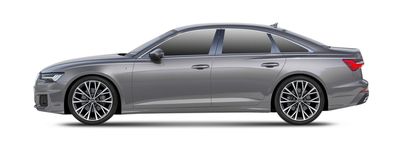
The current Audi A6 generation (C8) relies entirely on electrification and represents Audi's vision for the future of the luxury class. All engines are now equipped with mild hybrid technology, while the plug-in hybrids offer an electric range of up to 91 kilometers. As the generation has only been on the market since 2018, there is no long-term experience yet, but the first few years show promising approaches. The top-of-the-range engine is the 3.0 TFSI with 340 hp and 48-volt mild hybrid system, which combines sporty performance with high efficiency. The mild hybrid technology promises a service life of over 350,000 kilometers, as the electric support relieves the combustion engine.
Audi A6 mild hybrid petrol engine: Generation V (2018-today)
The Audi A6 engine range is based on two 2.0 TFSI engines with 204 and 245 hp and the 3.0 TFSI with 340 hp. All Audi A6 engines feature 48-volt mild hybrid technology with belt starter-generator and cylinder deactivation. The Audi A6 2.0 TFSI with 204 hp is considered to be particularly successful and is developing into the best petrol engine of this generation - it offers smooth power delivery over a wide engine speed range and has so far been free of major series production problems.
Audi A6 plug-in hybrids: Generation V (2018-today)
The Audi A6 TFSI e variants offer system outputs of 367 and 462 hp with an electric range of up to 91 km. These Audi A6 engines combine a 2.0 TFSI with a 105 kW electric motor and offer impressive driving performance, but are technically very complex.
Audi A6 diesel engines: Generation V (2018-today)
Three Audi A6 TDI engines with 204, 231 and 286 hp are available, all with a 48-volt mild hybrid system. The Audi A6 3.0 TDI with 231 hp continues the tradition of reliable Audi diesels and is considered the best diesel of this generation.
| Audi A6 engine | Power output | Fuel consumption | Typical weaknesses | Rating |
|---|---|---|---|---|
| 2.0 TFSI MHEV | 204-245 HP | 6.2-7.1 l/100km | No series problems so far | Very good |
| 3.0 TFSI MHEV | 340 HP | 7.8-8.5 l/100km | Complex, but promising | Good |
| 2.0 TDI MHEV | 204 HP | 4.8-5.4 l/100km | Robust, proven | Very good |
| 3.0 TDI MHEV | 231-286 HP | 5.2-6.1 l/100km | Continuation of the success story | Very good |
| 2.0 TFSI e | 367-462 HP | 1.7-2.1 l/100km + electricity | Complex but efficient | Good |

Conclusion: The best Audi A6 engines of all generations
The development of Audi A6 engines over five generations shows an impressive technological evolution. While the TDI engines consistently set standards for reliability and efficiency, the powerful petrol engines often struggled with their complexity. The new fifth-generation mild hybrid technology promises a bright future for drivers who value efficiency and reliability.
- Best Audi A6 gasoline engine:
The Audi A6 2.0 TFSI MHEV (204 hp, Generation V) combines modern mild-hybrid technology with high efficiency and excellent reliability to date.
- Best Audi A6 diesel engine:
The Audi A6 3.0 TDI (233 hp, Generation III) offers the best combination of reliability, economy and sporty performance across all generations.
- Best Audi A6 hybrid engine:
The Audi A6 2.0 TFSI e (367 hp, Generation V) with its high electric range of up to 91 km and impressive system performance.
For maintenance and spare parts for all Audi A6 generations, AUTODOC offers a comprehensive range of original and quality spare parts with fast delivery and expert advice.
TOP Products on the topic: