Table of Contents

 30 September 2025 (updated)
 Fiat Panda engines
Since its launch in 1980, the Fiat Panda has developed into one of the most successful small cars in Europe, offering a diverse range of Fiat Panda engines across four generations. Each generation has brought new technologies and different strengths and weaknesses, with technological evolution ranging from simple naturally aspirated engines to modern turbo engines and hybrid drives.

Fiat Panda engines: Historical generations I & II (1980-2011)
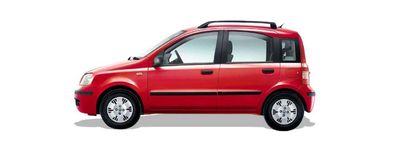
The first two Fiat Panda generations shaped the image of the Italian small car for over three decades and established a reputation for simplicity and reliability. The first generation (1980-2003) was characterized by robust but technically simple naturally aspirated engines that easily reached 250,000 to 350,000 kilometers with proper maintenance. The second generation (2003-2011) introduced more modern technologies, but remained true to the basic principle of simplicity. Major engine damage was rare in both generations, with only wearing parts such as timing belts and water pumps requiring regular maintenance. The absolute top engine of the historic generations was the 1.3 MultiJet Diesel from the second generation, which combined economy, reliability and surprisingly good driving performance.
Fiat Panda gasoline engines: Historic generations I & II (1980-2011)
The Fiat Panda petrol engine range of the first generation mainly comprised simple naturally aspirated engines: The 0.9 liter FIRE engine with 34-45 hp was the entry-level engine and was considered almost indestructible. Later, the 1.0 FIRE with 45-50 hp and the 1.1 FIRE with 54 hp were added. These Fiat Panda engines were characterized by their simplicity - mechanical injection, robust construction and minimal electronics made them low-maintenance long runners. The second generation brought more modern variants: The 1.2 FIRE with 60 hp became the standard engine, while the 1.4 16V with 100 hp provided sporty driving performance. The Fiat Panda 1.2 FIRE developed into the most reliable petrol engine of both generations and offered an excellent balance between economy and durability.
Fiat Panda diesel engines: Historic generations I & II (1980-2011)
The first generation of Fiat Panda diesels was dominated by the 1.0 diesel with 37 hp, which was economical but very loud and sluggish. The second generation revolutionized the diesel range with the modern 1.3 MultiJet engine, which ushered in a new era with 70 hp or 75 hp. This Fiat Panda diesel with common-rail injection and turbocharging not only offered fuel consumption of less than 4 liters per 100 km, but also impressively smooth running for the vehicle class. The 1.3 MultiJet proved to be exceptionally reliable and durable, with typical mileages of over 400,000 kilometers with proper maintenance.
Fiat Panda special engines: Historic generations I & II (1980-2011)
A special feature of the first generation was the Fiat Panda Electric (1990-1998), one of the first series-produced small electric cars with lead-acid batteries and a range of 50 km. There was also the Fiat Panda 4x4 with reinforced engines for all-wheel drive, which was particularly popular in mountainous regions.
| Fiat Panda engine | Power output | Fuel consumption | Typical weaknesses | Rating |
|---|---|---|---|---|
| 0.9 FIRE | 34-45 HP | 6.0-7.5 l/100km | Timing belt, water pump | Very good |
| 1.0 FIRE | 45-50 HP | 6.5-7.0 l/100km | Minimal weaknesses | Very good |
| 1.1 FIRE | 54 HP | 6.8-7.2 l/100km | Timing belt every 60,000 km | Good |
| 1.2 FIRE | 60 HP | 6.0-6.8 l/100km | Very robust | Very good |
| 1,4 16V | 100 HP | 7.5-8.5 l/100km | Valve clearance, ignition coils | Good |
| 1.0 diesel | 37 HP | 4.5-5.0 l/100km | Loud, sluggish | Average |
| 1.3 MultiJet | 70-75 HP | 3.8-4.2 l/100km | Very reliable | Very good |
Fiat Panda engines: Generation III (2011-2023)
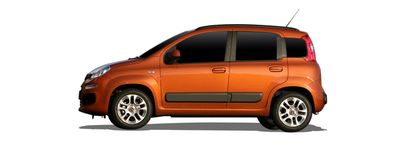
The third Fiat Panda generation marked a significant technological leap and introduced turbo engines and modern exhaust technology for the first time. With proper maintenance, most engines of this generation reach 200,000 to 300,000 kilometers, with the proven FIRE engines continuing to offer the highest reliability. The new TwinAir turbo engines, on the other hand, showed typical teething troubles of modern downsizing units. The absolute highlight was the 0.9 TwinAir with 85 hp - a technical masterpiece with just two cylinders, turbocharging and a start-stop system, which was, however, susceptible to turbocharger damage. CNG technology was also introduced for the first time with the 0.9 TwinAir Natural Power.
Fiat Panda petrol engines: Generation III (2011-2023)
The third-generation Fiat Panda petrol engine range included both proven and revolutionary concepts. The classic 1.2 FIRE with 69 hp remained as the entry-level engine and continued to prove itself as the most reliable engine in the series. The big innovation was the 0.9 TwinAir engine, a two-cylinder turbo with 85 hp, which impressed with its innovative technology, but also brought problems with it. The Fiat Panda TwinAir suffered from turbocharger damage, oil loss and problems with the automatic start-stop system. Later, the 1.0 FIRE with 70 hp was added, which occupied a middle position between the proven 1.2 FIRE and the problematic TwinAir.
Fiat Panda diesel engines: Generation III (2011-2023)
The tried-and-tested 1.3 MultiJet remained the heart of the Fiat Panda diesel range in the third generation, now with 75 hp and Euro 5 emissions standard. This Fiat Panda Diesel retained its legendary reliability and continued to offer fuel consumption of less than 4 liters per 100 km. From 2015, a 95 hp version was also offered, which provided more power with similar efficiency. The 1.3 MultiJet developed into the best engine of the entire third generation and remained the first choice for frequent drivers.
Fiat Panda alternative drives: Generation III (2011-2023)
The third generation introduced the Fiat Panda Natural Power with 0.9 TwinAir CNG drive, which achieved a fuel consumption of just 2.9 kg/100 km on natural gas. From 2013, the Fiat Panda 4x4 was also available with reinforced engines for all-wheel drive, which established itself as a winter vehicle in particular.
| Fiat Panda engine | Power output | Fuel consumption | Typical weaknesses | Rating |
|---|---|---|---|---|
| 1.2 FIRE | 69 HP | 5.9-6.5 l/100km | Very robust, proven | Very good |
| 1.0 FIRE | 70 HP | 5.8-6.3 l/100km | Minimal weaknesses | Good |
| 0.9 TwinAir | 85 HP | 4.9-5.8 l/100km | Turbocharger, oil loss, start-stop | Problematic |
| 1.3 MultiJet | 75-95 HP | 3.9-4.3 l/100km | Very reliable | Very good |
| 0.9 TwinAir CNG | 80 HP | 2.9 kg/100km | Turbocharger, limited filling stations | Moderate |
Fiat Panda engines: Generation IV (2023-today)
The current Fiat Panda generation relies entirely on electrification and modern hybrid technology, although classic combustion engines continue to play an important role. All petrol engines are now equipped with mild hybrid technology, while a purely electric version is marketed as a separate model. As the generation has only been on the market since 2023, there is no long-term experience yet, but the initial tests show promising approaches. The top-of-the-range engine is the 1.0 hybrid with 70 hp, which combines the tried-and-tested FIRE engine with 12-volt mild hybrid technology. The hybrid technology promises a service life of over 250,000 kilometers, as the electric assistance relieves the combustion engine.
Fiat Panda hybrid petrol engines: Generation IV (2023-today)
The basis of the Fiat Panda engine range is the 1.0 hybrid with 70 hp, which combines the tried-and-tested FIRE engine with 12-volt mild hybrid technology. This Fiat Panda engine has a belt starter-alternator and a small lithium-ion battery that recovers energy when braking. The Fiat Panda 1.0 Hybrid is considered to be particularly successful and is developing into the best engine of this generation - it offers the reliability of the proven FIRE engine with improved efficiency through hybrid technology.
Fiat Panda electric drive: Generation IV (2023-today)
The all-electric Fiat Panda is offered as a separate model, but is technically based on a different platform and is not directly comparable with the hybrid versions. It offers a range of around 320 km and is positioned as the city vehicle of the future.
| Fiat Panda engine | Power output | Fuel consumption | Typical weaknesses | Rating |
|---|---|---|---|---|
| 1.0 Hybrid | 70 HP | 4.6-5.2 l/100km | No series problems so far | Very good |
| Electric | 113 HP | 16.8 kWh/100km | Range, charging infrastructure | Good |

Conclusion: The best Fiat Panda engines of all generations
The development of the Fiat Panda engines shows an impressive continuity in the philosophy of simplicity and reliability. While experimental engines such as the TwinAir certainly caused problems, the tried-and-tested FIRE engines and MultiJet diesels have remained reliable companions across all generations. The new fourth-generation hybrid technology promises a promising further development of this tradition.
- Best Fiat Panda gasoline engine:
The Fiat Panda 1.2 FIRE (69 hp, Generation III) combines proven technology with modern efficiency and is considered virtually indestructible with proper maintenance.
- Best Fiat Panda diesel engine:
The Fiat Panda 1.3 MultiJet (75 hp, Generation II & III) offers the best combination of reliability, economy and everyday usability across all generations.
- Best Fiat Panda hybrid engine:
The Fiat Panda 1.0 Hybrid (70 hp, Generation IV) with its proven FIRE base and modern mild-hybrid technology for improved efficiency.
For maintenance and spare parts for all Fiat Panda generations, AUTODOC offers a comprehensive range of original and quality spare parts with fast delivery.
TOP Products on the topic: