Table of Contents

 30 September 2025 (updated)
 Renault Espace engines
Since its launch in 1984, Renault Espace has established itself as a pioneer in the MPV segment, offering a diverse range of Renault Espace engines across five generations. The technological evolution ranges from simple naturally aspirated engines to modern turbocharged engines with hybrid assistance.

Renault Espace engines: Historic generations I-III (1984-2002)
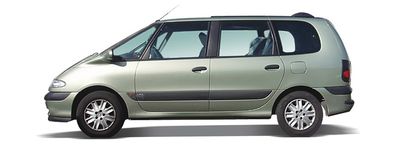
The first three Renault Espace generations shaped the large van segment and were characterized by robust but technically simple engines. With proper maintenance, mileage typically reached 250,000 to 350,000 kilometers, whereby the diesel versions were significantly more durable than the petrol models. Major engine damage was rare, but the early petrol engines often required repairs to the cylinder head gasket or timing chain between 150,000 and 200,000 kilometers. The absolute top engine of the historic generations was the 2.2 dT diesel with 113 hp (Generation III), which optimally combined power, reliability and, by the standards of the time, acceptable economy. The first generation (1984-1991) mainly offered petrol engines with a displacement of 1.9 to 2.2 liters, while diesel engines became available for the first time in the second generation (1991-1996). The third generation (1996-2002) introduced modern common-rail diesels and more powerful V6 petrol engines.
Renault Espace gasoline engines: Historic generations I-III (1984-2002)
The Renault Espace petrol engine range included various naturally aspirated engines. In the first generation, the 2.0-liter engine with 109 hp dominated, supplemented by a 1.9-liter with 88 hp. The second generation brought the proven 2.0-liter in a revised form with 113-120 hp as well as a 2.2-liter with 125 hp. The highlight was the 3.0 V6 with 190 hp introduced in the third generation, which was, however, more prone to repairs due to its complexity. These Renault Espace engines suffered from typical problems of the time: cylinder head gasket defects, timing chain problems and increased oil consumption at high mileages. The most reliable petrol engine was the second-generation 2.0-liter engine with 113 hp, which was characterized by its robustness and ease of maintenance.
Renault Espace diesel engines: Historic generations I-III (1984-2002)
Among the Renault Espace diesels, the 2.1 TD with 88 hp was initially established in the second generation (from 1991), but it was loud and sluggish. The third generation brought the much more modern 2.2 dT with 113 hp, which was equipped with a turbocharger and intercooling. This Renault Espace Diesel developed into the most reliable engine of the historical generations - especially the variants produced from 1998 onwards with an improved injection pump proved to be very durable and economical. The 2.2 dT offered an excellent combination of performance, fuel consumption of just 7.5-8.5 liters per 100 km and high reliability, making it the ideal family and long-distance engine.
| Renault Espace engine | Power output | Fuel consumption | Typical weaknesses | Rating |
|---|---|---|---|---|
| 1.9 Petrol | 88 HP | 9.5-10.5 l/100km | Weak-chested, cylinder head gasket | Moderate |
| 2.0 Petrol | 109-120 HP | 9.0-10.0 l/100km | Robust, occasional timing chain | Good |
| 2.2 Petrol | 125 HP | 9.5-10.5 l/100km | Cylinder head gasket, oil consumption | Average |
| 3,0 V6 | 190 HP | 11.0-12.0 l/100km | Complex, prone to repairs | Moderate |
| 2.1 TD | 88 HP | 7.8-8.5 l/100km | Loud, sluggish, injection pump | Average |
| 2.2 dT | 113 HP | 7.5-8.5 l/100km | Very robust from 1998 | Very good |
Renault Espace engines: Generation IV (2002-2014)
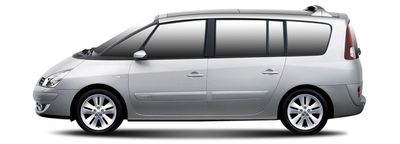
The fourth Renault Espace generation marked the transition to modern engine technologies and offered a much more diverse range of engines. With proper maintenance, most engines of this generation easily reached 300,000 to 400,000 kilometers, with the 2.0 dCi diesels being considered particularly durable. Major engine damage was rare, with only the early 2.0 turbo petrol engines showing weaknesses in the cylinder head gasket. The absolute pinnacle was the 2.0 dCi with 175 hp - a technical masterpiece with common-rail injection and variable turbocharger geometry, which offered both power and efficiency. This generation also introduced the first V6 diesel (3.0 dCi) and offered the most powerful petrol engine in Espace history with the 3.5 V6.
Renault Espace petrol engines: Generation IV (2002-2014)
The Renault Espace petrol engine range initially comprised the proven 2.0-liter naturally aspirated engine with 136 hp, which was later replaced by a 2.0 Turbo with 163-170 hp. For higher demands, there was the 3.5 V6 with 245 hp, which was, however, complex and thirsty. The Renault Espace 2.0 Turbo proved to be the most problematic petrol engine of this generation, with frequent reports of cylinder head gasket failures and turbocharger damage during sporty driving. The most reliable petrol engine remained the 2.0-liter naturally aspirated engine with 136 hp, which was characterized by its proven technology and easy maintenance, but was somewhat weak-chested for the weight of the Espace.
Renault Espace diesel engines: Generation IV (2002-2014)
The Renault Espace 2.0 dCi dominated the diesel range with various power levels from 127 to 175 hp. There was also a 1.9 dCi with 120 hp (2002-2006) and the powerful 3.0 dCi V6 with 181 hp. All Renault Espace diesels had modern common-rail injection with turbocharger and particulate filter (from 2005). The Renault Espace 2.0 dCi with 150 hp proved to be the most reliable and efficient engine of this generation, with a test consumption of only 6.8-7.5 liters per 100 km and high reliability. The 3.0 dCi V6 offered impressive performance, but was more prone to repairs to the complex exhaust gas recirculation and turbocharger.
| Renault Espace engine | Power output | Fuel consumption | Typical weaknesses | Rating |
|---|---|---|---|---|
| 2.0 Petrol | 136 HP | 8.5-9.5 l/100km | Weak-chested, but robust | Good |
| 2.0 Turbo | 163-170 HP | 9.0-10.0 l/100km | Cylinder head gasket, turbocharger | Problematic |
| 3,5 V6 | 245 HP | 11.5-12.5 l/100km | Complex, high consumption | Moderate |
| 1.9 dCi | 120 HP | 6.5-7.2 l/100km | Not very common | Average |
| 2.0 dCi | 127-175 HP | 6.8-7.5 l/100km | Very robust (150 hp variant) | Very good |
| 3.0 dCi V6 | 181 HP | 7.8-8.5 l/100km | EGR problems, turbocharger | Average |
Renault Espace engines: Generation V (2014-today)
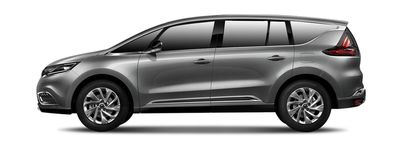
The current Renault Espace generation represents a radical change from classic van to crossover design and relies entirely on modern turbocharged engines. All engines feature direct injection and turbocharging, resulting in more compact dimensions and higher performance. As this generation has been on the market since 2014, the first long-term experiences are already becoming apparent: Most engines reach 250,000 to 350,000 kilometers with proper maintenance, whereby the 1.6 dCi diesels are considered particularly reliable. The top-of-the-range engine is the 2.0 Blue dCi with 200 hp, which combines sporty performance with acceptable efficiency. The introduction of hybrid technology from 2020 with the E-Tech Hybrid marks the start of the electrification of Renault Espace engines.
Renault Espace petrol engines: Generation V (2014-today)
The Renault Espace petrol engine range is based on the 1.6 TCe engine with various power levels from 160 to 200 hp. The 1.8 TCe with 225 hp was added later, but was only available in limited numbers. These Renault Espace engines feature direct injection and turbocharging, but exhibit typical problems of modern downsized engines: coking of the intake valves, problems with the high-pressure pump and occasional turbocharger damage during sporty driving. The Renault Espace 1.6 TCe with 160 hp developed into the most reliable petrol engine of this generation, while the more powerful variants are more susceptible to repairs.
Renault Espace diesel engines: Generation V (2014-present)
The Renault Espace 1.6 dCi initially dominated the diesel range with power levels from 130 to 160 hp. From 2018, it was replaced by the more modern 2.0 Blue dCi with 160, 180 and 200 hp. These Renault Espace diesels feature twin-turbo technology (2.0 Blue dCi) and SCR catalytic converter with AdBlue injection. The Renault Espace 1.6 dCi with 130 hp proved to be the most reliable engine of this generation, with a test consumption of just 5.8-6.5 liters per 100 km and high reliability. The 2.0 Blue dCi engines offer more power, but are more prone to problems with the complex exhaust aftertreatment and twin-turbo system.
Renault Espace hybrid powertrain: Generation V (2014-present)
The Renault Espace E-Tech Hybrid with 200 hp system power was introduced in 2020. This combines a 1.6-liter petrol engine with two electric motors and an innovative multimode gearbox without a clutch. The Renault Espace E-Tech Hybrid offers a good balance between performance and consumption (5.8-6.2 l/100km), but is technically very complex and occasionally has problems with the electronics and the unusual gearbox.
| Renault Espace engine | Performance | Fuel consumption | Typical weaknesses | Rating |
|---|---|---|---|---|
| 1.6 TCe | 160-200 HP | 7.5-8.5 l/100km | Valve coking, high-pressure pump | Average |
| 1.8 TCe | 225 HP | 8.2-9.0 l/100km | Rare, turbocharger damage | Moderate |
| 1.6 dCi | 130-160 HP | 5.8-6.5 l/100km | Robust, proven | Very good |
| 2.0 Blue dCi | 160-200 HP | 6.2-7.0 l/100km | Exhaust gas aftertreatment, twin turbo | Good |
| E-Tech Hybrid | 200 HP | 5.8-6.2 l/100km | Complex, electronic problems | Good |

Conclusion: The best Renault Espace engines of all generations
The evolution of Renault Espace engines clearly shows the change from robust, simple units to complex, efficient turbocharged engines. While the historic diesels remained reliable throughout all generations, the modern petrol engines struggled with the typical problems of downsizing technology. The new fifth-generation hybrid technology offers a promising alternative for drivers who value efficiency and modern technology.
- Best Renault Espace gasoline engine:
The Renault Espace 2.0 petrol (113 hp, Generation II) combines proven technology with high reliability and easy maintenance - a real long runner without modern complexity.
- Best Renault Espace diesel engine:
The Renault Espace 1.6 dCi (130 hp, Generation V) offers the best combination of reliability, economy and everyday practicality with the latest diesel technology.
- Best Renault Espace hybrid engine:
The Renault Espace E-Tech Hybrid (200 hp, Generation V) with its innovative multi-mode technology and low fuel consumption of less than 6 liters per 100 km.
For maintenance and spare parts for all Renault Espace generations, AUTODOC offers a comprehensive range of original and quality spare parts with fast delivery.
TOP Products on the topic: