Table of Contents

 30 September 2025 (updated)
 VW Multivan engines
Since its introduction in 2003, the VW Multivan has established itself as a versatile large-capacity solution, offering a sophisticated range of VW Multivan engines across three generations. Each generation has brought new technologies and different strengths, with diesel engines traditionally playing the leading role.

VW Multivan engines: Generation I (2003-2015)
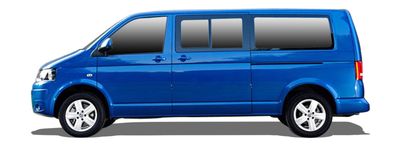
The first VW Multivan generation was based on the T5 platform and was characterized by robust but not yet fully developed engines. Mileage varied considerably depending on the engine type and maintenance: while the tried-and-tested 2.5 TDI diesels easily reached 350,000 to 450,000 kilometers with proper care, the early TSI petrol engines often required costly repairs to the timing chain or turbocharger between 150,000 and 200,000 kilometers. The engines from the first production phase (2003-2009) in particular frequently exhibited problems with the injection system and turbochargers. The absolute top engine of this generation was the 2.5 TDI with 174 hp, which optimally combined power, reliability and moderate economy and proved to be virtually indestructible.
VW Multivan petrol engines: Generation I (2003-2015)
The VW Multivan petrol engine range was very straightforward in the first generation and mainly comprised the 2.0 TSI with various power levels from 150 to 204 hp. These VW Multivan engines suffered from typical problems of the early TSI generation: timing chain problems, increased oil consumption and turbocharger damage made them the most problematic engines of this generation. Although the VW Multivan 2.0 TSI with 204 hp was powerful, it was not very popular due to its high fuel consumption of 9-11 liters per 100 km and frequent susceptibility to repairs. Many owners reported oil consumption of up to one liter per 1,000 kilometers, which was particularly annoying in a large-capacity vehicle.
VW Multivan diesel engines: Generation I (2003-2015)
The VW Multivan diesels were dominated by the legendary 2.5 TDI in various power levels from 130 to 174 hp. The VW Multivan 2.5 TDI with 130 hp (2003-2009) was the entry-level engine, while the more powerful variants with 174 hp provided better driving performance. These VW Multivan TDI engines with their robust pump-nozzle injection proved to be extremely durable, even if they occasionally had problems with the injection nozzles and the high-pressure pump. From 2009, the more modern 2.0 TDI with common-rail injection was added, initially with 140 hp, later also with 180 hp. These VW Multivan diesels were more economical and quieter than their 2.5-liter predecessors, but did not achieve their legendary robustness.
| VW Multivan engine | Power output | Fuel consumption | Typical weaknesses | Rating |
|---|---|---|---|---|
| 2.0 TSI | 150-204 PS | 9.0-11.0 l/100km | Timing chain, oil consumption, turbocharger | Problematic |
| 2.5 TDI | 130-174 HP | 7.5-8.5 l/100km | Injectors, very robust | Very good |
| 2.0 TDI | 140-180 HP | 6.8-7.8 l/100km | More economical, but less robust | Good |
VW Multivan engines: Generation II (2015-2023)
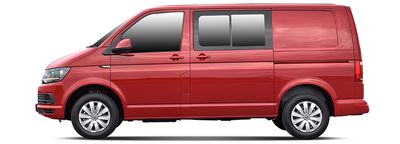
The second VW Multivan generation (T6/T6.1) marked a significant leap in quality and is considered the most balanced of all three generations. With proper maintenance, most engines of this generation easily reach 300,000 to 400,000 kilometers, with the 2.0 TDI diesel with 150 hp being considered particularly durable and economical. Major engine damage has become much rarer, with only the powerful 2.0 TSI petrol engines continuing to show weaknesses in terms of oil consumption. The absolute highlight was the 2.0 TDI with 204 hp - a technical masterpiece with bi-turbo charging that offered both power and efficiency. For the first time, modern exhaust gas purification with SCR catalytic converter and AdBlue injection was also introduced, which significantly improved the emission values.
VW Multivan petrol engines: Generation II (2015-2023)
The VW Multivan petrol engine range was continued with the proven 2.0 TSI, but in a revised form (EA888 Gen 3). With outputs of 150, 180 and 204 PS, the VW Multivan 2.0 TSI offered significantly improved reliability compared to its predecessor. The smaller variants with 150 hp proved to be significantly more reliable, while the powerful VW Multivan TSI engines with 204 hp continued to show occasional problems with increased oil consumption. The VW Multivan 2.0 TSI (EA888 Gen 3) developed into the best petrol engine in the entire history of the Multivan, with only rare reports of timing chain problems and significantly reduced oil consumption.
VW Multivan diesel engines: Generation II (2015-2023)
The VW Multivan 2.0 TDI (EA288) was offered in various power levels from 84 to 204 hp. The basis was the VW Multivan 2.0 TDI with 102 hp, followed by the more popular variants with 150 and 199 hp. All VW Multivan diesels had modern common-rail injection with SCR catalytic converter and AdBlue system. The VW Multivan 2.0 TDI with 150 hp proved to be the most reliable and efficient engine of this generation, with a test consumption of only 6.2-7.1 liters per 100 km and high reliability - ideal for frequent drivers and business people. The 204 hp bi-turbo diesel offered impressive performance, but was more complex and therefore more prone to turbocharger damage.
| VW Multivan engine | Power output | Fuel consumption | Typical weaknesses | Rating |
|---|---|---|---|---|
| 2.0 TSI | 150-204 PS | 8.5-9.8 l/100km | Occasional oil consumption (204 PS) | Good |
| 2.0 TDI | 102-150 HP | 6.2-7.1 l/100km | Very robust and economical | Very good |
| 2.0 TDI Bi-Turbo | 199-204 HP | 7.0-7.8 l/100km | Turbocharger, complex | Good |
VW Multivan engines: Generation III (2021-today)
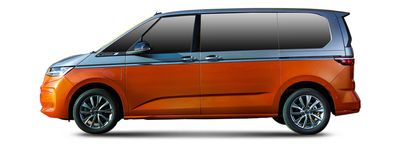
The current VW Multivan generation (T7) is based on the MQB platform for the first time and relies entirely on modern engine technology with electrification. All petrol engines are now equipped with mild hybrid technology, while the plug-in hybrids offer an electric range of up to 50 kilometers. As the generation has only been on the market since 2021, there is no long-term experience yet, but the initial tests show promising approaches. The top-of-the-range engine is the 1.4 eHybrid with 218 hp system output, which combines sporty driving performance with high efficiency. The mild hybrid technology promises a service life of over 300,000 kilometers, as the electric support relieves the combustion engine. For the first time in Multivan history, there is no longer a classic diesel engine - a controversial decision criticized by many business owners.
VW Multivan mild hybrid petrol engine: Generation III (2021-today)
The VW Multivan engine range is based on two 1.5 eTSI engines with 136 hp and 150 hp. Both VW Multivan engines feature 48-volt mild hybrid technology with belt starter-generator and cylinder deactivation. The VW Multivan 1.5 eTSI with 150 hp is considered to be particularly successful and is developing into the best engine of this generation - it offers smooth power delivery over a wide engine speed range and has so far been free of major series production problems. A 2.0 TSI with 204 PS is also available, but is less recommendable due to its higher fuel consumption and the well-known EA888 problem.
VW Multivan plug-in hybrids: Generation III (2021-today)
The VW Multivan eHybrid variant offers a system output of 218 hp with an electric range of up to 50 km. This VW Multivan engine combines a 1.4 TSI with a 116 hp electric motor and offers solid performance for city driving, but with limitations in trunk volume and higher weight. The VW Multivan 1.4 eHybrid is proving reliable in initial tests, but the complexity of the system means higher maintenance costs are to be expected.
| VW Multivan engine | Power output | Fuel consumption | Typical weaknesses | Rating |
|---|---|---|---|---|
| 1.5 eTSI | 136-150 HP | 7.2-7.8 l/100km | No series problems so far | Very good |
| 2.0 TSI | 204 HP | 8.5-9.2 l/100km | Known EA888 problem | Average |
| 1.4 eHybrid | 218 HP | 1.8 l/100km + electricity | Complex, heavier | Good |

Conclusion: The best VW Multivan engines of all generations
The development of VW Multivan engines clearly shows the change from robust but thirsty diesels to efficient, electrified petrol engines. While the VW Multivan diesel engines played the leading role over two generations and proved to be extremely reliable, the third generation marks a complete paradigm shift. The new mild-hybrid technology promises a promising alternative for drivers who value efficiency and modern technology, even if many tradespeople regret the discontinuation of diesel engines.
- Best VW Multivan gasoline engine:
The VW Multivan 1.5 eTSI (150 PS, Generation III) combines modern mild-hybrid technology with high efficiency and excellent reliability to date.
- Best VW Multivan diesel engine:
The VW Multivan 2.5 TDI (174 PS, Generation I) offers the best combination of reliability, durability and suitability for everyday use across all generations.
- Best VW Multivan hybrid engine:
The VW Multivan 1.4 eHybrid (218 PS, Generation III) with its electric range of up to 50 km and low fuel consumption in city traffic.
For maintenance and spare parts for all VW Multivan generations, AUTODOC offers a comprehensive range of original and quality spare parts with fast delivery.
TOP Products on the topic: