Table of Contents

 30 September 2025 (updated)
 Suzuki Swift engines
The Suzuki Swift has become one of the most successful small cars since its launch in 1983, offering a diverse range of engines across four generations. Each generation has brought new technologies and different strengths and weaknesses, with technological evolution ranging from simple naturally aspirated engines to modern hybrid powertrains.

Suzuki Swift engines: Historic generations I-II (1983-2004)
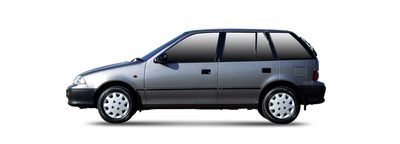
The first two Suzuki Swift generations shaped the small car segment for over two decades and were characterized by simple but robust engines. Mileage varied greatly depending on maintenance: while the proven 1.3-liter naturally aspirated engines easily reached 300,000 to 350,000 kilometers with proper care, the smaller 1.0-liter units often required major repairs between 200,000 and 250,000 kilometers. The first generation (1983-1989) was still very spartanly equipped, while the second generation (1989-2004) already had more modern injection technology. The absolute top engine of this era was the 1.3 GTI with 100 hp from the second generation, which combined sporty performance with acceptable reliability. These historic Suzuki Swift engines were considered easy to maintain and inexpensive to run.
Suzuki Swift gasoline engines: Historic generations I-II (1983-2004)
The Suzuki Swift petrol engine range mainly comprised naturally aspirated engines with carburetor or early injection technology. The smallest engine was a 1.0-liter three-cylinder engine with 50 hp, which was mainly used in the first generation. More popular was the 1.3-liter four-cylinder with 68-75 hp, which proved to be the most reliable engine of the historical generations. These Suzuki Swift engines mainly suffered from age-related problems such as carburetor icing, leaking gaskets and rust problems on the exhaust. The most powerful historic Suzuki Swift was the 1.3 GTI with 100 hp (1989-1996), which impressed with its sporty tuning and characteristic sound, but was more susceptible to wear and tear.
Suzuki Swift diesel engines: Historic generations I-II (1983-2004)
Diesel engines were a rarity in the historic Suzuki Swift generations. Only in the second generation was there a sporadic 1.5-liter diesel engine with 50 hp, which was mainly offered in Europe. This Suzuki Swift diesel was extremely economical (4.2-4.8 l/100km), but also very loud and sluggish. Reliability was average, with typical problems with the injection pump and the starter motor at low temperatures.
| Suzuki Swift engine | Power output | Fuel consumption | Typical weaknesses | Rating |
|---|---|---|---|---|
| 1.0 three-cylinder engine | 50 HP | 6.5-7.2 l/100km | Low performance, vibrations | Average |
| 1.3 four-cylinder | 68-75 HP | 6.8-7.5 l/100km | Carburetor problems, rust | Good |
| 1.3 GTI | 100 HP | 7.8-8.5 l/100km | Wear with sporty use | Good |
| 1.5 Diesel | 50 HP | 4.2-4.8 l/100km | Loud, sluggish, injection pump | Average |
Suzuki Swift engines: Generation III (2005-2017)
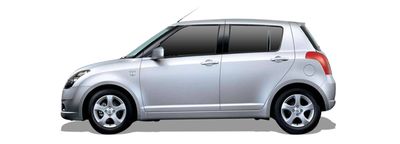
The third Suzuki Swift generation marked a significant modernization push and is considered the most balanced of all generations. With proper maintenance, most engines of this generation easily reach 250,000 to 300,000 kilometers, with the 1.3-liter petrol engines being considered particularly durable. Major engine damage is rare, with only the timing chain of the 1.6-liter engine occasionally showing weaknesses after 150,000 kilometers. The absolute highlight was the 1.6 VVT with 125 hp in the Swift Sport - a technical masterpiece with variable valve timing that offered both power and efficiency. This generation also introduced modern safety technology and improved rust protection measures, which significantly increased longevity.
Suzuki Swift petrol engines: Generation III (2005-2017)
The Suzuki Swift petrol range started with the tried and tested 1.3 VVT (92 hp), which proved to be the most reliable engine of this generation. In addition, there was a smaller 1.2 VVT with 94 hp from 2010, which received modern dual-jet technology. These smaller Suzuki Swift engines proved to be very economical and reliable, with only occasional ignition coil problems after high mileage. For sporty drivers, there was the Suzuki Swift 1.6 VVT with 125 hp in the Swift Sport, but this proved to be the most problematic engine of this generation - frequent reports of timing chain problems and increased oil consumption during sporty driving tarnished its otherwise good reputation.
Suzuki Swift diesel engines: Generation III (2005-2017)
The Suzuki Swift 1.3 DDiS was the only diesel engine offered and came from the cooperation with Fiat. With 75 hp, it offered a good balance between performance and consumption (4.1-4.6 l/100km). This Suzuki Swift Diesel proved to be robust and durable, with occasional problems with the turbocharger after 200,000 kilometers and typical diesel problems on short journeys. The particulate filter regeneration worked reliably, but required regular highway driving.
| Suzuki Swift engine | Power output | Fuel consumption | Typical weaknesses | Rating |
|---|---|---|---|---|
| 1.2 VVT Dualjet | 94 HP | 4.8-5.4 l/100km | Occasional ignition coils | Very good |
| 1.3 VVT | 92 HP | 5.2-5.8 l/100km | Very robust | Very good |
| 1.6 VVT Sport | 125 HP | 6.4-7.1 l/100km | Timing chain, oil consumption | Moderate |
| 1.3 DDiS | 75 HP | 4.1-4.6 l/100km | Turbocharger, particulate filter | Good |
Suzuki Swift engines: Generation IV (2017-today)
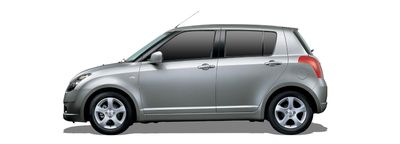
The current Suzuki Swift generation is all about modern efficiency and represents Suzuki's vision for the future of small cars. All petrol engines feature dual-jet technology with direct injection, while the hybrid variants offer additional electric support. As the generation has only been on the market since 2017, there is no long-term experience yet, but initial experience shows promising approaches. The top-of-the-range engine is the 1.4 Boosterjet with 140 hp in the Swift Sport, which combines sporty performance with acceptable efficiency. The mild hybrid technology promises a service life of over 300,000 kilometers, as the electric support relieves the combustion engine.
Suzuki Swift petrol engines: Generation IV (2017-today)
The basis of the Suzuki Swift engine range is the 1.2 Dualjet with 90 hp, which proves to be particularly economical and reliable. This Suzuki Swift engine features modern direct injection and is developing into the best engine of this generation - it offers smooth power delivery and has so far been free of major production problems. The Suzuki Swift 1.4 Boosterjet with 140 hp is available for sporty demands, but it shows early signs of turbocharger problems and increased oil consumption.
Suzuki Swift Hybrid drives: Generation IV (2017-today)
The Suzuki Swift Hybrid variants offer system outputs of 83 hp (1.2 Hybrid) and 115 hp (1.2 Strong Hybrid) with electric assistance. These Suzuki Swift engines combine efficiency with low emissions, but are technically complex and occasionally show problems with battery cooling at high temperatures.
Suzuki Swift diesel engines: Generation IV (2017-present)
Diesel engines have been completely dropped in the current generation, as Suzuki relies entirely on gasoline and hybrid technology.
| Suzuki Swift engine | Power output | Fuel consumption | Typical weaknesses | Rating |
|---|---|---|---|---|
| 1.2 Dualjet | 90 HP | 4.9-5.3 l/100km | No serial problems so far | Very good |
| 1.4 Boosterjet | 140 HP | 5.8-6.4 l/100km | Turbocharger, oil consumption | Moderate |
| 1.2 Hybrid | 83 HP | 4.1-4.5 l/100km | Battery cooling | Good |
| 1.2 Strong Hybrid | 115 HP | 3.9-4.3 l/100km | Complex but efficient | Good |

Conclusion: The best Suzuki Swift engines of all generations
The development of Suzuki Swift engines clearly demonstrates Suzuki's focus on reliability and efficiency. While the historic Suzuki Swift engines impressed with their simplicity, the modern units offer significantly more power with lower fuel consumption. The fourth-generation hybrid technology promises a promising alternative for environmentally conscious drivers who value low operating costs.
- Best Suzuki Swift gasoline engine:
The Suzuki Swift 1.2 Dualjet (90 hp, Generation IV) combines modern direct injection with high efficiency and excellent reliability to date.
- Best Suzuki Swift diesel engine:
The Suzuki Swift 1.3 DDiS (75 PS, Generation III) offers the best combination of reliability, economy and everyday usability of any diesel variant ever offered.
- Best Suzuki Swift hybrid engine:
The Suzuki Swift 1.2 Strong Hybrid (115 hp, Generation IV) with its high efficiency and low fuel consumption of under 4.5 liters per 100 kilometers.
For maintenance and spare parts for all Suzuki Swift generations, AUTODOC offers a comprehensive range of original and quality spare parts with fast delivery.
TOP Products on the topic: