Table of Contents

 12 November 2025 (updated)
 Essential Guide to Tow Bar Grease: When and How to Properly Lubricate Your Hitch
Choosing the right tow bar grease and knowing when to apply it can significantly impact your towing experience and equipment longevity. The decision to grease your tow ball depends on your hitch type, with standard hitches benefiting from proper lubrication while stabiliser hitches requiring a completely clean, dry surface for optimal performance.

Benefits of Greasing a Tow Ball
- Reduces Friction: Greasing the tow ball minimizes metal-on-metal contact, which helps prevent screeching noises and premature wear of both the ball and the coupling.
- Corrosion Protection: Grease acts as a barrier against rust and corrosion, especially if the tow ball is exposed to the elements.
- Smoother Operation: A lubricated tow ball can make hitching and unhitching smoother and quieter.
- Prevents Sticking: Grease can help prevent the tow ball and coupling from sticking together, making it easier to unhitch.
Professional Tip from Autodoc Specialists: Regular inspection of your hitch components should accompany any lubrication routine. Look for signs of wear, rust, or damage that might compromise towing safety.
Sold by AUTODOC Sold by AUTODOC Sold by AUTODOC Sold by AUTODOC Sold by AUTODOC
 Article number: 20-A08
More
£5.29
£13.23
for 1 litre
price incl. 20% VAT, excl. delivery costs
Article number: 20-A08
More
£5.29
£13.23
for 1 litre
price incl. 20% VAT, excl. delivery costs
 Article number: 20-A69
More
£4.59
£22.95
for 1 litre
price incl. 20% VAT, excl. delivery costs
Article number: 20-A69
More
£4.59
£22.95
for 1 litre
price incl. 20% VAT, excl. delivery costs
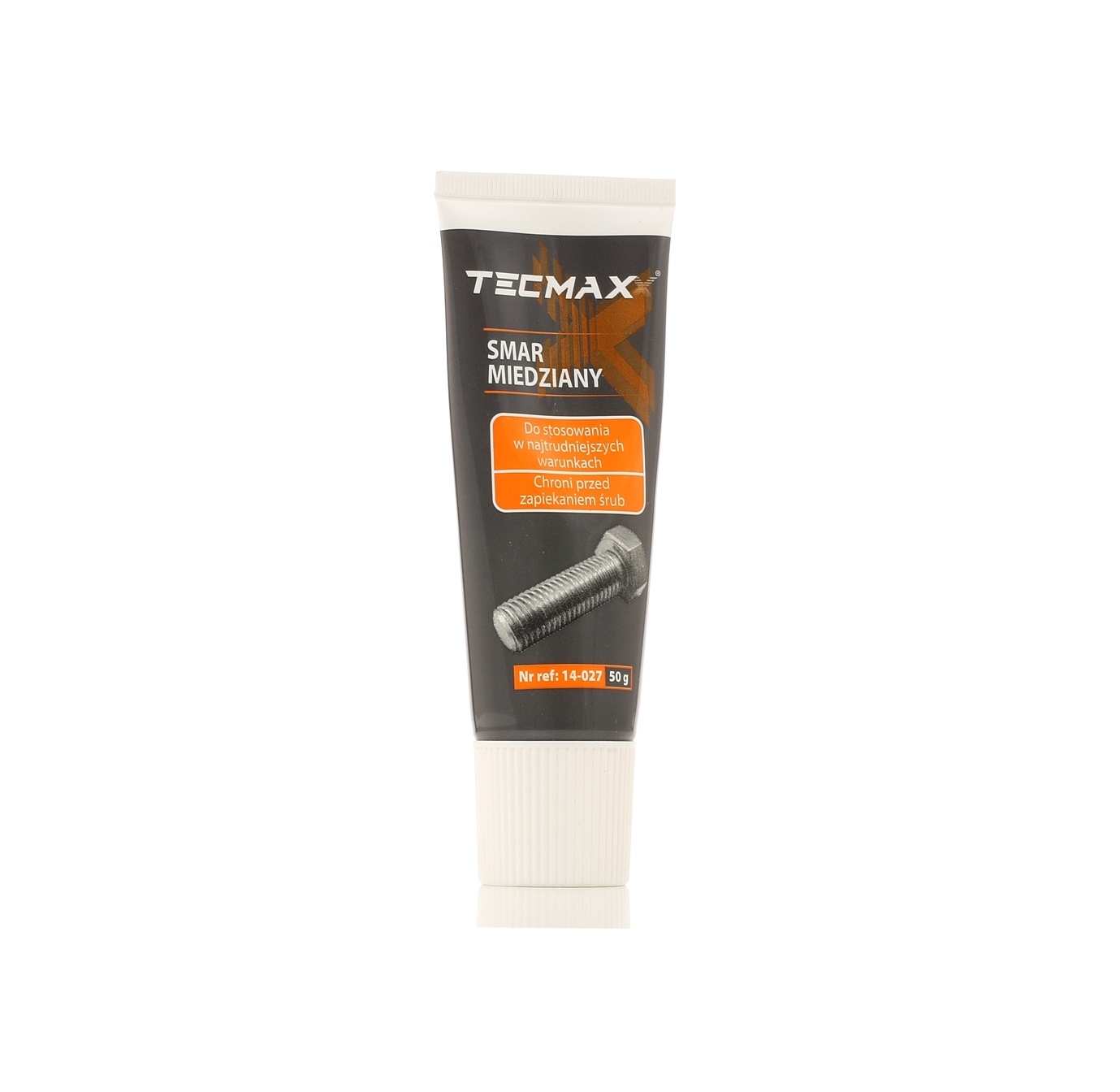 TECMAXX Copper Grease
Article number: 14-027
More
£4.99price incl. 20% VAT, excl. delivery costs
TECMAXX Copper Grease
Article number: 14-027
More
£4.99price incl. 20% VAT, excl. delivery costs
 Article number: 3080
More
£11.49
£114.90
for 1 kilogram
price incl. 20% VAT, excl. delivery costs
Article number: 3080
More
£11.49
£114.90
for 1 kilogram
price incl. 20% VAT, excl. delivery costs
 Article number: 14-002
More
£2.99
£14.95
for 1 litre
price incl. 20% VAT, excl. delivery costs
Article number: 14-002
More
£2.99
£14.95
for 1 litre
price incl. 20% VAT, excl. delivery costs

Which grease is suitable for trailer hitches?
Selecting appropriate grease for your tow hitch requires understanding different formulations and their specific properties. White lithium grease remains the most popular choice among automotive professionals due to its excellent adhesion properties and resistance to water washout.
Multipurpose grease with high melting point characteristics provides reliable performance across various temperature ranges. These formulations typically contain lithium or calcium-based thickeners that maintain consistency under load and temperature variations.
| Grease Type | Best For | Temperature Range | Water Resistance |
|---|---|---|---|
| White Lithium | General purpose | -20°C to 120°C | Excellent |
| Multipurpose | Heavy-duty applications | -30°C to 160°C | Good |
| Marine Grade | Coastal/wet conditions | -20°C to 150°C | Superior |
For specialised applications, marine-grade grease offers superior water resistance and corrosion protection. This becomes particularly valuable for boat trailer applications or vehicles operating in high-moisture environments.

Lubricate a trailer hitch: Step-by-step instructions
Proper application technique ensures maximum effectiveness and longevity of your chosen lubricant. Begin by thoroughly cleaning the tow ball surface using brake cleaner or electrical contact cleaner to remove old grease, dirt, and grime.
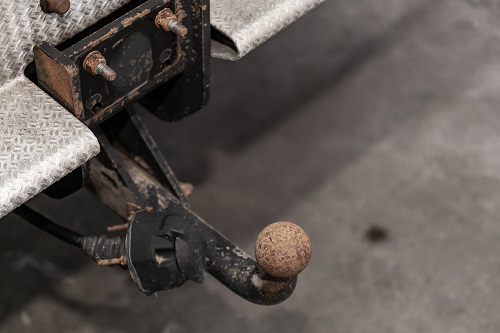
Cleaning Process:
- Remove loose debris with wire brush
- Apply brake cleaner to dissolve old grease
- Wipe clean with lint-free cloth
- Allow complete drying before proceeding
Once clean, apply a thin, even layer of grease to the entire tow ball surface. Avoid over-application, as excess grease attracts dirt and grit particles that can increase abrasion over time.
Application Steps:
- Apply grease using clean cloth or brush
- Ensure complete coverage of ball surface
- Remove excess with clean rag
- Install towball cover for protection
To grease a trailer hitch or not?
The decision to grease your tow ball depends entirely on your hitch system type. Standard hitches without stabiliser systems benefit significantly from proper lubrication, while stabiliser hitches require completely clean, dry surfaces.
Recommended Article
Maintenance and precautions when using tow hitches
Alko stabilisers and similar anti-sway systems rely on friction pads that contact the tow ball to provide stability control. Any grease or lubricant on these surfaces compromises the system's effectiveness and can lead to dangerous trailer sway during transport.
Standard Hitch Requirements:
- Regular greasing recommended
- Reduces wear and noise
- Improves hitching ease
- Extends component life
Stabiliser Hitch Requirements:
- Never apply grease or lubricant
- Keep tow ball completely clean
- Clean with brake cleaner before use
- Maintain dry surface for optimal friction
Expert Advice from Autodoc Mechanics: Always consult your trailer hitch types documentation before applying any lubricant. Manufacturer specifications take precedence over general recommendations.
Sold by AUTODOC Sold by AUTODOC Sold by AUTODOC Sold by AUTODOC Sold by AUTODOC
 Article number: 20-A58
More
£13.99
£27.98
for 1 kilogram
price incl. 20% VAT, excl. delivery costs
Article number: 20-A58
More
£13.99
£27.98
for 1 kilogram
price incl. 20% VAT, excl. delivery costs
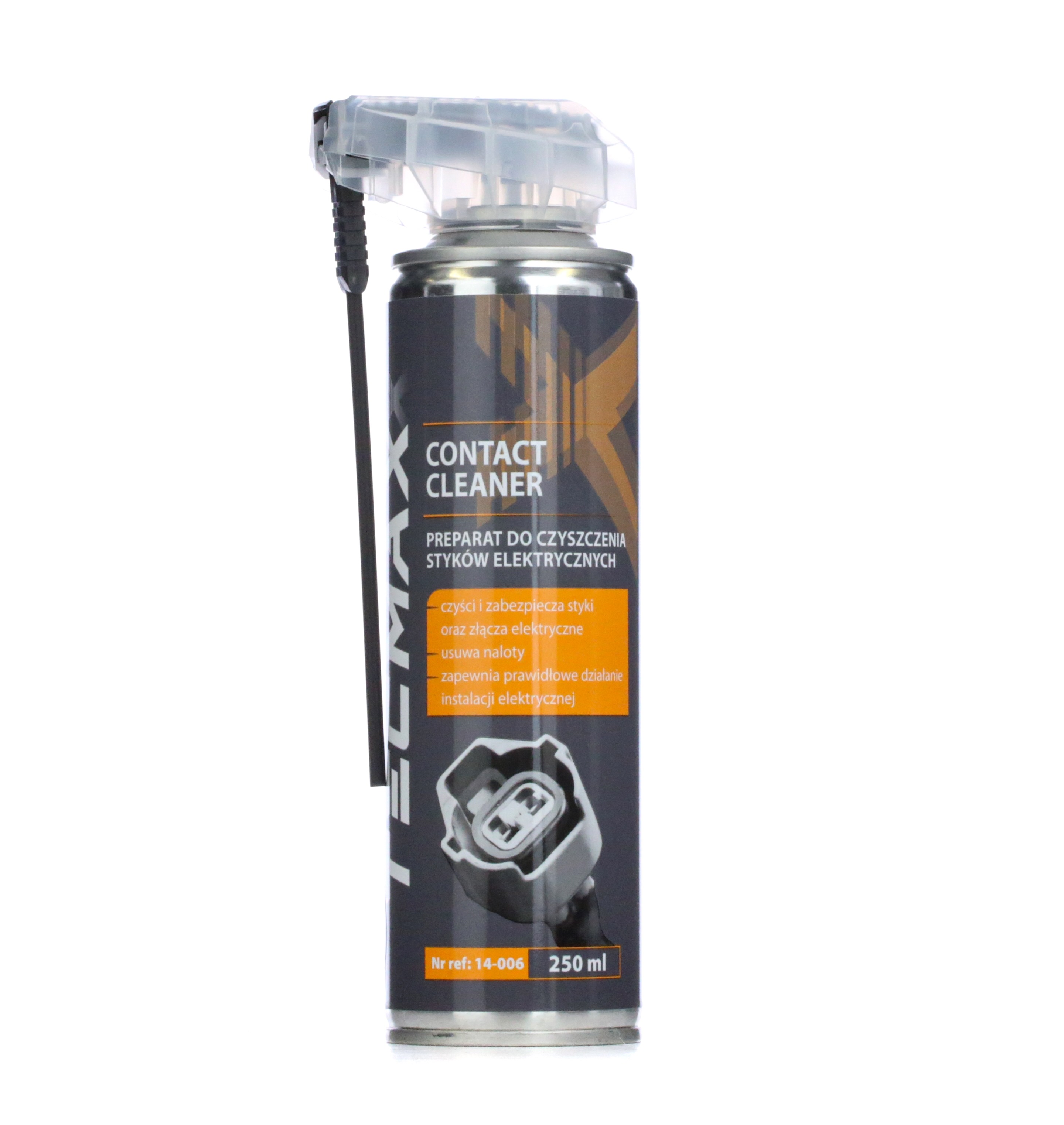 TECMAXX Contact Spray
aerosol, Capacity: 250ml
Article number: 14-006
More
£3.99
£15.96
for 1 litre
price incl. 20% VAT, excl. delivery costs
TECMAXX Contact Spray
aerosol, Capacity: 250ml
Article number: 14-006
More
£3.99
£15.96
for 1 litre
price incl. 20% VAT, excl. delivery costs
 Article number: 20-A67
More
£3.99
£19.95
for 1 litre
price incl. 20% VAT, excl. delivery costs
-22%
Article number: 20-A67
More
£3.99
£19.95
for 1 litre
price incl. 20% VAT, excl. delivery costs
-22%
 LIQUI MOLY Silicon Lubricant
Tube, Capacity: 100ml
Article number: 3312
compared to
RRP
£14.19
£10.99
£109.90
for 1 litre
price incl. 20% VAT, excl. delivery costs
LIQUI MOLY Silicon Lubricant
Tube, Capacity: 100ml
Article number: 3312
compared to
RRP
£14.19
£10.99
£109.90
for 1 litre
price incl. 20% VAT, excl. delivery costs
 Article number: B504
More
£4.59
£11.48
for 1 litre
price incl. 20% VAT, excl. delivery costs
Article number: B504
More
£4.59
£11.48
for 1 litre
price incl. 20% VAT, excl. delivery costs

Alternatives to conventional grease
Several alternatives to traditional petroleum-based grease offer specific advantages for different applications. Dry lubricants, including graphite-based products and PTFE sprays, provide friction reduction without attracting dirt and debris.
WD-40 and similar penetrating oils offer temporary lubrication but lack the staying power required for sustained towing applications. These products work better for maintenance cleaning than primary lubrication.
Dry Lubricant Options:
- Graphite spray for dust-prone environments
- PTFE coating for long-term protection
- Molybdenum disulfide for extreme pressure applications

Frequency and correct timing for maintenance
Maintenance frequency depends on usage patterns, environmental conditions, and equipment specifications. Regular inspection should occur before each towing session, with thorough cleaning and reapplication every 3-6 months for frequent users.
| Usage Level | Inspection Frequency | Reapplication Interval |
|---|---|---|
| Daily/Weekly | Before each use | Monthly |
| Monthly | Weekly | Every 3 months |
| Occasional | Before each use | Every 6 months |
Environmental factors significantly impact maintenance requirements. Coastal areas, dusty conditions, and winter salt exposure accelerate grease degradation and require more frequent attention.
Consider implementing a maintenance log to track lubrication dates and identify patterns in wear or performance issues. This documentation proves valuable for warranty claims and helps optimise maintenance schedules.

Conclusion
Proper tow bar grease selection and application significantly impacts towing safety, equipment longevity, and overall performance. Understanding your specific hitch type determines whether lubrication benefits or compromises system effectiveness.
For standard hitches, regular greasing with appropriate products reduces friction, prevents corrosion, and extends component life. However, stabiliser hitches require completely clean, dry surfaces to function properly, making grease application counterproductive and potentially dangerous.
Remember to inspect your towbar and electric kit regularly, and consider professional installation for complex systems. Proper maintenance today prevents costly repairs and ensures safe towing experiences for years to come.