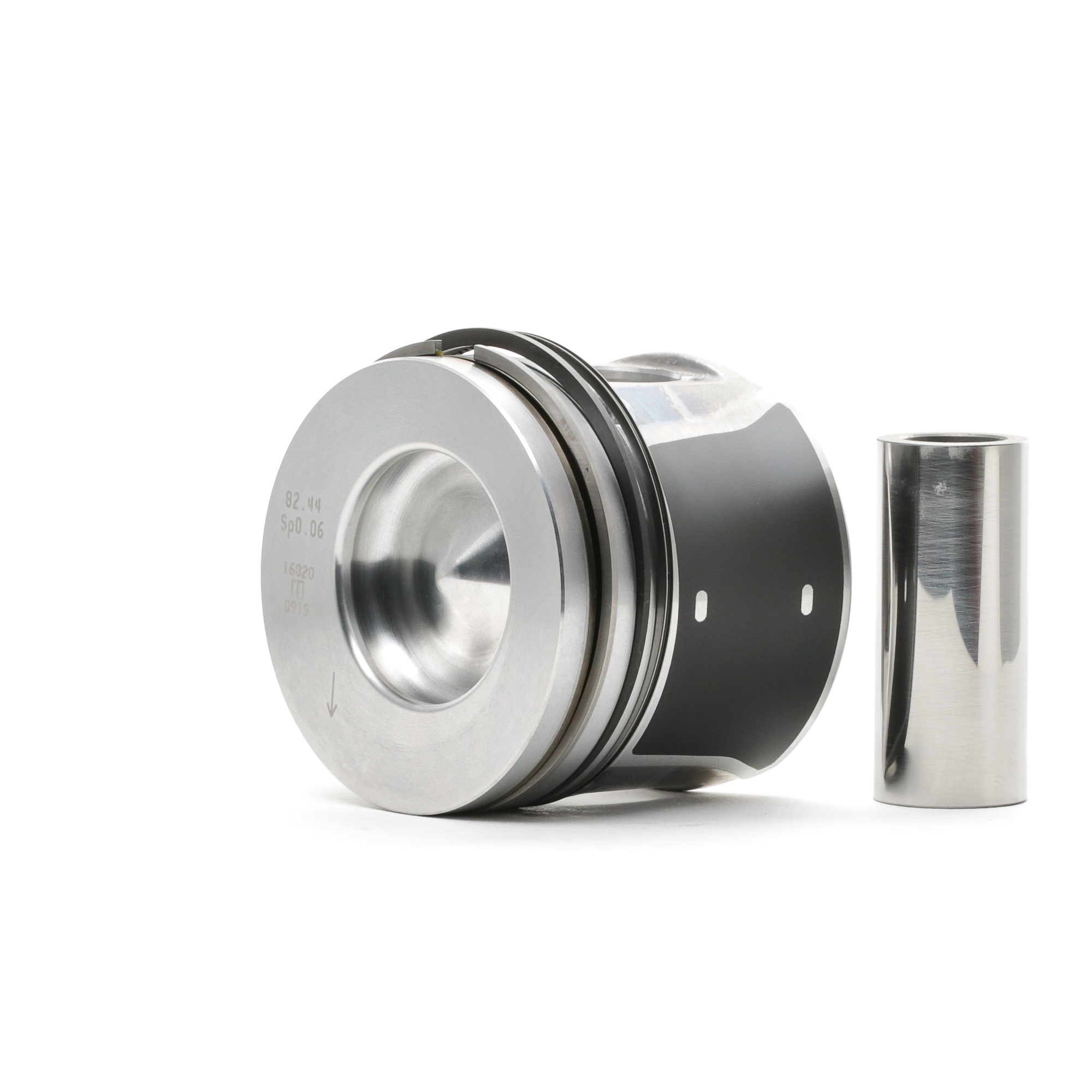
Engine piston in a car: What is it and how does it work?
Understanding how your car functions can be daunting, especially with so many intricate components working together. One such essential part is the engine piston, a key player in your car’s internal combustion engine. In simple terms, the piston’s job is to transform the energy generated during combustion into mechanical movement. It achieves this by transferring the force from the burning fuel-air mixture to the engine’s crankshaft, helping to turn the wheels. Let’s explore exactly how it all works.
What does a piston do?
In a reciprocating internal combustion engine, the piston plays a central role in converting the energy from fuel combustion into mechanical motion. During the power stroke, the air-fuel mixture ignites within the cylinder, causing an explosive increase in pressure and temperature in just a fraction of a second. This rapid expansion of gases drives the piston downward with significant force.
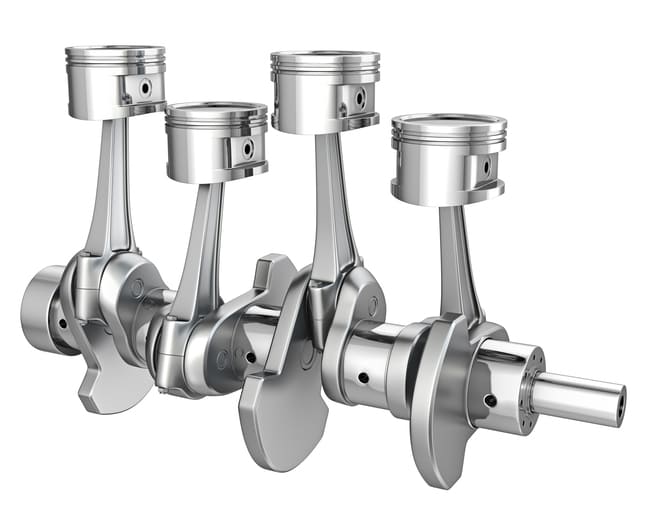
In reciprocating internal combustion engines, a piston set in motion by the combustion of the air/fuel mixture moves up and down. Simply put, it absorbs the resulting gas pressure and transmits it to the crankshaft as a powerful rotational force. The magnitude of this energy changes direction several times during a working cycle and depends on the piston strength and the inclination between the piston crown and connecting rod axis.
Enormously high pressures, large inertial forces, and extreme temperature fluctuations act on pistons, connecting rods and crankshafts during every working cycle. They function the same in all engines. During combustion, the converted forces are released as usable torque. It is important to note that the requirements vary according to the design of the engine.

In terms of performance demands, the engine crankshaft operates under varying conditions depending on the vehicle type. For instance, in large diesel truck engines, the crankshaft typically functions at speeds below 2,000 rpm. In contrast, a diesel passenger car engine may reach up to nearly 5,000 rpm, while petrol engines in passenger cars can operate at speeds as high as 7,000 rpm.
The nature of the loads also differs significantly. Large-displacement diesel engines are subjected to much higher ignition forces, which place additional stress on engine components such as the crankshaft and piston assembly. Furthermore, evolving exhaust emission regulations and the growing trend toward engine downsizing are expected to result in higher combustion pressures in future engines. These changes will demand even greater durability and efficiency from engine internals.
The piston also performs several other crucial functions beyond converting combustion energy into mechanical motion:
- Sealing the combustion chamber: It prevents gases from escaping during the combustion process.
- Guiding the connecting rod: In plunger-type engines, the piston helps maintain the correct motion path of the connecting rod.
- Dissipating heat: It transfers heat generated during combustion away from the combustion chamber.
- Assisting gas exchange: The piston helps draw in the air-fuel mixture and expel exhaust gases through its up-and-down movement.
- Promoting mixture formation: The specially shaped top surface of the piston, known as the piston crown, aids in optimising combustion by improving air-fuel mixing.
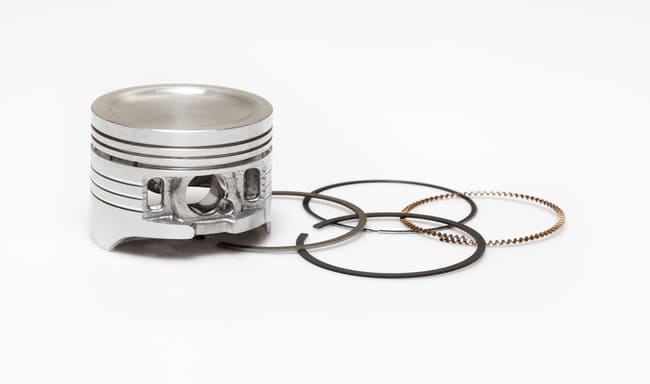
- Accommodating sealing elements: The piston houses the piston rings, which serve multiple purposes. These include sealing off the combustion chamber from the crankcase, regulating oil consumption by scraping excess oil from the cylinder walls, and conducting heat away from the piston to the cooler cylinder bore.
Each of these roles is essential for maintaining engine efficiency, performance, and longevity.
What is an opposed-piston engine?
An opposed-piston engine features two pistons operating within a single cylinder, moving towards each other and sharing a central combustion chamber. Unlike conventional engines with one piston per cylinder, this design eliminates the need for a cylinder head, improving thermal efficiency and reducing heat loss.
This technology was widely used between the 1930s and 1960s in a variety of applications including ships, tanks, racing motorcycles, and aircraft. A notable example is the Junkers Jumo 204 engine, which delivered 650 kW (880 hp) and powered Lufthansa aircraft. It was particularly popular for long-range reconnaissance missions during the Second World War due to its excellent fuel efficiency and reliability, making it a favourite among Luftwaffe pilots.
After the Second World War, the opposed-piston engine, which was particularly widespread in the GDR, powered tractors, excavators, locomotives and tractors, among other things. However, problems with the oil supply, and somewhat unsteady running, meant that the concept never really caught on.
Today, however, the concept is experiencing a revival. The company Achates Power is developing opposed-piston engines for modern vehicles, including the Ford F-150. By refining the oil transfer process and introducing more precise oil metering, they claim to have overcome the previous technical limitations. One of the key advantages of their updated design is a notably smooth torque curve. According to the company, these engines are not limited to large trucks and pickups. They could also be adapted for use in standard passenger cars.
Maintaining the value of your vehicle
In order to ensure that the piston can reliably perform its job over the entire service life of the vehicle, drivers of gasoline engines have to make sure that they only use fuel with the correct octane rating. The same goes for spark plugs. These must be checked on a regular basis. If you use biofuels, you must change the oil more frequently and be sure to check the oil level and top it off, if necessary.
According to AUTODOC specialists, using high-quality engine oil and components suited to your car’s specifications plays a crucial role in prolonging piston life and maintaining optimal performance. Regular maintenance using trusted parts also helps to prevent premature wear and costly repairs.

The environment and how achieve low-emission and complete combustion
Modern pistons are engineered to support low-emission and complete combustion processes. Their design and material composition not only enhance thermal and mechanical performance but also play a crucial role in reducing fuel consumption and emissions. Thanks to their ability to minimise friction and control oil usage, today’s pistons make a meaningful contribution to protecting the environment and conserving valuable resources.
Conclusion
The piston is a fundamental component of the internal combustion engine, responsible for converting combustion energy into mechanical force that powers your vehicle. In addition to this core function, it also plays a key role in sealing the combustion chamber, regulating oil consumption, and supporting efficient heat transfer. Whether used in conventional or opposed-piston engines, piston technology continues to advance in response to demands for improved performance, fuel efficiency, and reduced emissions. By following proper maintenance practices, such as using the correct fuel, checking oil levels, and replacing spark plugs regularly, you can help ensure your pistons operate reliably throughout the life of the vehicle. A better understanding of this crucial part can lead to smarter car care and enhanced environmental responsibility.
FAQs
What causes piston damage in a car engine?
Piston damage can result from using the wrong fuel type, poor-quality oil, engine overheating, or a lack of regular maintenance such as spark plug replacement.
Can you replace pistons without replacing the whole engine?
Yes, pistons can be replaced individually if they are damaged. However, this requires significant engine disassembly and should be carried out by a professional mechanic.
How often should I check my engine oil if I use biofuel?
If you use biofuel, it’s advisable to check the engine oil more frequently than with standard fuel. Always follow your vehicle manufacturer’s recommendations for oil change intervals.
Why is piston maintenance important for environmental protection?
Properly functioning pistons ensure efficient combustion, reduce harmful emissions, and lower oil consumption, all of which contribute to better environmental performance.
How do I know if my car has piston problems?
Common signs of piston issues include excessive smoke from the exhaust, loss of engine power, unusual knocking noises, and increased oil consumption.
Can opposed-piston engines be used in regular cars?
Yes, modern developments have made it possible to adapt opposed-piston engines for use in standard passenger vehicles, offering benefits in efficiency and performance.
Top products


 10 September 2025 (updated)