Table of Contents

 11 December 2025 (updated)
 Engine connecting rod: functions, problems, and failure symptoms
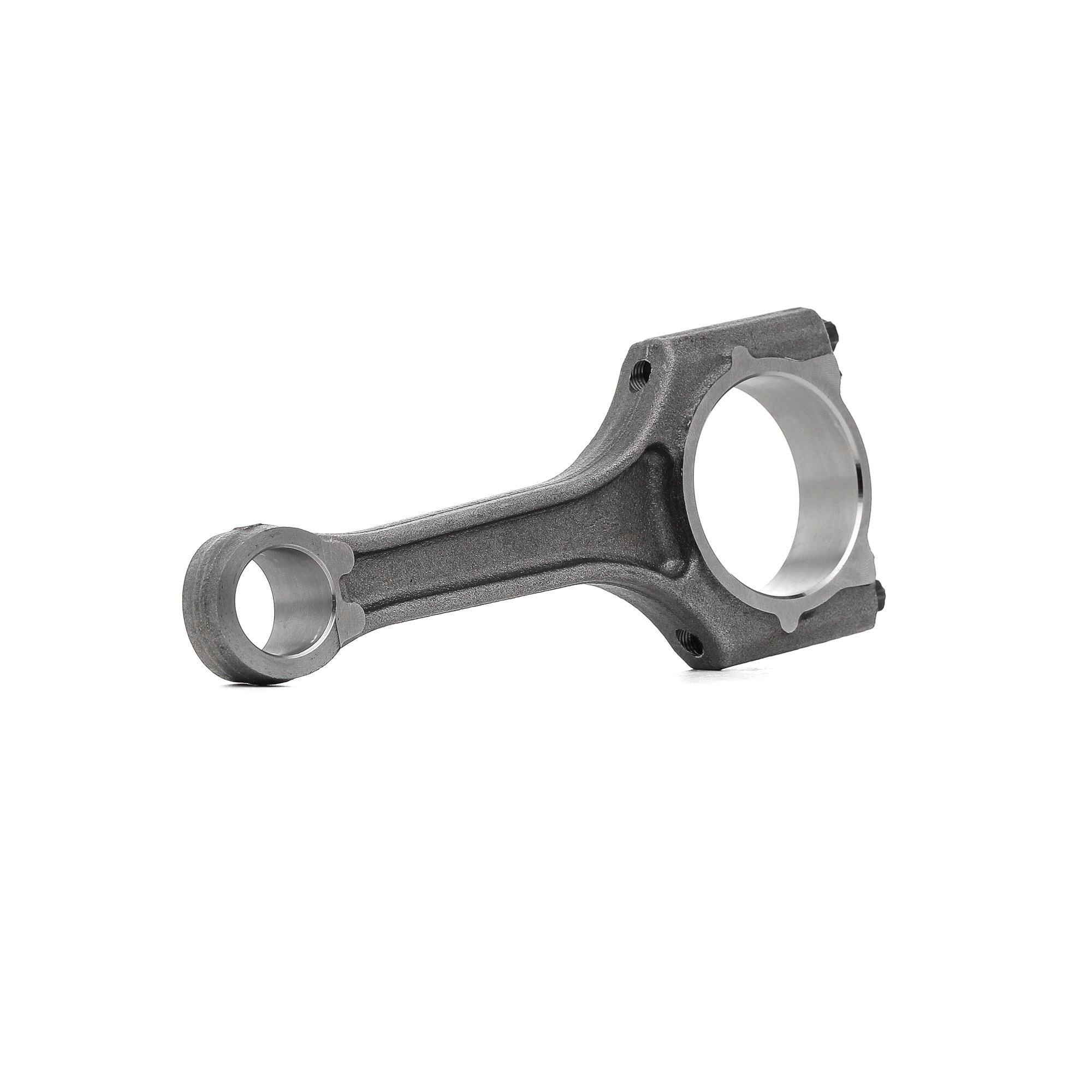
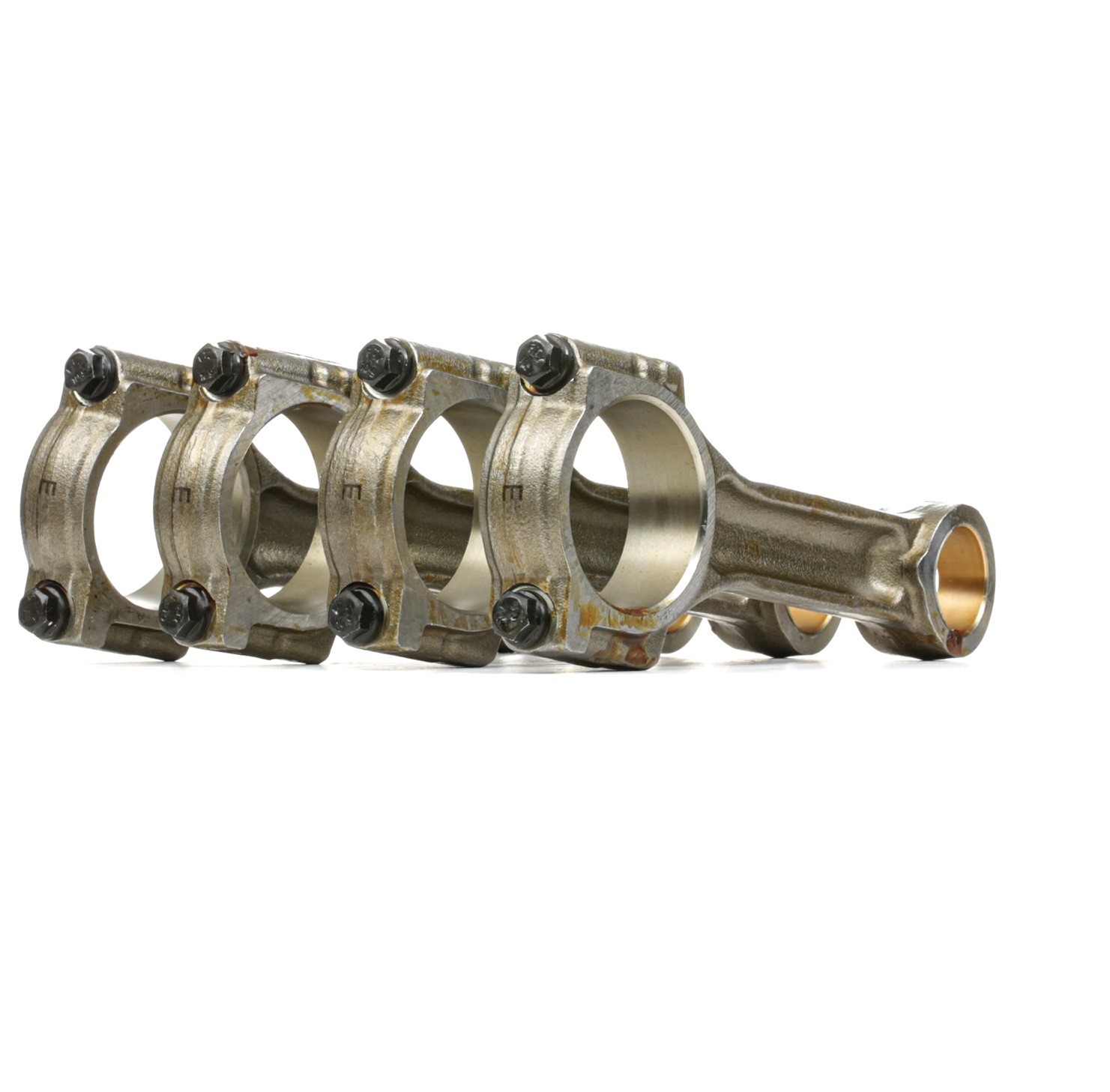
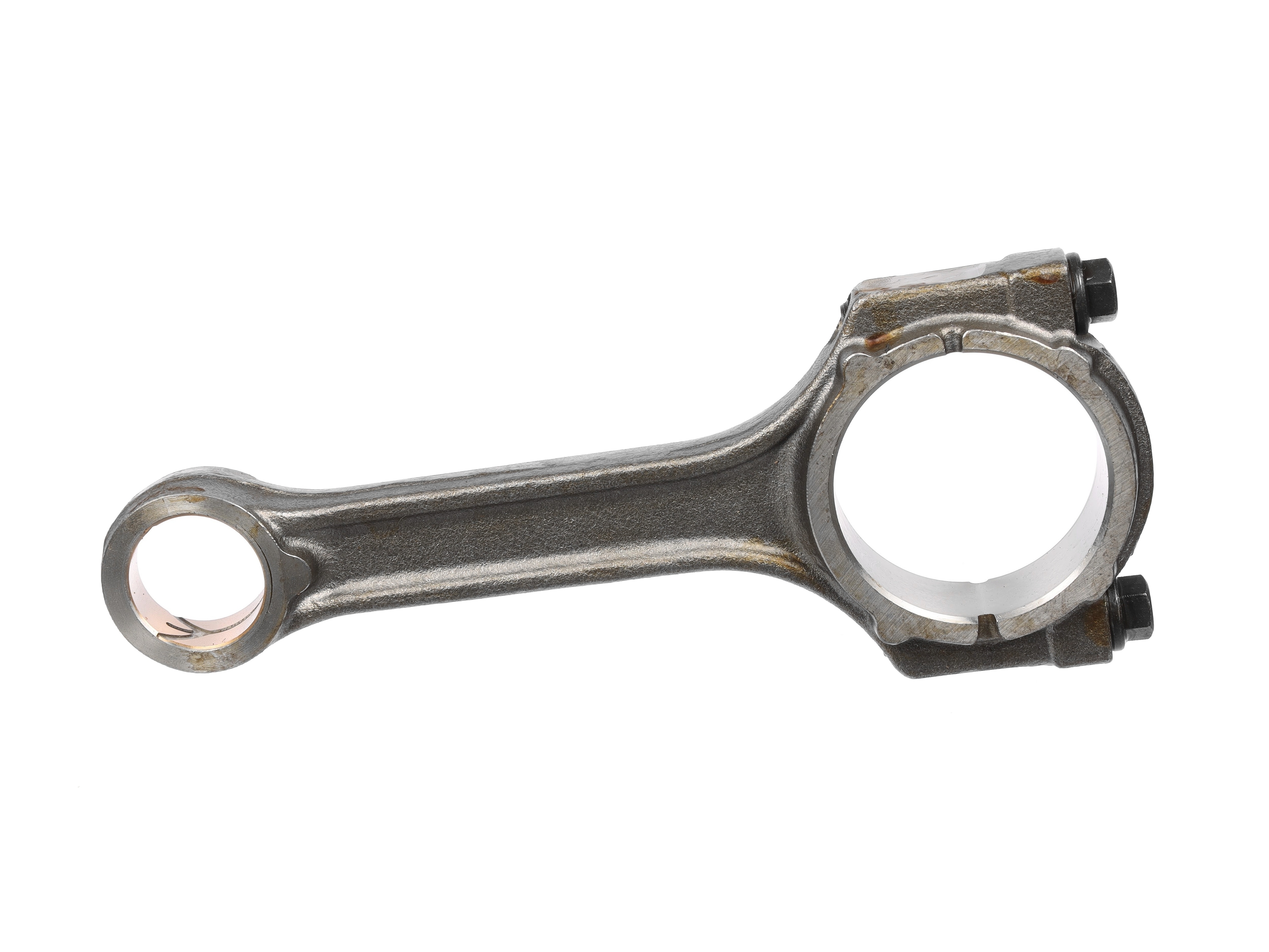
A connecting rod, often called a con rod, links the engine pistons to the crankshaft, converting the linear motion of combustion into rotational motion. Due to its role, this component is constantly under immense tension and pressure, especially in high-performance or tuned engines.
While connecting rod failure is uncommon in modern vehicles, especially when properly maintained, problems can arise over time. Understanding the part’s function, fault symptoms, and repair options can help you avoid major engine damage and unnecessary expense.
What does a connecting rod do?
The primary job of a connecting rod is to transfer energy from the piston to the crankshaft during the combustion cycle. It acts as a vital link in converting combustion pressure into the rotational force that powers the car engine.
To withstand high temperatures and forces, connecting rods are typically made from forged steel or aluminium alloys. Some high-performance or motorsport engines use lightweight titanium rods for enhanced strength-to-weight ratio. The material, shape, and weight of a rod can vary by manufacturer and vehicle class.
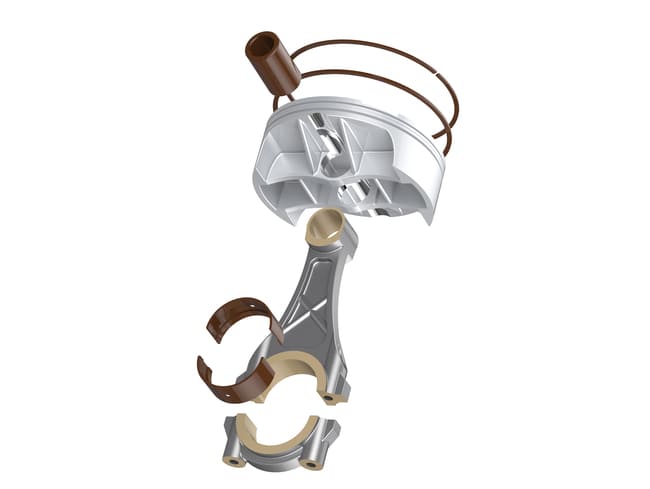
Modern engines require rods that are both robust and lightweight to ensure durability, efficiency, and performance. Even minor changes in the rod geometry or weight can impact engine balance.
Common signs of a failing connecting rod
Although robust, connecting rods and their bearings can wear out or become damaged over time. Here are the most common symptoms of faults:
- Knocking or ticking noises from the engine: often referred to as “rod knock”, this occurs when the clearance between the connecting rod and crankshaft becomes too large, usually due to worn bearings.
- Power losses or misfiring: a damaged rod can disrupt the piston’s motion, affecting combustion and leading to inefficiency.
- Excessive oil consumption or low oil pressure: worn connecting rod bearings can reduce oil pressure, leading to overheating or poor lubrication.
- Metal shavings in the oil: often a sign of internal wear; these can appear if the rod is scraping against the crankshaft.
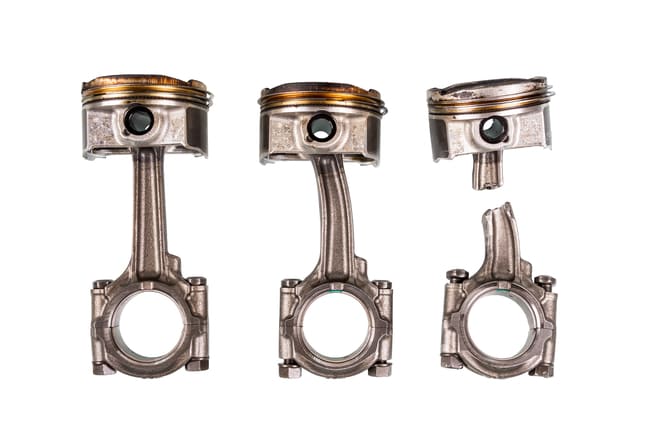
Ignoring these symptoms can escalate the problem quickly, potentially resulting in a cracked rod, damaged crankshaft, or a seized engine.
Causes of connecting rod failure
There are several reasons why a connecting rod might fail, including the following:
1. Insufficient lubrication
A major cause of rod bearing wear is a lack of lubrication. If your engine oil is low, dirty, or the wrong type for your engine, it may not create a sufficient oil film between the rod bearing and the crankshaft journal. Over time, metal-on-metal contact leads to rapid wear and even bearing failure.
2. Material or manufacturing defects
Although rare, especially in newer vehicles, flaws in the metallurgy or machining of a rod can cause it to crack or fail prematurely. This is more common in classic cars with older engine designs.
3. Over-revving or engine misuse
Shifting to a lower gear at high RPM (accidental downshift) can cause sudden, excessive high revving. This puts a lot of stress on the rods and bearings, potentially causing the parts to bend, stretch, or even snap.
4. Corrosion from inactivity
If a car sits unused for long periods, especially without proper preparation, condensation can form inside the engine. This leads to corrosion on the bearing surfaces. When starting up, the rust particles can wear down the bearings and crankshaft.

Diagnosing connecting rod problems
A skilled mechanic can often diagnose rod bearing damage simply by listening to the engine while it idles. Rod knocking tends to start with a subtle clicking or tapping sound that worsens with increasing RPM and oil temperature.
In garages, mechanics use stethoscopes, oil analysis, and sometimes bore scopes to confirm the condition of the rod and bearings. Catching these issues early can make a huge difference in repair cost and engine life.
If you suspect rod damage, it’s crucial to stop driving and get the vehicle diagnosed immediately. AUTODOC mechanics advise against driving with bad rods as a simple bearing issue can quickly turn into total engine failure.
Replacing the connecting rod bearings
Replacing damaged bearings alone may seem cost-effective, but the repair is both labour-intensive and time-consuming. The engine must be removed, disassembled, cleaned, and measured for correct bearing clearances.
Sold by AUTODOC Sold by AUTODOC Sold by AUTODOC Sold by AUTODOC Sold by AUTODOC
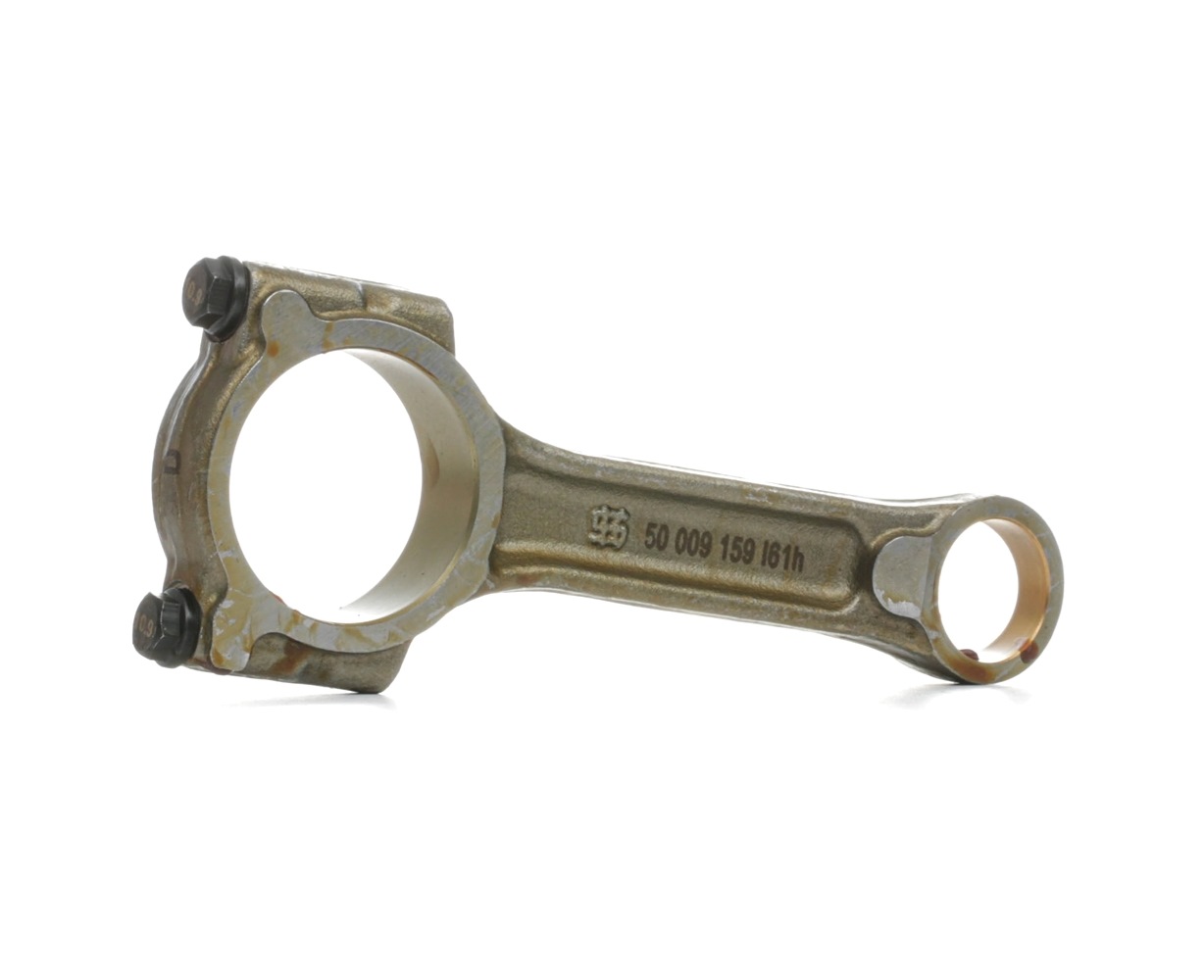 KOLBENSCHMIDT Connecting Rod
Article number: 50009159
£39.99£159.96 / Price per 4 items
price incl. 20% VAT, excl. delivery costs
KOLBENSCHMIDT Connecting Rod
Article number: 50009159
£39.99£159.96 / Price per 4 items
price incl. 20% VAT, excl. delivery costs
 Article number: 38079
£47.99£191.96 / Price per 4 items
price incl. 20% VAT, excl. delivery costs
-35%
Article number: 38079
£47.99£191.96 / Price per 4 items
price incl. 20% VAT, excl. delivery costs
-35%
 Article number: CO007300
compared to
RRP
£128.08
£82.99£331.96 / Price per 4 items
price incl. 20% VAT, excl. delivery costs
Article number: CO007300
compared to
RRP
£128.08
£82.99£331.96 / Price per 4 items
price incl. 20% VAT, excl. delivery costs
 KOLBENSCHMIDT Connecting Rod
Article number: 50009190
£42.49
Price per item
£169.96 / Price per 4 items
price incl. 20% VAT, excl. delivery costs
-19%
KOLBENSCHMIDT Connecting Rod
Article number: 50009190
£42.49
Price per item
£169.96 / Price per 4 items
price incl. 20% VAT, excl. delivery costs
-19%
 Article number: CO005000
compared to
RRP
£103.87
£83.49£333.96 / Price per 4 items
price incl. 20% VAT, excl. delivery costs
Article number: CO005000
compared to
RRP
£103.87
£83.49£333.96 / Price per 4 items
price incl. 20% VAT, excl. delivery costs
Repair process:
- The crankshaft journal is checked for scoring or wear
- Bearings are replaced
- Axial and radial clearances are carefully recalibrated
- Oil pressure is checked after reassembly
Typical cost in the UK: £1,500–£2,000 depending on labour and parts.
Full engine replacement
In many modern cars, especially those outside warranty or not considered collector’s items, replacing the entire engine is often more cost-effective. A remanufactured engine can cost as little as £600–£1,000 and usually comes with a warranty, saving time and reducing the risks.
However, for classic car owners, preserving original engine components is often essential for maintaining authenticity and value. In these rare cases, a professional rebuild of the original engine, including replacing or reconditioning the connecting rod, is the preferred route.
Maintenance tips to prevent rod damage
To extend the life of your engine’s connecting rods and avoid costly repairs, follow these preventive tips:
- Change the engine oil regularly: always use the recommended type of engine oil for your vehicle and replace it at the intervals specified in your owner’s manual.
- Avoid engine overspeed: be careful when shifting gears, especially in manual transmissions.
- Warm up the engine: give your engine time to reach optimal temperature before hard acceleration.
- Store your vehicle properly: if the car will be unused for a long period, add a fuel stabiliser, keep the battery charged, and consider an oil change before and after storage.
Sold by AUTODOC Sold by AUTODOC Sold by AUTODOC Sold by AUTODOC Sold by AUTODOC
 ET ENGINETEAM Connecting Rod
Article number: OM0032
£48.99£195.96 / Price per 4 items
price incl. 20% VAT, excl. delivery costs
ET ENGINETEAM Connecting Rod
Article number: OM0032
£48.99£195.96 / Price per 4 items
price incl. 20% VAT, excl. delivery costs
 Article number: 50009642
£64.99£259.96 / Price per 4 items
price incl. 20% VAT, excl. delivery costs
-18%
Article number: 50009642
£64.99£259.96 / Price per 4 items
price incl. 20% VAT, excl. delivery costs
-18%
 Article number: CO006500
compared to
RRP
£122.42
£99.49£397.96 / Price per 4 items
price incl. 20% VAT, excl. delivery costs
-18%
Article number: CO006500
compared to
RRP
£122.42
£99.49£397.96 / Price per 4 items
price incl. 20% VAT, excl. delivery costs
-18%
 Article number: CO002600
compared to
RRP
£102.02
£83.49£333.96 / Price per 4 items
price incl. 20% VAT, excl. delivery costs
-17%
Article number: CO002600
compared to
RRP
£102.02
£83.49£333.96 / Price per 4 items
price incl. 20% VAT, excl. delivery costs
-17%
 Article number: CO006900
compared to
RRP
£106.65
£87.99£351.96 / Price per 4 items
price incl. 20% VAT, excl. delivery costs
Article number: CO006900
compared to
RRP
£106.65
£87.99£351.96 / Price per 4 items
price incl. 20% VAT, excl. delivery costs
Summary
The connecting rod is one of the most hard-working parts of a combustion engine. While damage is rare in well-maintained modern vehicles, ignoring early symptoms like rod knock can lead to catastrophic failure and high repair costs.
In many cases, particularly with newer vehicles, replacing the engine as a whole is more economical than repairing a single rod or bearing. However, in rare or vintage models, retaining the original components may be worth the investment in restoration.
If you notice suspicious noises or experience a drop in performance, don’t delay. Seek help from a qualified mechanic to diagnose and resolve the issue before it escalates.
Top spare car parts:
- Head gasket for Vauxhall Corsa
- Car turbocharger
- Engine mount Mercedes
- 185 65 R15 tyres
- Riken tyres
- Tyres 185/60 R15
- Tyres for BMW
- All season tyres
Recommended Article
Crankshaft: what you need to know