
Table of Contents

 30 May 2025
 Tyre Tread Depth Guide: Legal Minimum in the UK, How to Check, and Tread Depth Lifespan
Understanding tyre tread depth is essential for road safety and staying legal in the UK. This guide explains the legal minimum tread depth, simple ways to check tyre wear, and how tread depth impacts performance and stability. Stay informed to ensure safer driving and avoid costly penalties.
Understanding tyre tread depth
The tyre tread is the outer surface of a tyre that comes into direct contact with the road. It consists of grooves, patterns, and blocks. The depth of the grooves is designed to ensure grip, optimal handling, and safety compliance.
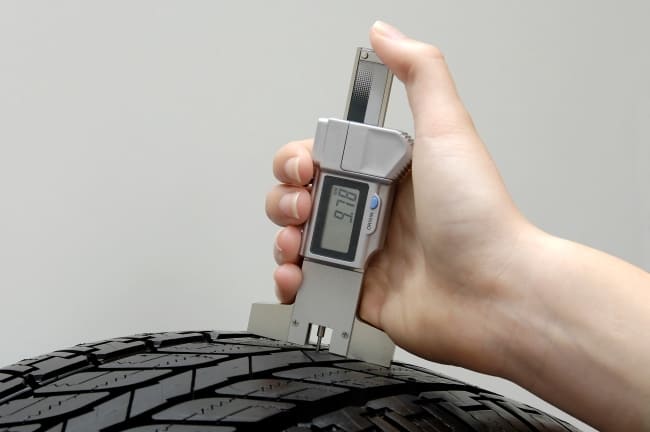
When the tread becomes too shallow, it means that it is worn and less effective at maintaining traction and control, particularly in wet or icy road conditions. This is why most places have a legal minimum requirement for road safety. In the UK, this requirement may vary depending on the type of vehicle used.
Tyre tread depth chart (UK)
| Type of vehicle | Minimum tread depth |
|---|---|
| Passenger cars | 1.6 mm across the central ¾ of the tread breadth and around the entire tyre circumference. |
| Goods vehicles (up to 3,500 kg) | Same as above. |
| Trailers and caravans (up to 3,500 kg) | Same as above. |
| Most vehicles weighing over 3,500 kg | 1 mm throughout a continuous band covering at least 3/4 of the tread breadth around the entire circumference. |
| Mopeds and motorbikes (below 50 cc) | The tyre’s original tread pattern must be clearly visible. |
Legal tyre tread in the UK
For cars, the legal minimum tyre depth is at least 1.6 mm across the central ¾ of the tread breadth and around the entire circumference. As explained above, the legal minimum depth may be different for some heavy-duty vehicles and small two-wheelers.
It is advisable to replace your tyres before they are worn down to the minimum to ensure that they maintain traction, stability, and performance, wear more evenly, and disperse water effectively. The quality of the tread can also directly affect fuel consumption.
You should also factor in the weather conditions. For example, the MOT generally recommends a replacement for a depth of less than 2.5 mm for summer tyres and less than 4 mm for winter tyres as deeper treads provide more grip in wet and snowy conditions.
Recommended Article
Tyre blowout: what to do, prevention tips, and solutions
What is the legal minimum tread depth for tyres on your trailer or caravan?
Trailers and caravans have the same legal requirement for the tread depth as cars, which is at least 1.6 mm (see specifics above). In comparison to car tyres, however, the wheels of trailers and caravans usually have to hold more weight and are stationary for longer periods, leading to more stress. The general recommendation is to replace these tyres at least once every 5 to 7 years even if the tread has not reached the minimum depth.
How long will a 2 mm tyre tread last?
If your tyre’s tread is only 2 mm deep, you may be able to get another 1,000 miles out of it at most. However, it is advisable to start looking for new car tyres right away and not avoid a replacement for too long.
How long will a 3 mm tyre tread last?
Depending on the driving conditions, a 3 mm tread should give you another 10,000 to 20,000 miles before a replacement. The difference in braking performance and grip for a 3 mm tread and a 1.6 mm tread is significant, however, 3 mm is sufficient rather than optimal. Make sure to replace the tyres in good time.
Sold by AUTODOC Sold by AUTODOC Sold by AUTODOC Sold by AUTODOC Sold by AUTODOC
 Article number: TST/DGE
£8. 59price incl. 20% VAT, excl. delivery costs
Article number: TST/DGE
£8. 59price incl. 20% VAT, excl. delivery costs
 Article number: YT-37364
£19. 99price incl. 20% VAT, excl. delivery costs
Article number: YT-37364
£19. 99price incl. 20% VAT, excl. delivery costs
 Article number: VS0563
£99. 99price incl. 20% VAT, excl. delivery costs
Article number: VS0563
£99. 99price incl. 20% VAT, excl. delivery costs
 Article number: 0XTY065
£8. 99price incl. 20% VAT, excl. delivery costs
-15%
Article number: 0XTY065
£8. 99price incl. 20% VAT, excl. delivery costs
-15%
 Article number: 92514
compared to
RRP
£182.45
£154. 49price incl. 20% VAT, free delivery
Article number: 92514
compared to
RRP
£182.45
£154. 49price incl. 20% VAT, free delivery
How long will a 4 mm tyre tread last?
If the depth is 4 mm, the tyre may last for 10,000–30,000 miles before it’s worn to the minimum. However, its exact lifespan will depend on the roads, tyre quality, and driving conditions. Regular checks help ensure timely replacements.
How long will a 5 mm tyre tread last?
A 5 mm tread typically lasts approximately 20,000–40,000 miles, depending on factors like driving style, road surfaces, vehicle type, and tyre quality. You should also consider your vehicle’s performance requirements as some cars require deeper treads for improved handling and cornering.
How to check tyre tread depth
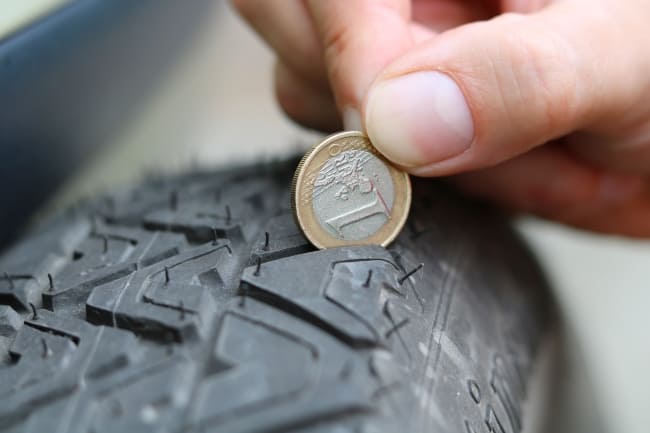
To check the depth of the tyre treads, you can measure it using a tyre tread depth gauge or, alternatively, by looking at the wear indicators or inserting a 20p coin. The 20p coin test is a common method as the length of the coin’s outer edges is roughly 2 mm.
To perform the test, simply insert the coin into the tread grooves in the central three quarters of the tread. If the outer edge of the coin is not visible, the depth should be above the minimum 1.6 mm. If it is visible, the tyres are too worn and should be replaced right away.
Sold by AUTODOC Sold by AUTODOC Sold by AUTODOC Sold by AUTODOC Sold by AUTODOC
 Article number: 91234
£29. 49price incl. 20% VAT, free delivery
Article number: 91234
£29. 49price incl. 20% VAT, free delivery
 Article number: AK63
£15. 99price incl. 20% VAT, excl. delivery costs
Article number: AK63
£15. 99price incl. 20% VAT, excl. delivery costs
 Article number: 0623207
£8. 99price incl. 20% VAT, excl. delivery costs
-6%
Article number: 0623207
£8. 99price incl. 20% VAT, excl. delivery costs
-6%
 Article number: 92268
compared to
RRP
£80.11
£74. 99price incl. 20% VAT, free delivery
-5%
Article number: 92268
compared to
RRP
£80.11
£74. 99price incl. 20% VAT, free delivery
-5%
 Article number: 92512
compared to
RRP
£65.81
£61. 99price incl. 20% VAT, free delivery
Article number: 92512
compared to
RRP
£65.81
£61. 99price incl. 20% VAT, free delivery
Tyre tread wear indicators
Tyre tread indicators are small raised bars located within the grooves of a tyre. These bars help drivers visually assess tread depth. When the surface wears down to the level of these indicators, the tyre has reached the legal minimum of 1.6 mm and must be replaced. However, it is recommended to fit new ones when the depth is 3 mm or less to maintain stability. Regularly inspecting these indicators is a simple way to monitor tyre health.
Recommended Article
Car tyre insurance: what it is, prices in the UK, and advantages
Top products related to this topic:


