Problems with the Volvo V60

Reliability Volvo V60: common problems, issues symptoms and faults
- Electric tailgate not working: The electric tailgate of the Volvo V60 often shows malfunctions, especially in models from 2019 onwards. These problems occur after 20,000-40,000 km and manifest themselves by complete failure or jerky opening/closing of the tailgate.
- D4 (190 PS) turbocharger problems: The D4 diesel engine with 190 hp shows typical turbocharger weaknesses as early as 80,000-120,000 km. Symptoms include loss of power, black smoke and whistling noises, which indicate wear on the turbine blades or defective seals.
- T8 Hybrid battery problems: The T8 Hybrid system shows battery degradation after only 60,000-100,000 km. The high-voltage battery loses capacity, resulting in reduced electric range and more frequent engine starts.
- 2.0 diesel injection system breakdowns: The 2.0 diesel engines (D3, D4, D5) suffer from injection problems from 100,000-150,000 km. Contaminated injectors and defective high-pressure pumps cause rough engine running and increased fuel consumption.
Volvo V60: Problems with the electric tailgate
The Volvo V60's electric tailgate frequently malfunctions, resulting in complete failure, jerky movement or incomplete closing. These complaints are particularly common in the 2019 and 2020 model variants and can occur after just 20,000-40,000 km of driving. The symptoms range from sporadic dropouts to complete failure of the automatic opening and closing function. The reliability of the electric tailgate is impaired by weather conditions, soiling of the sensors and wear on the drive mechanism. Software errors in the control unit are also often the cause of these breakdowns.
Regular maintenance is essential for the longevity of the electrical components. The sensitive Volvo V60 tailgate drives require regular cleaning of the guide rails and lubrication of the moving parts every 20,000 km. Diagnosis is carried out using the Volvo diagnostic system VIDA, which reads out specific error codes for the tailgate. In the case of software problems, an update of the control unit software often helps, while mechanical defects may require the replacement of drive motors or sensors.
Volvo V60: Problems with the D4 (190 hp) turbocharger
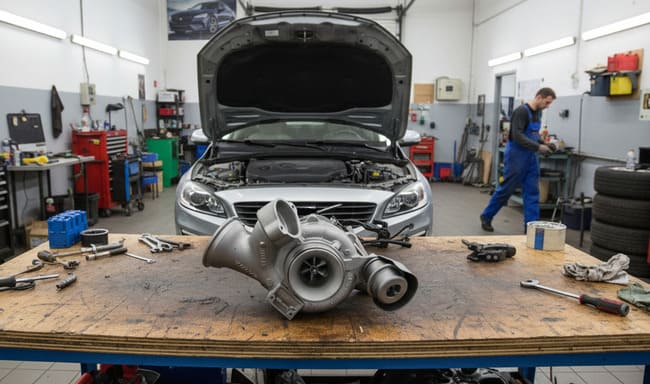
The 190 hp D4 diesel engine exhibits characteristic turbocharger weaknesses, which are noticeable through loss of power, black smoke from the exhaust and metallic noises. These faults typically occur between 80,000 and 120,000 km, but can also occur earlier if inadequately maintained. The symptoms often begin gradually with reduced acceleration and develop into a significant drop in performance. The turbine blades, which are damaged by high temperatures and dirt, are particularly affected. The service life of the turbocharger is considerably shortened by frequent short journeys and irregular oil changes.
A systematic check is crucial for the early detection of turbocharger problems. The precise Volvo V60 D4 turbocharger systems require high-quality engine oils with low SAPS content and change intervals of maximum 15,000 km. The diagnosis includes pressure measurements in the charge air circuit, visual inspection for oil leaks and a smooth running check. At the first sign of problems, the charge air cooler system should be cleaned and the air filters replaced to prevent further damage.
Volvo V60: Problems with the T8 hybrid system
The T8 hybrid system of the Volvo V60 shows battery degradation and loss of performance after only 60,000-100,000 km. The high-voltage battery continuously loses capacity, resulting in reduced electric range and more frequent combustion engine starts. Symptoms include reduced electric driving time, longer charging times and error messages on the display. The reliability of the system is impaired by extreme temperatures, frequent rapid charging and deep discharges. In addition, problems with the power electronics and high-voltage cables can occur, manifested by warning lights and emergency running programs.
Professional maintenance is critical for the service life of the hybrid system. The complex Volvo V60 T8 battery systems require special diagnostic equipment and regular software updates every 20,000-30,000 km. Battery conditioning through full charge/discharge cycles every 10,000 km can slow down degradation. If performance declines, a battery analysis should be carried out to identify individual defective cells. Preventive measures include avoiding extreme states of charge and regular air conditioning of the battery.
Volvo V60: Problems with the 2.0 diesel injection system
The 2.0 diesel engines (D2, D3 150 hp, D4, D5) of the Volvo V60 suffer from characteristic injection problems that occur from 100,000-150,000 km. Dirty injectors cause rough engine running, increased fuel consumption and black smoke. The symptoms begin with slight jerking when idling and develop into significant power losses. The D3 (150 hp) and D4 variants in particular are susceptible to coking of the injectors due to inferior fuel quality. The high-pressure pump can fail between 120,000-180,000 km, leading to complete engine standstill. These breakdowns are often due to inadequate fuel filter maintenance.
A professional inspection is essential for the early detection of fuel injection problems. The sensitive Volvo V60 common-rail systems require high-quality diesel fuels and regular fuel filter changes every 20,000 km. Diagnosis is carried out via pressure measurements in the fuel system and injector tests. Preventive measures include regular fuel system cleaning with special additives every 30,000 km and the use of premium diesel fuel with cleaning additives.
Volvo V60: Problems with the automatic transmission

The automatic transmission of the Volvo V60, especially in T4, T5 and T6 petrol versions, shows weaknesses in the form of jerky gear changes and delayed gear selection. These complaints often occur between 60,000-100,000 km and are manifested by hard gear shifting, slippage during acceleration and unusual noises. The gearbox does not shift correctly or does not jump into the desired gear, which is particularly problematic at low speeds. The 8-speed automatic also exhibits problems with the transmission control unit, which manifest themselves in error messages and emergency running programs. With T3 and T4 engines, the first symptoms can appear after just 40,000 km.
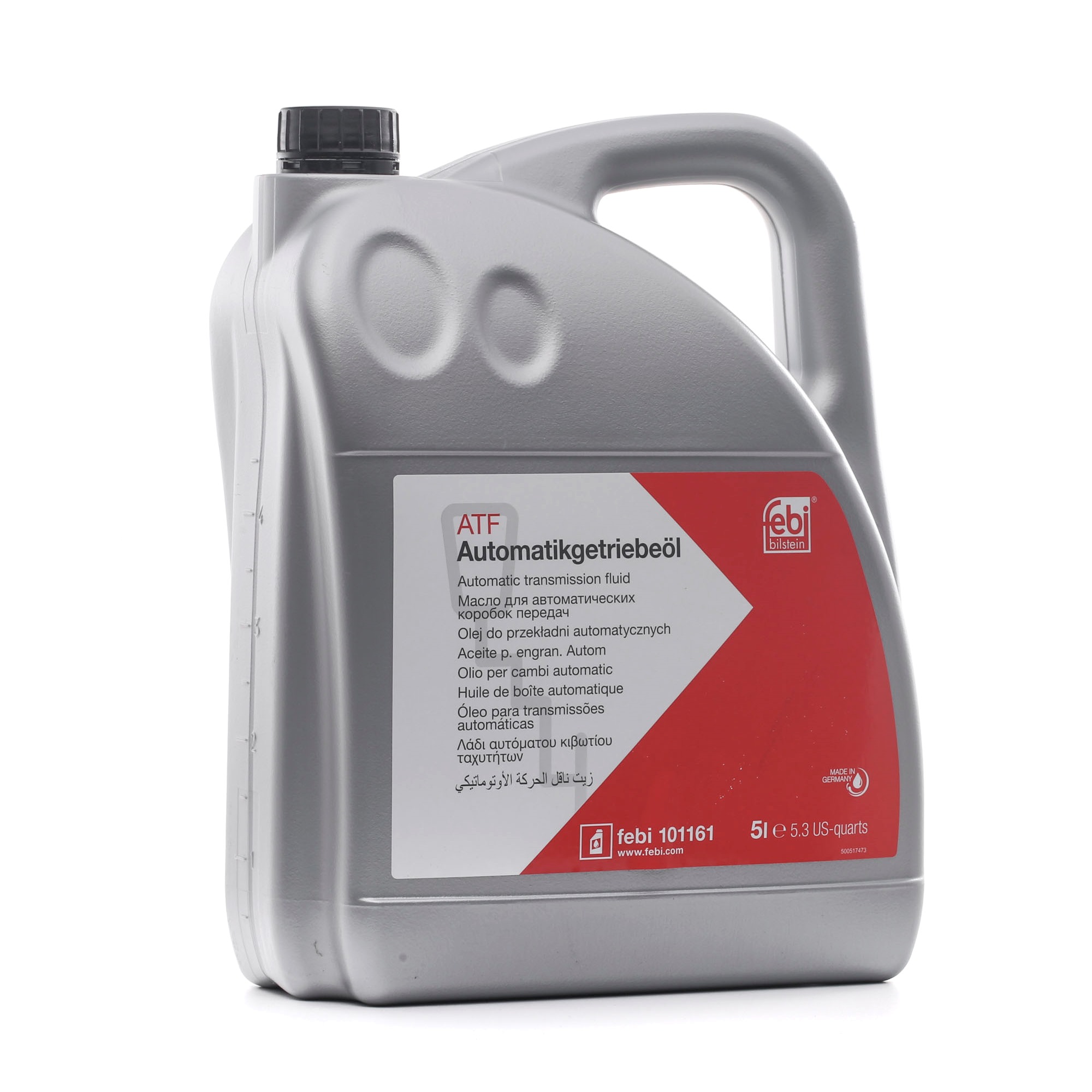
Regular maintenance is crucial for the reliability of the transmission components. The complex Volvo V60 automatic transmissions require special ATF fluids and filter changes every 60,000 km, even though Volvo advertises "lifetime filling". Software updates to the transmission control unit can solve many shifting problems, while mechanical defects often require the replacement of clutch packs or valve bodies. Diagnosis is carried out via transmission pressure tests and analysis of shift times.
Volvo V60: Problems with the B4 diesel mild hybrid system
The B4 diesel mild hybrid system of the Volvo V60 shows specific weaknesses in the 48V electrical system and the integrated starter-generator. These problems are particularly prevalent in 2020 models and manifest themselves in starting problems, battery warnings and reduced hybrid support. The 48V battery already loses capacity after 50,000-80,000 km, which leads to more frequent error messages. The integrated starter generator (ISG) shows signs of wear on the bearings and can fail between 80,000-120,000 km. In addition, problems occur with the DC/DC converter unit that connects the 48V system to the 12V electrical system.
A systematic check is critical to the functionality of the mild hybrid system. The sensitive Volvo V60 B4 48V components require regular voltage checks and software updates every 15,000 km. Diagnostics include battery voltage measurements, insulation resistance testing and analysis of hybrid ECU data. Preventive maintenance includes cleaning the high-voltage connectors and regular conditioning of the 48V battery through full charge/discharge cycles.
Additional common faults of the Volvo V60
Based on the experiences of Volvo V60 drivers, the following problems also occur:
- Defective parking sensors: often occur after 40,000-60,000 km, especially in models with 163 hp diesel engines, caused by dirt or moisture.
- Problems with the air conditioning system: Loss of coolant and compressor defects as early as 50,000 km, often in T5 and T6 petrol versions.
- Electronic handbrake not working: Occurs in all engine variants after 70,000-100,000 km, often due to wear of the actuators.
- Headlight condensation: Particularly in D6 hybrid models after 30,000-50,000 km, caused by defective seals.
- Infotainment system errors: Software problems and display failures after 20,000-40,000 km in all 2019-2020 models.
- Fuel pump problems in gasoline engines: T4, T5 and T6 engines show pump defects between 100,000-150,000 km.

Volvo V60: weaknesses and strengths
| Strengths |
Weak points |
| High safety standards |
Electric tailgate problems |
| Comfortable chassis |
Turbocharger wear on diesels |
| Large trunk |
Hybrid battery degradation |
| Modern assistance systems |
Injection problems with 2.0 diesel |
| Solid build quality |
Automatic transmission judder |
| Good aerodynamics |
48V system faults |
| Powerful diesel engines |
Electronic failures |
The Volvo V60 proves to be a technically advanced vehicle with high safety and comfort standards, but shows typical weak points of modern vehicles with complex electronics and hybrid technology. Most problems can be avoided through consistent maintenance and timely intervention. The hybrid and diesel systems in particular require special attention and regular specialist inspection to maximize service life and avoid costly repairs.

 22 October 2025 (updated)