Table of Contents
 25 June 2024
 Using different tyres at the front & rear: reasons, advantages & disadvantages
First of all, you should know that it’s not a good idea to mix different types of tyres on your car, such as winter and summer tyres or different treads, as this can seriously impair handling, braking and stability.
Having said that, you don’t necessarily have to replace all four tyres every time and there is no law prohibiting the use of different brands for the front and rear axles. However, it’s important to determine how running different tyres at the front and rear will affect your vehicle and whether it’s worth it for you in the long term.
Is it ok to have different brand tyres at the front and back of the car?
While you should generally use the same brand on the same axle and replace both tyres at the same time, it may be possible to use a different brand for each axle. For example, let’s say you have Michelin tyres on both axles but only the rear tyres need to be replaced. It would be safe and legal to install new Continental tyres at the rear provided that they meet the same specifications and are the same type.
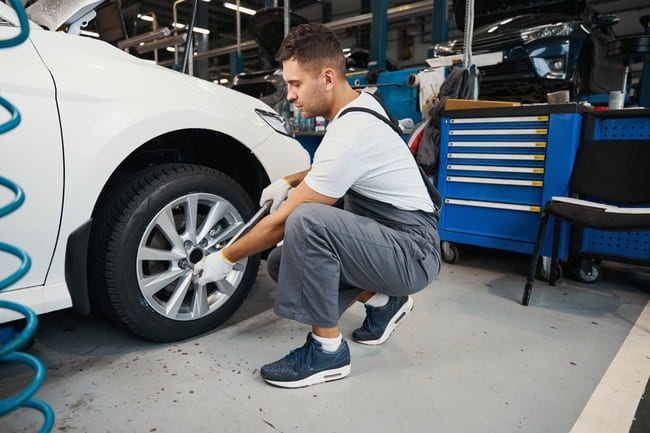
Should I install new tyres on the front or back of my car?
In other words, if you only buy 2 tyres, where should you put them? On cars with a front-wheel drive, the front tyres usually wear a lot quicker than the rear ones. This leads to the common misconception that you should simply replace the front two tyres.
However, this isn’t always the safest option. Instead, the general recommendation is to remove the old tyres and install the rear tyres at the front and install new ones at the rear instead.
Newer tyres have a deeper tread and therefore better grip. The reason why it is better to have increased grip at the rear is that there is a lower risk of losing control of the car due to oversteer. When there is less grip at the front but more at the rear, you could experience understeer, which is much easier and safer to manage.
Sold by AUTODOC Sold by AUTODOC Sold by AUTODOC Sold by AUTODOC Sold by AUTODOC
Milever All Season Versat MC545

 Article number


 A
67 dB
A
67 dB
 £36.49
Price per item
£145.96 / Price per 4 items
price incl. 20% VAT, free delivery
-31%
Goodyear Vector 4 Seasons Gen-3
£36.49
Price per item
£145.96 / Price per 4 items
price incl. 20% VAT, free delivery
-31%
Goodyear Vector 4 Seasons Gen-3

 Article number

 B
72 dB
compared to
RRP
£154.80
£105.99
Price per item
£423.96 / Price per 4 items
price incl. 20% VAT, free delivery
-44%
Pirelli Winter SottoZero 3
B
72 dB
compared to
RRP
£154.80
£105.99
Price per item
£423.96 / Price per 4 items
price incl. 20% VAT, free delivery
-44%
Pirelli Winter SottoZero 3

 Article number
B
72 dB
compared to
RRP
£320.48
£178.49
Price per item
£713.96 / Price per 4 items
price incl. 20% VAT, free delivery
-9%
Michelin Primacy 4
Article number
B
72 dB
compared to
RRP
£320.48
£178.49
Price per item
£713.96 / Price per 4 items
price incl. 20% VAT, free delivery
-9%
Michelin Primacy 4

 Article number
 B
68 dB
compared to
RRP
£124.52
£112.99
Price per item
£451.96 / Price per 4 items
price incl. 20% VAT, free delivery
-14%
Hankook Winter i*cept RS2 W452
B
68 dB
compared to
RRP
£124.52
£112.99
Price per item
£451.96 / Price per 4 items
price incl. 20% VAT, free delivery
-14%
Hankook Winter i*cept RS2 W452

 Article number
 B
71 dB
compared to
RRP
£102.48
£87.99
Price per item
£351.96 / Price per 4 items
price incl. 20% VAT, free delivery
B
71 dB
compared to
RRP
£102.48
£87.99
Price per item
£351.96 / Price per 4 items
price incl. 20% VAT, free delivery
Should tyres be replaced in pairs?
Experts almost always advise you to replace the tyres in pairs to reduce the risk of reducing the car’s stability. This is because using one new and one old tyre or tyres at different stages of wear on the same axle will likely cause an imbalance in rolling resistance and grip.
Other potential problems include excessive or uneven wear and wheel misalignment. Moreover, if you own an SUV/car with a 4-wheel drive, you may be told to replace all four tyres at once due to the vulnerability of the drive system.
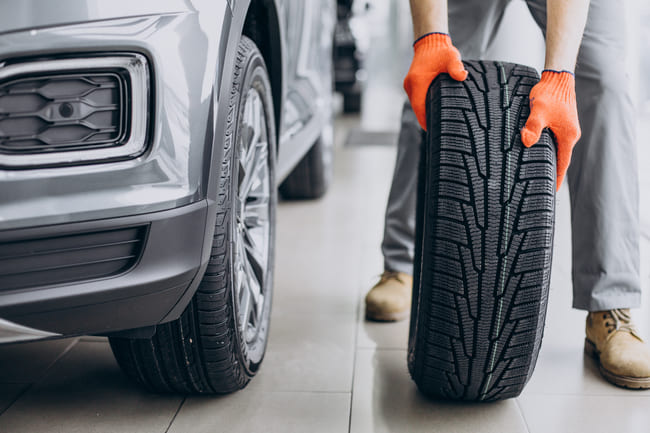
Additionally, the diameters and circumference of tyres can vary between tyre manufacturers, meaning that if you use two different brands on the same axle, it could cause the Electronic Stability Programme (ESP) to malfunction and send a false warning notification concerning the tyre air pressure.
Can I have different tyres on my car?
First things first, when you buy tyres you should make sure to get the same type of tyres with the same dimensions and handling properties. If you don’t get exactly the same product for both axles, you should at least stick to the same brand and product for both wheels on the same axle.
You should to buy the car tyres in pairs and where possible, change all the tyres at the same time for the best results. Under no circumstances should you mix different types of tyres or mix tyres with different tread properties.
Top products related to this topic: