Table of Contents

 16 May 2024
 What is rolling resistance of car tyres?
Tyre rolling resistance is the energy that your vehicle must provide to the tyres to keep them moving at a constant speed on a surface. Essentially, it is the effort necessary to sustain tyre motion. The primary factor causing rolling resistance is a phenomenon called hysteresis.
There are several factors that contribute to the level of resistance, including the design of the tyres themselves, the vehicle load, the tyre air pressures, the road surface, and outside temperatures. The construction, rubber compound, and tread pattern of a tyre all impact the amount of rolling resistance. For example, softer compounds, such as those used in car winter tyres, typically generate greater resistance for safety, whereas harder compounds, such as those used in summer tyres, are designed to reduce friction and resistance for performance. Moreover, an underinflated tyre will likely generate more resistance as it is more likely to deform.
Car tyre rolling resistance ratings
Otherwise known as the tyre energy rating, in Europe, the rolling resistance class ranges from class A (the most energy efficient/lowest resistance) to class E (the least energy efficient/highest resistance). This is usually displayed alongside the tyre’s wet grip rating (also A to E), which indicates how long the braking distances are on wet roads. If you’re searching for car tyres online, you should be able to select or indicate your desired rolling resistance rating, e.g., by using shop filters.
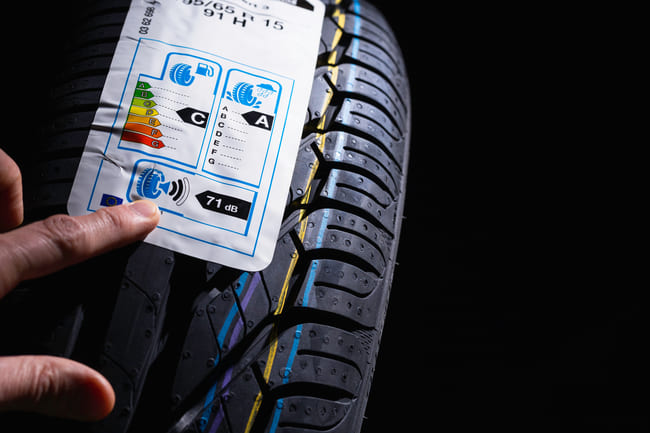
The benefits of low rolling resistance vehicle tyres
Tyres account for roughly 20% of a vehicle’s overall fuel consumption. This is why automotive engineers are constantly looking to improve the design and construction of tyres to generate more fuel savings and reduce emissions. Moreover, it’s estimated that a 30% increase in car tyre rolling resistance leads to an excess fuel consumption of 3 to 5%. In this sense, tyres with a low rolling resistance rating are better for the environment overall and more cost-effective in terms of fuel.
This is particularly relevant for most drivers today due to the rising prices of petrol and diesel. On top of this, the reduction in friction may help to extend the lifespan of the tyres as well as the noise levels generated while driving. Some of these products are specifically designed to enhance the vehicle’s handling performance and your overall driving experience.
However, it’s important to remember that fuel efficiency isn’t everything. Traction is critical when it comes to maintaining road safety, particularly in wet or icy weather conditions. You should therefore consider the balance between grip or braking distances and reduced resistance when purchasing new tyres.
For an optimal combination of energy efficiency with enhanced safety, it is recommended to look for high-quality tyres that perform well in various weather conditions, such as the all-season N’Blue EV Nexen tyres. When choosing new tyres, always make sure that the new ones match the specifications indicated in the car owner’s manual or on the sidewall of the ones currently fitted, as well as meet the legal requirements specified by local authorities.
Top products related to this topic: