Problems with the Audi S4

Reliability Audi S4: common problems, issues symptoms and faults
- Timing chain wear on the 4.2 V8: The timing chain can wear out as early as 80,000-120,000 km, which can lead to rattling during cold starts and subsequent engine damage. The 2009 models with the 4.2 V8 engine are particularly affected.
- Turbocharger problems in the 3.0 TFSI: The turbocharger often shows defects between 100,000-150,000 km, manifested by loss of power, bluish smoke and whistling noises. This is one of the most common complaints with TFSI engines.
- Tiptronic transmission problems: The automatic transmission can develop shifting problems as early as 120,000 km, whereby it does not shift properly or does not jump into the desired gear. The automatic transmission often exhibits jerky movements.
- Fuel pump failure: The fuel pump often fails between 80,000-100,000 km, causing the engine to malfunction or fail to start. This leads to unexpected breakdowns.
Audi S4: Problems with the timing chain in the 4.2 V8 engine
The timing chain in the 4.2 V8 engine of the Audi S4 shows typical signs of wear from a mileage of 80,000 km, with the first symptoms often appearing as a characteristic rattling noise when starting from cold. This frequent weak point manifests itself as metallic noises from the engine compartment, which may initially disappear after warming up. As wear progresses, the noises become more permanent and can lead to serious engine damage if the timing chain jumps or breaks. The service life of the timing chain is considerably shortened by irregular oil changes and the use of inferior oils. These faults are particularly common in 2009 models, as the early generation of chain tensioners was still installed here.
A systematic check is essential for the early detection of timing chain problems. The sensitive Audi S4 timing chain systems require regular inspections every 15,000 kilometres and the use of high-quality 5W-30 engine oil. Diagnosis is carried out by listening to the engine noise with a stethoscope and checking the chain tension. At the first sign of a problem, a workshop should be visited immediately, as a complete replacement of the timing chain including tensioner and rails will be necessary. Preventive maintenance with regular oil changes every 10,000 kilometres can extend the service life considerably.
Audi S4: Problems with the turbocharger in the 3.0 TFSI
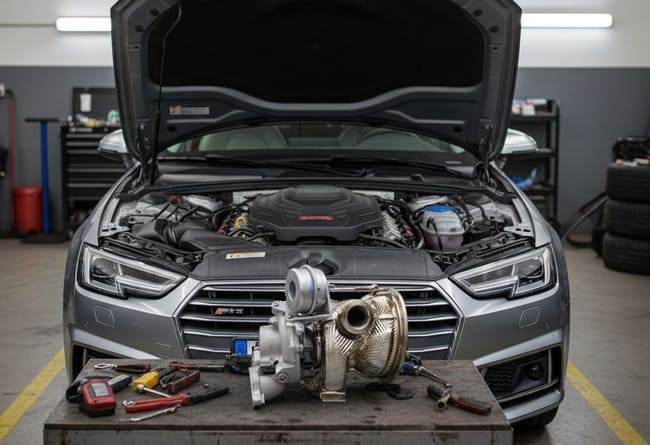
The turbocharger in the 3.0 TFSI engine typically develops characteristic defects between 100,000 and 150,000 km, with the first symptoms being reduced boost pressure and loss of power. This weakness manifests itself in whistling or squealing noises when accelerating, bluish smoke from the exhaust and increased oil consumption. The reliability of the turbocharger is strongly influenced by the quality of the engine oil used and adherence to the oil change intervals. Frequent short journeys and abruptly switching off the hot engine after motorway journeys accelerate wear considerably. The complaints often manifest themselves sporadically at high engine speeds before the turbocharger stops working completely.
Regular maintenance is crucial for the longevity of the turbocharger. The precise Audi S4 turbocharger systems require special attention to the oil quality and regular checks of the charging lines every 20,000 kilometres. Diagnosis is carried out by measuring the boost pressure, visually checking for oil leaks and analysing the exhaust gas values. In the event of defects, it is usually necessary to replace the entire turbocharger, as repairs are often not cost-effective. Preventive measures include running the engine after motorway journeys, the use of high-quality fully synthetic oil and regular cleaning of the intake tract.
Audi S4: Problems with the Tiptronic automatic transmission
The Tiptronic automatic transmission of the Audi S4 develops characteristic problems from a mileage of around 120,000 kilometres, with the first signs manifesting themselves in delayed or jerky gear changes. The automatic transmission does not shift precisely between gears or does not jump into the desired gear, which is particularly noticeable at low speeds and when starting off. These frequent faults are caused by clutch wear, valve body problems or contaminated transmission fluid. The service life of the transmission is significantly reduced by sporty driving, frequent starts on inclines and neglected maintenance. Typical symptoms include grinding noises, vibrations when changing gear and the gearbox warning light coming on.
Professional maintenance is essential for the proper functioning of the transmission. The complex Audi S4 Tiptronic systems require regular flushing of the ATF fluid every 60,000 km and checks of the electronics. Diagnosis is carried out by reading out the error codes, checking the oil level and fluid quality as well as test drives with shift point analysis. A specialist workshop should be consulted immediately at the first sign of trouble, as minor problems can quickly develop into costly total damage. Preventive maintenance with high-quality ATF oil and a gentle driving style can extend the service life to over 200,000 kilometres.
Audi S4: Problems with the fuel pump
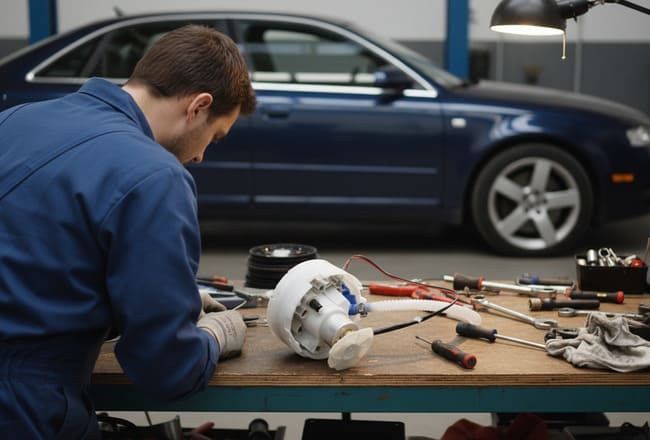
The fuel pump in the Audi S4 typically shows signs of failure between 80,000 and 100,000 kilometres, with the first symptoms often being sporadic starting problems and a loss of power at high engine speeds. The engine does not start or does not function properly, which can lead to unexpected breakdowns. This weak point is manifested by buzzing noises from the tank area, which are particularly audible when the ignition is switched on. The reliability of the fuel pump is influenced by the fuel quality, frequent driving with a low tank level and contamination in the fuel system. In the event of advanced wear, the engine can suddenly stall while driving, leading to dangerous situations.
A professional inspection is necessary for the timely detection of fuel pump problems. The sensitive Audi S4 fuel systems require regular checks of the fuel pressure every 30,000 km and the use of high-quality fuel. Diagnosis is carried out by measuring the fuel pressure, checking the electrical connections and analysing the fuel quality. In the event of defects, a complete replacement of the fuel pump is usually necessary, as this is installed as a unit in the tank. Preventive measures include avoiding driving with a low tank level, regular use of fuel system cleaners and the use of brand-name fuel.
Audi S4: Problems with the injection system and ignition coils
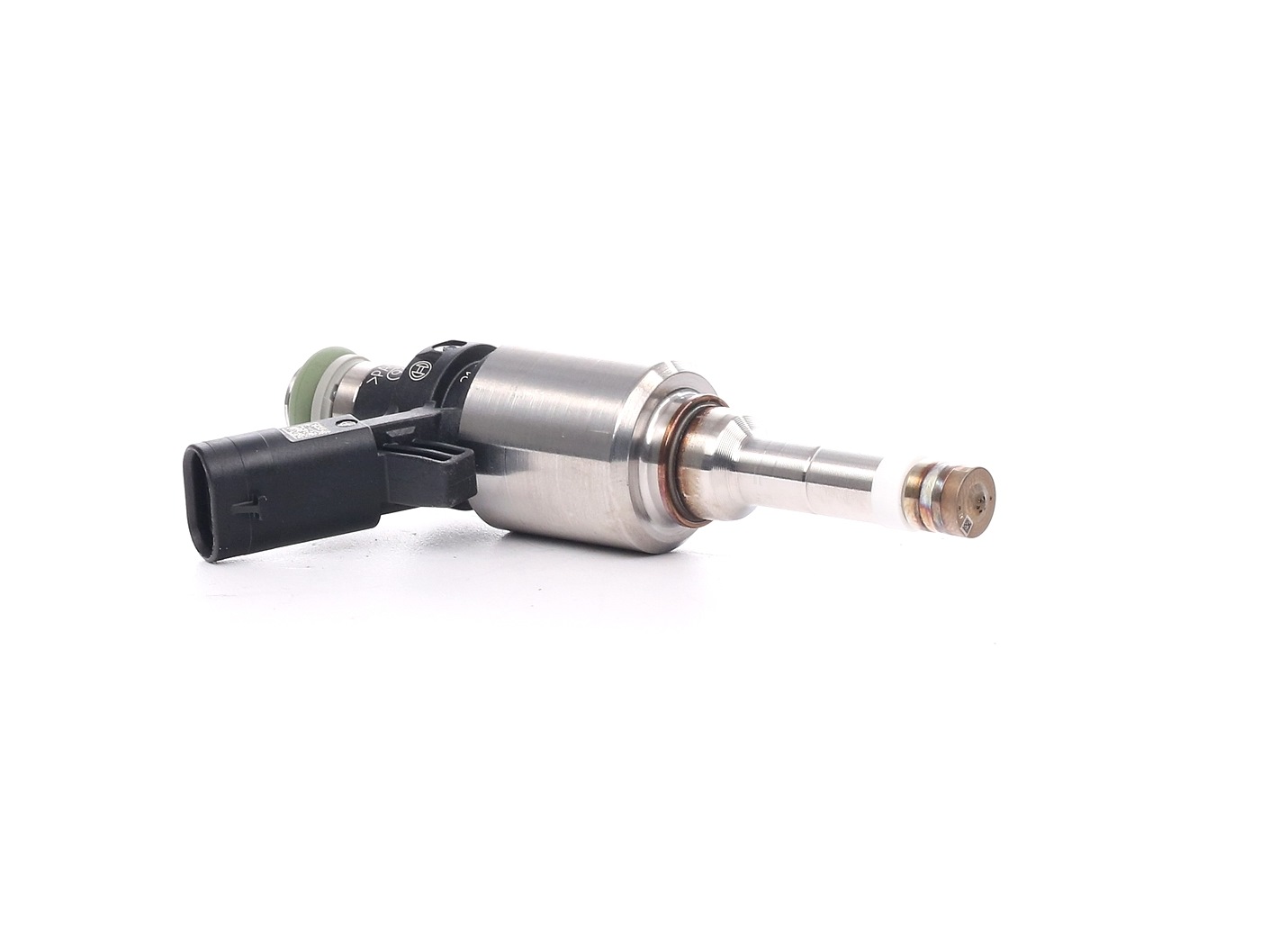
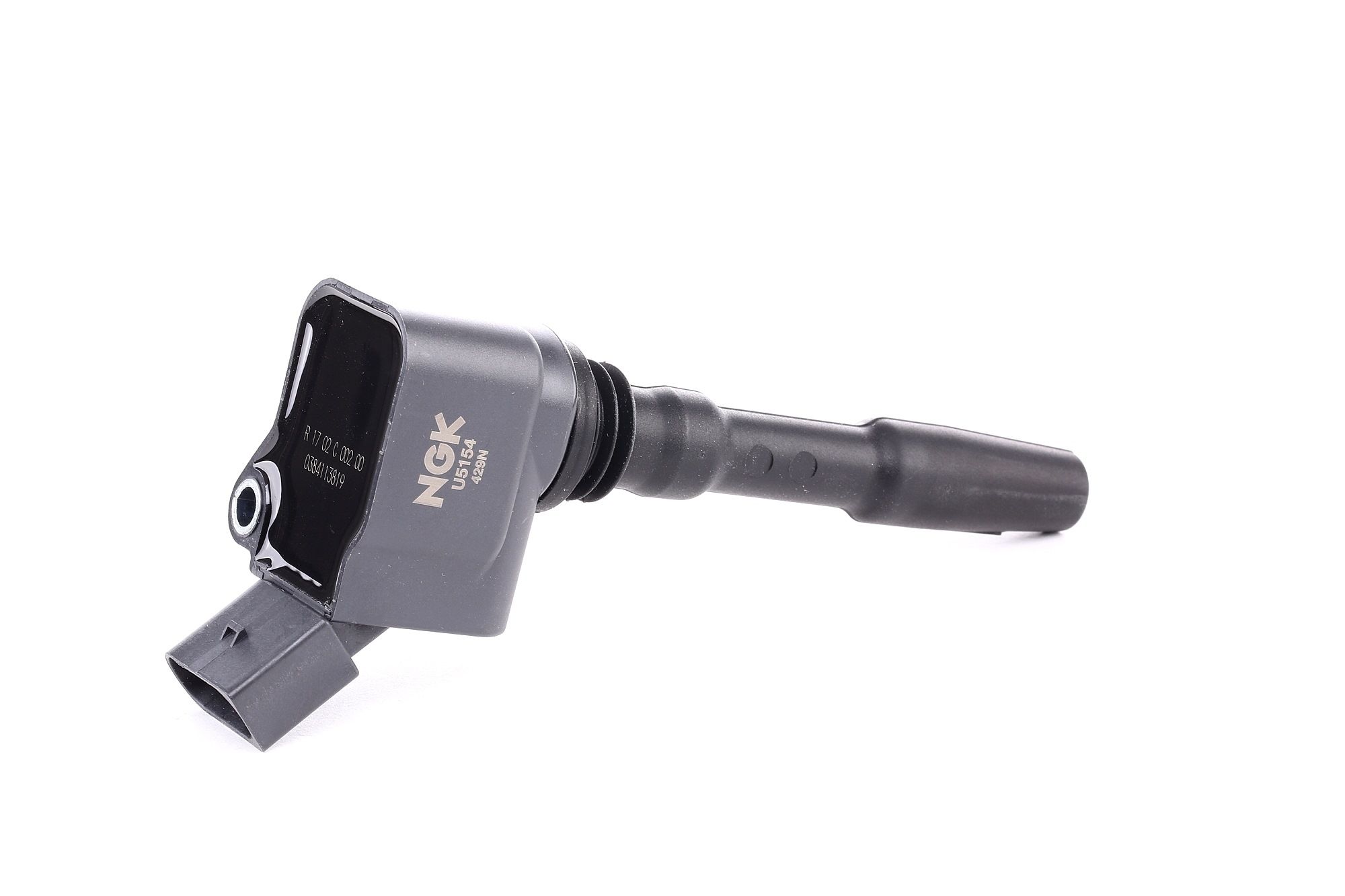
The injection system of the Audi S4 develops characteristic problems as early as 60,000 kilometres, with the ignition coils and injection nozzles being particularly affected by wear. These faults manifest themselves as irregular engine running, misfiring and increased fuel consumption. The symptoms include engine stuttering when accelerating, loss of power and the engine control light coming on. In the 3.0 TFSI engines in particular, there are frequent problems with the ignition coils, which wear out more quickly due to the high thermal load on the turbocharger. The service life of the components is considerably reduced by the use of low-quality fuel and infrequent maintenance. Typical breakdowns are caused by complete failure of individual cylinders.
Regular maintenance is essential for the injection system to function optimally. The precise Audi S4 injection systems require regular cleaning every 30,000 km and replacement of the ignition coils every 60,000 km. Diagnosis is carried out by reading out the error codes, measuring the cylinder compression and checking the injection values. In the event of problems, all ignition coils should be replaced at the same time, as consequential damage to the catalytic converters can develop. Preventive treatment with high-quality fuel additives and regular use of Super Plus fuel can significantly extend the service life of the components.
Additional common faults of the Audi S4
Based on the experience of Audi S4 drivers, the following additional problems occur:
- Water pump defects in the 4.2 V8: Typically occur after 120,000-140,000 km, often caused by bearing defects or leaking seals.
- Air suspension problems: Can occur as early as 80,000 km, often due to defective air bellows or compressor problems.
- Xenon headlight problems: Often occur after 60,000-80,000 km, usually due to defective ballasts or burners.
- Brake problems: Premature wear of the brake discs after 40,000-60,000 km, especially with a sporty driving style.
- Air conditioning compressor defects: Typically occur after 100,000-120,000 km, often due to loss of refrigerant or clutch defects.
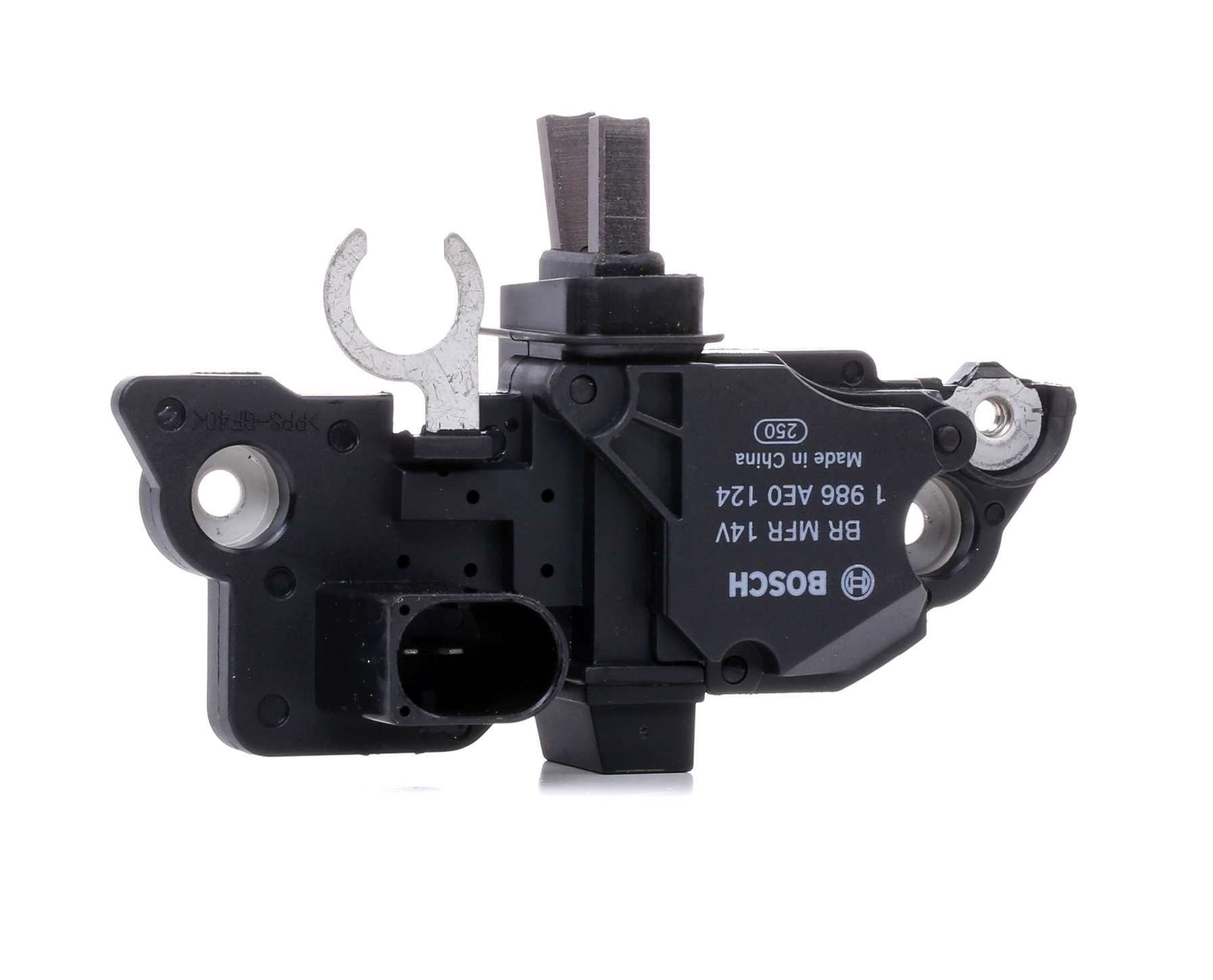
- Battery and alternator problems: Can occur after 80,000 km, especially in vehicles with many electrical consumers.

Audi S4: weaknesses and strengths
| Strengths |
Weak points |
| High engine power and sportiness |
Timing chain wear on the 4.2 V8 |
| Quattro all-wheel drive |
Turbocharger problems with the 3.0 TFSI |
| High-quality workmanship |
Tiptronic transmission problems |
| Good suspension set-up |
Fuel pump failures |
| Modern assistance systems |
High maintenance costs |
| Comfortable equipment |
Injection system problems |
| Value stability |
Electronic faults |
The Audi S4 proves to be a powerful vehicle with a sporty character, but one that requires intensive maintenance and attention. Most problems can be avoided by regular inspections and preventive measures. The mechanical components in particular, such as the timing chain and turbocharger, require regular checks to avoid costly repairs and ensure the longevity of the vehicle.


 8 December 2025 (updated)